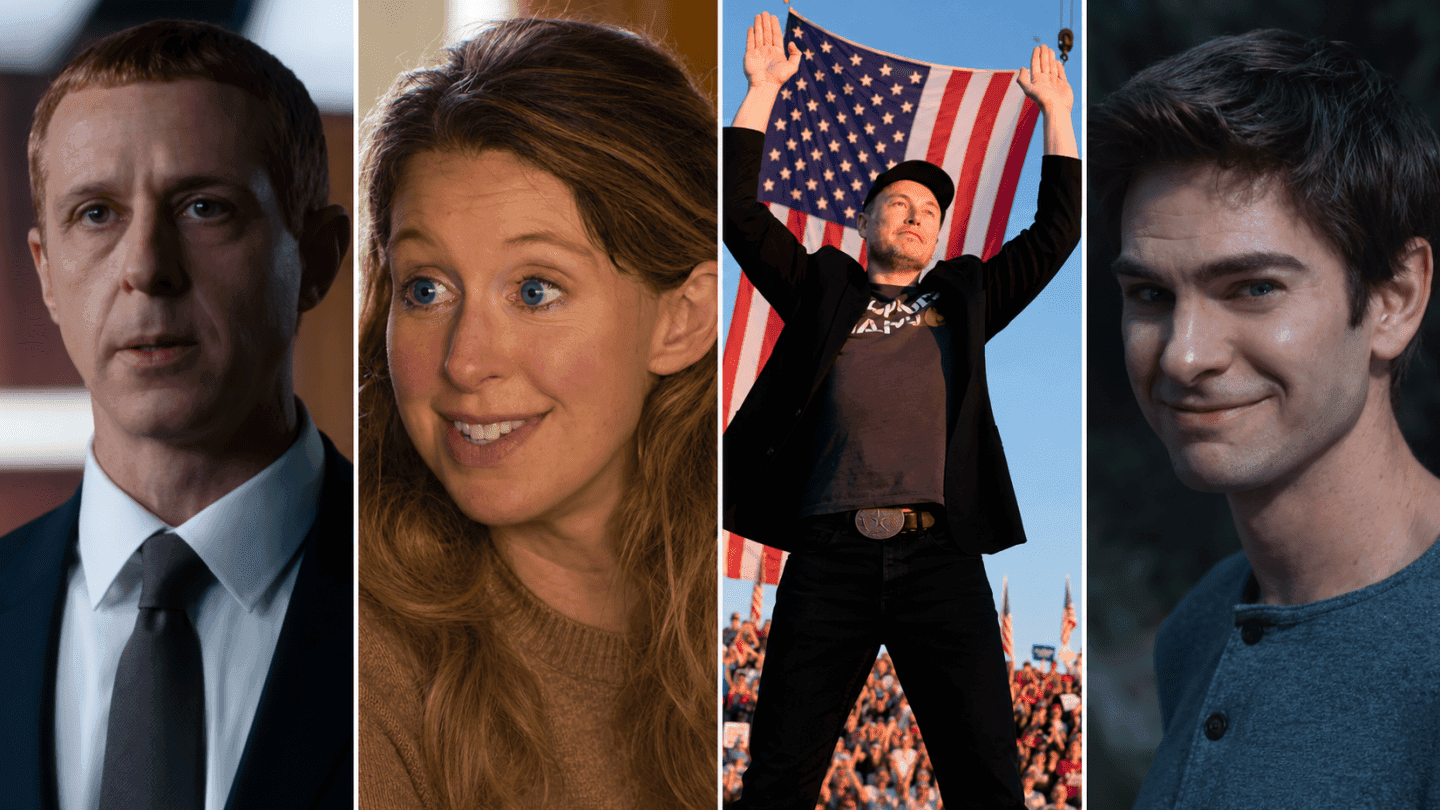
The upcoming October release calendar is shaping up to be an unusual battlefield, as four films centered on high-profile tech industry figures are set to open within weeks of each other. The cluster, which industry observers are already calling a scheduling pileup, pits competing studios against one another in a race to capture audience attention with stories about innovation, ambition, and legal reckoning.
Leading the charge is a courtroom drama that dramatizes the antitrust trial of a major social media CEO, a role that has been in development for over three years. The project, which began production before the real-world legal proceedings concluded, was initially slated for a spring debut but was pushed back twice during post-production. Its distributor is now committing to a prime mid-October weekend, betting that awards-season buzz will offset the crowded field.
Not far behind is a biopic tracing the rise and fall of a controversial cryptocurrency exchange founder. This film takes a more documentary-style approach, weaving archival footage with dramatized reenactments, a choice that has divided test audiences but intrigued festival programmers. The studio behind it moved its release date up by two weeks after learning of the competing titles, hoping to secure an earlier foothold.
A third entry, a satirical dramedy about a fictionalized search-engine billionaire facing congressional hearings, comes from a director known for mixing sharp political commentary with ensemble comedy. This picture had long been positioned as a late-October counterprogramming play, designed to appeal to adult viewers seeking a lighter take on heavyweight themes. Its studio has remained firm on that date, despite the logjam.
Rounding out the quartet is a prestige thriller centered on the defamation case brought against a streaming platform executive. This is the only one of the four adapted from a bestselling nonfiction book, and its producers have leaned heavily on the source material’s narrative momentum. Early buzz from private screenings has been strong, but the film’s distributor acknowledges that carving out an audience will require differentiating its tone from the other three.
The coincidence has sparked debate among distribution executives about the wisdom of clustering similar subject matter. Some argue that audiences will treat the films as a kind of thematic festival, sampling multiple titles over successive weekends. Others warn of a cannibalization effect, where moviegoers choose just one and skip the rest, leaving several strong releases underperforming.
Adding to the pressure is the fact that all four films target overlapping demographics - educated, news-literate adults aged 35 and older, a group that has proven harder to lure back to theaters in recent years. None of the productions carry blockbuster budgets, but each carries meaningful financial risk for its respective studio. Marketing campaigns will need to emphasize what makes each story distinct, from the specific legal angle to the style of filmmaking.
The October window has historically been reserved for awards contenders and genre fare, but this year’s convergence marks a notable shift toward real-world corporate drama. Public interest in tech leaders has remained high following a string of congressional hearings, high-profile lawsuits, and whistleblower revelations. That cultural moment has emboldened filmmakers to treat moguls as modern titans whose flaws mirror classical tragic figures.
One wrinkle complicating the release strategy is the ongoing Screen Actors Guild strike, which has limited cast availability for promotional tours. With actors unable to attend premieres or sit for junkets, studios are pivoting to director-led interviews and social media campaigns built around behind-the-scenes footage. Early tracking suggests that word-of-mouth will play an unusually large role in the opening weekends, as traditional publicity channels remain constrained.
None of the four films has yet released a full trailer, though teasers have leaked across social platforms, fueling speculation and premature comparisons. Critics who have seen rough cuts describe the quartet as less redundant than the logline suggests, with each taking a distinct tonal approach to its protagonist. One is reportedly sympathetic to its subject, another scathing, a third wryly detached, and the fourth leaning into moral ambiguity.
The scheduling coincidence appears to stem from unrelated production delays rather than intentional counterprogramming. Two of the films were originally slated for 2025 premieres but stalled during reshoots, while a third waited months for a music clearance. The fourth completed on schedule but its studio chose to hold it for the fall awards corridor, unaware of the others’ movements.
As September winds down, exhibitors are reporting strong advance ticket interest for the quartet, particularly in coastal markets where tech industry news dominates local headlines. Whether that enthusiasm translates into sustained box office remains an open question. The last time Hollywood released multiple films about the same industry figure in one season - when three Steve Jobs projects were announced - only one reached theaters, and it underwhelmed commercially.
For now, studio marketing teams are hunkering down, fine-tuning their campaigns to highlight each film’s unique angle. One poster tagline emphasizes the courtroom clash; another playfully asks whether its hero is a genius or a grifter. The directors, all career veterans, have publicly expressed mutual respect, with one telling a podcast that a rising tide of intelligent cinema lifts all boats. Whether audiences agree will become clear by Halloween.
Source: The Hollywood Reporter