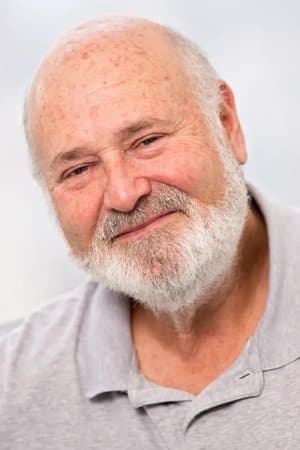
Rob Reiner’s Stephen King Hit: 40 Years Later
Discover how Rob Reiner turned Stephen King’s most personal story into a surprise 1980s film classic - its legacy and impact today.
Director
Rob Reiner
Advertisement
Discover how Rob Reiner turned Stephen King’s most personal story into a surprise 1980s film classic - its legacy and impact today.
It was 40 years ago this week that Rob Reiner quietly delivered what would become one of the most beloved films of the 1980s, a movie that took Stephen King’s most autobiographical work and turned it into an unlikely box-office sensation. Released in the summer of 1986, Stand by Me wasn’t a horror film, didn’t feature any of King’s signature monsters, and starred four unknown teenagers at its core. Yet it connected with audiences on a level that surprised industry insiders, critics, and even King himself.
At the heart of the story is a simple premise: four boys in 1959 Oregon set off on a two-day hike to find the body of a missing local boy. Adapted from King’s novella “The Body”, the film was a coming-of-age tale about friendship, mortality, and the sting of leaving childhood behind. Reiner, fresh off the success of the mockumentary This Is Spinal Tap, took on a project that was a radical departure from his comedic roots. He was stepping into uncharted territory, but he did so with a deep respect for the source material.
King has long been open about the fact that The Body was the most personal thing he had ever written. It drew directly from his own upbringing in Durham, Maine, and the adventures he shared with his brother and friends. That authenticity was something Reiner recognized instantly when a producer handed him the novella. He saw the potential for a film not about the macabre, but about the ache of adolescence and the vividness of memory.
What followed was a casting process that became the stuff of Hollywood legend. Reiner auditioned hundreds of young actors before finding his four leads: Wil Wheaton, River Phoenix, Corey Feldman, and Jerry O’Connell. Phoenix, just 15 at the time, brought a weary wisdom to the role of Chris Chambers that anchored the film. Wheaton, as the protagonist Gordie Lachance, carried the weight of a boy mourning his older brother. Feldman delivered a manic, unhinged energy as Teddy Duchamp, and O’Connell, the only true newcomer, provided the comic relief as the chubby, good-hearted Vern Tessio.
The chemistry among the four was immediate and raw. Reiner reportedly encouraged them to improvise, to joke, and to fight like real kids would, which gave the dialogue a naturalism that set it apart from other teen films of the era. The infamous leech scene, where the boys panic while removing bloodsuckers from their skin, was shot with genuine screams and laughter, capturing a moment of pure, unfiltered adolescence.
The production itself was a tight, efficient shoot, largely taking place in the small town of Brownsville, Oregon, which stood in for the fictional Castle Rock. Reiner kept the budget modest and the schedule tight, focusing on performance over spectacle. What the film lacked in special effects, it made up for in emotional honesty.
When Stand by Me hit theaters in August 1986, it was not expected to be a blockbuster. It was a late-summer release, slotted against bigger studio fare. But word of mouth spread quickly. Audiences were moved by the film’s gentle melancholy and its refusal to sugarcoat the harsh realities of small-town life. The story ended not with a triumphant climax, but with a quiet, devastating prologue showing the fate of the characters as adults. That melancholic coda, narrated by an older Gordie (played by Richard Dreyfuss), left viewers wiping away tears as they exited the theater.
Critics were effusive. Reviewers praised Reiner for his restraint and for coaxing career-defining performances from his young cast. The film was nominated for an Academy Award for Best Adapted Screenplay, and River Phoenix received a nomination for Best Supporting Actor at the Independent Spirit Awards, cementing his status as one of the most promising young stars of his generation.
For King, the film was a vindication. He has said on numerous occasions that Stand by Me is the only film adaptation of his work that he genuinely loves. He has described watching it as a near-spiritual experience, seeing his childhood brought to life with such fidelity. Reiner, for his part, never directed another Stephen King adaptation, but the success of Stand by Me proved that King’s talent extended far beyond the horror genre.
The film’s legacy has only grown in the four decades since. Its iconic lines - “Do you wanna see a dead body?” and the closing observation that “I never had any friends later on like the ones I had when I was twelve” - have become embedded in pop culture. The soundtrack, featuring Ben E. King’s “Stand by Me,” became a chart-hit again. And the movie’s place in the pantheon of coming-of-age cinema is secure, often sharing a shelf with The Outsiders and Dead Poets Society.
This month, as Stand by Me celebrates its 40th anniversary, distributors have announced a restored theatrical rerelease to introduce the film to a new generation. It’s a fitting tribute to a film that proved that the most personal stories can become the most universal. Reiner, now 81, remains as proud of the film today as he was on its opening night. He has often said that the movie’s success taught him the value of trust - trust in the material, trust in his actors, and trust in his own instincts.
What Stand by Me achieved was rare. It took a respected author’s most intimate memoir-as-fiction and turned it into a cultural touchstone without diluting its essence. Four decades on, it stand as a gentle reminder that the biggest surprises in cinema often come from the smallest, most heartfelt stories.
Source: The Hollywood Reporter
Advertisement
Advertisement