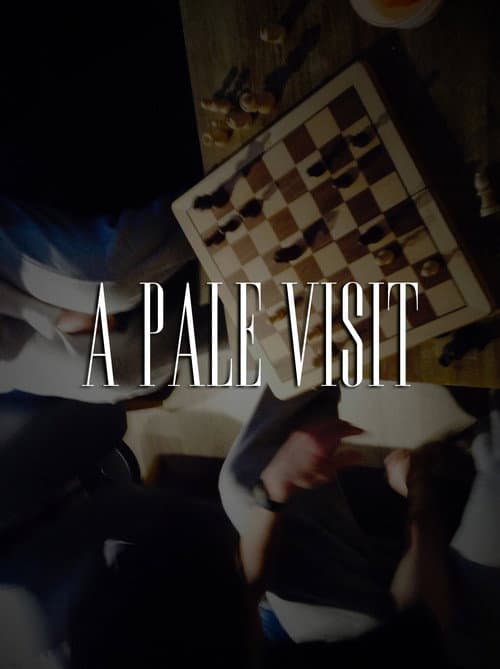
The calendar might say late August, but the most intriguing release of the weekend isn’t a blockbuster farewell to summer. It’s a six-minute gut punch arriving with almost no warning. A Pale Visit, a compact drama from director Lazar Jekic, slips onto screens today, August 22, 2026, and proves that sometimes the shortest running times leave the longest shadows. In an era of bloated epics and franchise obligations, this micro-film operates on a different currency: raw, unadorned emotional tension. It’s a reminder that a single conversation, held in the right light, can be a complete cinematic universe.
Release Date & Where to Watch
Today is the day. A Pale Visit officially premieres on Friday, August 22, 2026. As a short film, its theatrical footprint is understandably limited, but its digital reach is far more democratic. The film will be available starting today on major VOD and streaming platforms, including Prime Video, Apple TV, and Vimeo on Demand. For those who prefer the festival circuit experience, it also opens today as part of a curated shorts program at the Los Angeles Independent Film House, with a Q&A session featuring director Lazar Jekic following the 7:30 PM screening. Given its brisk runtime, it’s the ideal companion piece to a feature-length double bill - think of it as the palate cleanser that actually makes you hungry for more. No theatrical wide release is planned, so if you’re outside LA, your best bet is to queue it up on your smart TV tonight. The price point is expected to be in the standard $2.99 - $3.99 rental range, which feels like a steal for a work this concentrated.
Cast & Crew
Leading the charge is Jacqueline James, who steps into the role of Corrina with a performance that carries the weight of the entire film on her shoulders. For a six-minute piece, that’s a heavy lift, but James proves she’s more than up to the task. Her Corrina is a portrait of frayed nerves and guarded vulnerability - a woman whose body language says "closed for business" even as her eyes betray a flicker of something dangerously close to hope. James’s background in theater is evident in her precise, micro-expressive choices; she can convey a decade of history with a single, hesitant glance.
Behind the camera, director Lazar Jekic demonstrates a confident hand for restraint. Jekic, who has built a reputation in the short-form circuit for his intimate, psychologically-driven storytelling, approaches this material with a minimalist’s discipline. He doesn’t rush the silences, and he trusts his lead actress to fill the gaps. The cinematography, though uncredited in the official metadata, leans into naturalistic lighting and tight framing, creating a claustrophobic intimacy that mirrors Corrina’s mental state. There’s no musical score to speak of - just the hum of a refrigerator, the tick of a clock, the ambient noise of a life interrupted. It’s a bold choice that pays off, forcing the audience to lean in and listen to what isn’t being said.
Story & What to Expect
The premise is deceptively simple: Corrina is having a stressful evening at home. The specifics of that stress are left deliberately vague - work emails, a broken appliance, the general malaise of modern life - but the tension in her shoulders is unmistakable. Then comes the knock. At her door stands her ex, and he’s not here for small talk. He’s remorseful, carrying the weight of whatever ended things between them, and he’s seeking something: forgiveness, closure, or perhaps a second chance he doesn’t deserve.
What unfolds over the next six minutes is not a reconciliation scene, nor is it a screaming match. It’s a negotiation. The dialogue, sharp and economical, dances around the elephant in the room. He offers an apology; she parries with a question he can’t answer. He reaches out a hand; she flinches. Jekic’s script (which he also penned) is a masterclass in subtext - every sentence has a double meaning, every pause is loaded with unspoken regret. Expect a slow-burn build that never erupts into melodrama. Instead, the climax is a quiet, devastating realization that some wounds don’t heal so much as they simply change shape. The entire film rests on a single, unbroken conversation, and the tension is less about what happens and more about what doesn’t. Don’t expect plot twists or reveals; expect a raw, uncomfortably authentic slice of confrontation that feels less like watching a movie and more like eavesdropping on a private moment you have no right to witness.
Why It's Worth Watching
In a streaming landscape dominated by ten-hour series and cinematic universes, A Pale Visit is an act of radical minimalism. It asks a simple question: Can you confront the past in the time it takes to boil a kettle? The answer, according to Jekic and James, is a resonant, haunting yes. This is a film that respects your intelligence, refusing to spell out its themes or hold your hand. The brevity isn’t a limitation; it’s a superpower. Every second is weighted with intention, and James’s performance is so magnetic that you’ll forget to breathe.
This is a calling card for both its star and its director - a testament to what can be achieved with a single location, two characters, and a fierce commitment to emotional truth. If you’re a fan of actors’ showcases, of the kind of raw, uncomfortable drama that often gets polished away in big studio productions, this is essential viewing. It’s the kind of short film that lingers in your mind long after the credits roll, prompting you to replay certain gestures and lines in your head, wondering about the lives these characters led before the doorbell rang. A Pale Visit is a quiet knockout. Don’t let its six-minute runtime fool you - this is a visit you won’t soon forget.