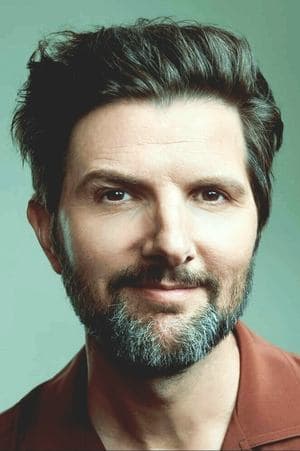
Adam Scott, the actor beloved for his deadpan delivery in Parks and Recreation and his more recent dramatic turns in Severance, has a confession to make. It involves one of cinema's most treasured adventure franchises, and the choice is, by his own admission, a deeply unpopular one among his peers. The actor recently revealed which installment of the Indiana Jones saga holds the top spot in his personal ranking, and it is not the beloved original.
During a recent appearance, Scott was pressed on his preference within the Harrison Ford-led series. While many fans and critics alike point to Raiders of the Lost Ark as the pinnacle of the franchise, Scott has aligned himself with a different camp. His favorite, he said, is the 1984 sequel Indiana Jones and the Temple of Doom. The admission was delivered with a knowing smirk, acknowledging that his taste runs contrary to the consensus that often dismisses the second chapter as the series' darker, more eccentric outlier.
Scott's reasoning goes beyond simple contrarianism. He argued that Temple of Doom possesses a grit and a visceral energy that the other films, for all their polish, sometimes lack. He praised the movie's relentless pacing, its more dangerous tone, and the sheer physicality of its set pieces, from the thrilling mine cart chase to the infamous bridge sequence. For Scott, the film's darker edges are not a flaw but a feature, giving it a distinct personality within the larger saga. He specifically lauded the performance of Ke Huy Quan as Short Round, calling the young sidekick a crucial element of the film's heart and humor.
The revelation places Scott in a minority, but he is far from alone. Over the years, a vocal subset of fans has championed Temple of Doom as a misunderstood gem. Its place in the franchise’s timeline is also notable, as it serves as a prequel to Raiders, unfolding in 1935. The film introduced both Short Round and the iconic, if initially reluctant, love interest Willie Scott, played by Kate Capshaw. Beyond its narrative position, its production history is legendary, from the infamous "movie brat" deal that gave director Steven Spielberg the rights to the James Bond franchise as a trade-off, to its role in prompting the creation of the PG-13 rating by the MPAA due to its intense depictions of violence and ritual sacrifice.
Scott’s choice inevitably stirs the long-running debate about the series' overall arc. While Raiders is often cited as a perfect screenplay, and The Last Crusade is beloved for its father-son dynamic between Ford and Sean Connery, Temple of Doom remains the wild card. It is the one that leans hardest into the serialized pulp origins of the character, emphasizing the macabre and the supernatural with an almost unrestrained glee. The fourth and fifth installments, Kingdom of the Crystal Skull and Dial of Destiny, have their own defenders, but they rarely enter the conversation with the same fervor as the original trilogy.
For an actor known for playing characters who are often the smartest or most sardonic person in the room, the choice makes a certain sense. Scott's career has been defined by a willingness to subvert expectations, whether it’s the oblivious manager in Step Brothers or the emotionally repressed Mark Scout in Severance. Picking the "wrong" Indiana Jones film fits that pattern of embracing the unconventional over the safe choice. He appears to value a film that takes risks, even if those risks result in a less cohesive final product than the original.
The actor's confession has sparked fresh conversation online, with fans rapidly taking sides. Some have expressed shock, while others have rallied to his defense with lengthy threads praising the film's practical effects and its intensity. The debate is a testament to the enduring power of the franchise itself. More than four decades after its debut, the series still commands passionate opinions, and the very act of ranking its five films remains a favorite pastime for a generation of movie lovers.
What is often overlooked in the debate is the context in which Temple of Doom was made. It was the follow-up to a cultural phenomenon, a movie that had to either replicate or reinvent. Spielberg chose to go darker and more frantic, resulting in a film that feels less like a sequel and more like a fever dream set in the exotic locales of India. The film's famous dinner scene, featuring chilled monkey brains and live snakes, remains a benchmark for on-screen gross-out humor. Its legacy is complicated, but undeniably influential.
Scott's preference does not diminish the other films in his eyes, but it does clarify his perspective on what makes an adventure truly gripping. He suggested that the sense of peril in Temple of Doom feels more tangible, less sanitized than in some of the later entries. The villains, led by the terrifying Mola Ram, are memorably sinister, and the stakes feel more personal for Indy, who is stripped of his usual adult allies and forced to rely on a child and a reluctant socialite.
Ultimately, the revelation is less about the film itself and more about the subjectivity of taste. It serves as a reminder that a franchise's success lies in its ability to offer something for everyone. The action is there, the humor is there, and the iconic fedora is always present. For Adam Scott, his favorite Indiana Jones movie is not the universally acclaimed masterpiece but the gritty, divisive middle chapter that dares to be different. In that choice, he finds the essence of adventure itself: unpredictable, chaotic, and never quite what you expect.
Source: The Hollywood Reporter