Animal Studies (Egret/Seagull/Midges/Spider/Swans) Preview
Read a preview of 'Animal Studies', a film exploring nature through vignettes: egret, seagull reflection, midges, spider, and swans in a line.
The experimental film landscape has always been a space where the medium itself becomes the message - and no one has proven that more consistently over the past five decades than Guy Sherwin. Today, July 26, 2026, marks the release of his latest work, Animal Studies (Egret / Seagull Reflection / Midges / Spider / Swans in a Line), a ten-minute 16mm meditation that extends a series he began way back in 1975. If you’ve never heard of Sherwin, you’re not alone - mainstream audiences rarely stumble into his corner of the art-house world. But for those who follow avant-garde cinema, his name is whispered with the kind of reverence usually reserved for structuralist poets. This new film arrives with hardly any advance buzz, no star wattage, and a running time shorter than most YouTube trailers. And that’s exactly the point.
Release Date & Where to Watch
Animal Studies officially premieres today - July 26, 2026 - though “premiere” in the traditional multiplex sense doesn’t quite apply. Sherwin’s work lives primarily in art galleries, film festivals, and academic screenings. The first major public exhibition of this piece will take place at the EXiS - Experimental Film and Video Festival in Seoul, South Korea, where it was programmed as part of the festival’s 2026 lineup. For viewers outside of Asia, catching the film will require a bit of hunting. It is currently scheduled for a limited run at the Anthology Film Archives in New York later this fall, and select microcinemas in London, Berlin, and Tokyo have expressed interest. No streaming deal has been announced, but given Sherwin’s history - his films have been archived at the BFI and the Centre Pompidou - a digital release through a platform like Fandor or a curated VOD service isn’t out of the question. For now, the only guaranteed way to see it is to track down a festival screening or a gallery installation. The metadata lists the runtime at a precise ten minutes, but Sherwin himself has noted that the length can vary depending on projection speed; one of the series’ key features is its modular nature.
Cast & Crew
The cast is essentially nonexistent. That’s not a gap in the metadata - it’s a deliberate choice. Sherwin’s subjects here are animals, and as he put it in the festival program notes for EXiS, “My filmic interest in animals is that they are unselfconscious, authentic, and can’t act.” So the performers are an egret, a seagull (seen only as a reflection), a swarm of midges, a spider, and a line of swans. No human actors appear on screen. The crew is even more minimal: Sherwin serves as director, cinematographer, editor, and presumably sound recordist. He has operated largely as a solo artist since the 1970s, shooting on a Bolex 16mm camera that he has maintained for decades. The only other credited collaborator, per festival records, is the film lab that processed the reversal stock - but even that detail is often left unmentioned in his filmography. This is a one-man operation, and that intimacy is central to the work’s effect.
Story & What to Expect
There is no narrative in the conventional sense. Animal Studies comprises five short vignettes, each named in the title: an egret, a seagull reflection, midges, a spider, and swans in a line. The film belongs to what Sherwin calls his “Short Film Series,” a project he began in 1975 and has been adding to ever since. In his own words from the EXiS program, “The beauty of working in a series is its flexibility; films can be added to or dropped, the order and manner of projection can be varied. Each film is like a brick, insignificant in itself, but can be combined into all kinds of structures.” That means the five segments you see on screen today might not appear in the same order - or even the same combination - a year from now. Sherwin has often screened the series with live projection choices, letting the projectionist rearrange reels like a DJ sequencing tracks.
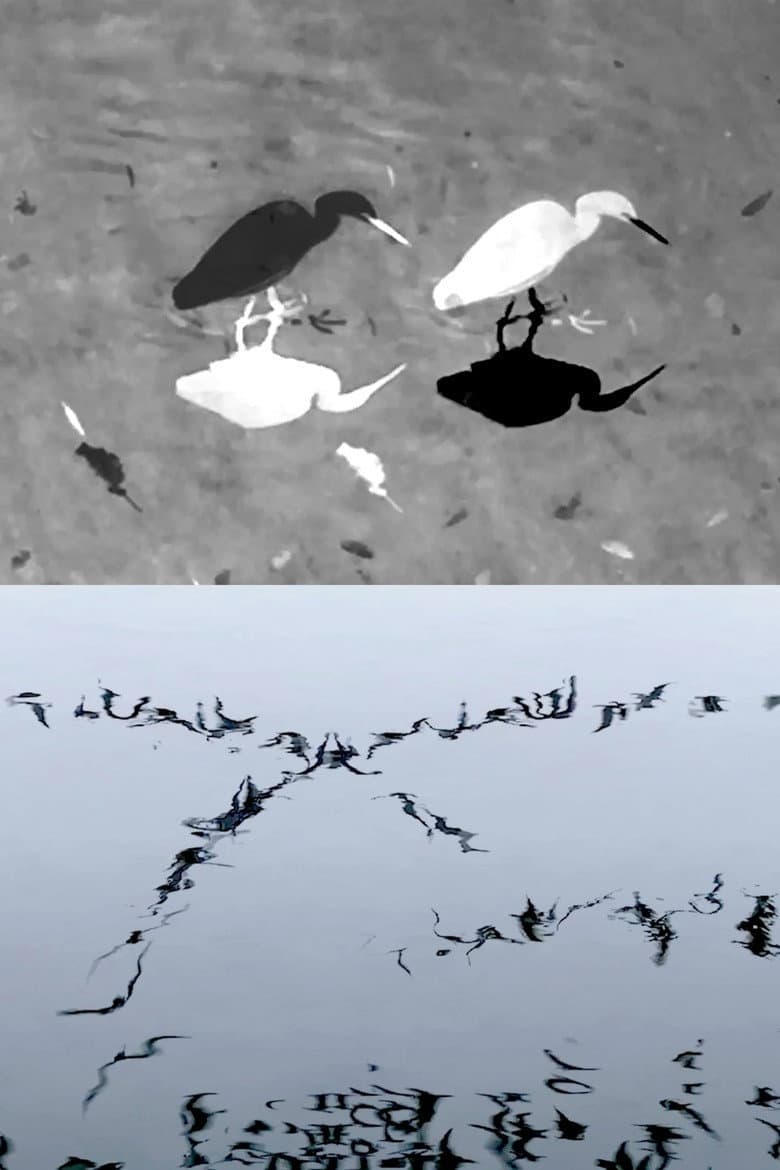
What you will see is unadorned observation. The egret stands still in shallow water, its white feathers catching afternoon light. The seagull reflection is just that - a bird seen in a rippled surface, its image fractured and reassembled by the water’s motion. Midges swarm in a column, a cloud of dark specks that seem to pulse with their own invisible heartbeat. A spider climbs a blade of grass, its legs moving with precise mechanical deliberation. And the swans - filmed in a line, probably along a canal - glide past with that peculiar dignity birds have when they don’t know they’re being watched. The camera rarely moves. There is no music, no voiceover, no narrative cue. Sherwin’s interest, as he stated, is in the unselfconscious authenticity of animals - they “can’t act,” and that inability becomes the film’s guiding aesthetic principle. Expect long takes, natural light, and the quiet hum of a 16mm projector.
Why It’s Worth Watching
In an era where every film feels obligated to explain itself, Animal Studies offers a radical alternative: it simply shows. Sherwin has been making work like this for over fifty years, and his patience with the form is almost defiant. The ten-minute runtime is not a concession to short attention spans - it is a concentrated dose of looking, a reminder that cinema began as a way of recording movement before it became a vehicle for plot. For viewers accustomed to blockbuster spectacle, this will feel like a palate cleanser, possibly even a test of endurance. But for anyone interested in the roots of experimental film, or in the quiet pleasure of watching a spider walk, it’s a small masterpiece.
There is also the question of legacy. At 79, Sherwin is still making films in the same format he started with in the 1970s. His Short Film Series now includes dozens of entries, and Animal Studies is one of the most recent. The film’s release through a major international festival like EXiS suggests that his work is gaining renewed attention - perhaps because its simplicity stands in stark contrast to the digital overload of contemporary media. The TMDb rating of 0/10 is, of course, meaningless; no one has voted yet. But that blank slate feels appropriate for a film that asks you to come to it without expectations. Give it ten minutes. Watch the birds. See if you can resist the urge to invent a story.