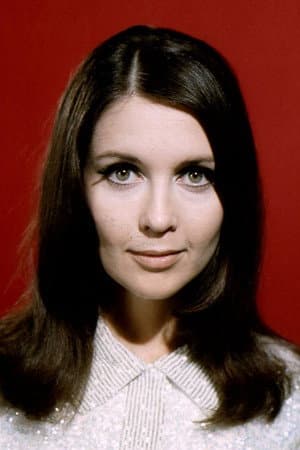
Anjanette Comer, the quietly striking actress who drifted through some of the most idiosyncratic Hollywood films of the 1960s and 1970s, died at 86. Her passing was confirmed by family representatives, though no cause of death or location was disclosed.
Comer was never a marquee name in the traditional sense, yet she carved out a distinctive niche playing women whose composure often masked something fragile or unsettled underneath. She could be ethereal in one scene and unnervingly placid in the next, a quality that made her a favorite of directors drawn to ambiguity.
From Texas to the Studio System
Born in Dawson, Texas, in 1934, Comer grew up in a small town before heading west to pursue acting. She broke into television in the early 1960s, logging appearances on series like The Continental Twist and The Alfred Hitchcock Hour, where her slightly off-kilter beauty and unreadable eyes fit the anthology format's appetite for the strange.
Her film breakthrough came in 1965 with The Loved One, Tony Richardson's acid satire of the Los Angeles funeral industry based on Evelyn Waugh's novel. Comer played Aimée Thanatogenos, a cosmetologist at a lavish mortuary who becomes the object of competing affections from an English poet and a young embalmer. The role demanded a delicate balance of innocence and absurdity, and Comer delivered it with a performance that critics at the time noted for its haunting stillness. The film, with its all-star cast and jet-black humor, announced her as a screen presence worth watching.
A Run of Unusual Roles
She followed that with a string of films that rarely conformed to genre expectations. In The Appaloosa (1966), she starred opposite Marlon Brando in a Western that traded the usual frontier heroics for something more brooding. Comer played a woman caught between Brando's drifter and a ruthless bandit, and her work in the film brought her a Golden Globe nomination for Best Supporting Actress.
Other credits from that period include The Money Trap with Glenn Ford and Rita Hayworth, and The Trouble with Girls opposite Elvis Presley. She worked steadily, but the parts she gravitated toward were seldom conventional leading-lady roles. Offscreen, Comer was known for her privacy and a certain wariness of the Hollywood machinery, which may have limited her commercial ascent even as it preserved her mystique.
The Cult of 'The Baby'
For a younger generation of film fans, Comer is best remembered for The Baby (1973), a psychological horror film so strange it has become a staple of midnight screenings and home-video rediscovery. She played Ann Gentry, a social worker who becomes dangerously fixated on a family whose adult son is kept in a crib and treated as an infant. The film was dismissed or misunderstood on release, but its reputation has grown enormously, and Comer's performance - righteous, increasingly unhinged, and strangely tender - anchors its uneasy power.
She continued working in television through the 1970s and 1980s, with roles on Police Story, The Rockford Files, and Murder, She Wrote, before largely stepping away from the industry. Her final film credit came in the 1990s. In later years she lived quietly, making only rare public appearances, and she largely declined interviews, preferring to let the work speak.
A Lasting, Low-Key Legacy
Comer's career resists easy summary. She wasn't a star who dominated an era, nor a character actor who popped up everywhere in recognizable bits. Instead, she left behind a small but potent filmography of women on the edge of things, and performances that reward revisiting. Directors who cast her seemed to understand that her stillness could be as disquieting as any scream.
She is survived by family members whose names were not immediately released. Tributes from film historians and cult-cinema devotees began circulating quickly, many pointing to The Baby as proof that Comer deserved a larger career than she got. But the films she made, however odd or overlooked at the time, have lasted - and so has her singular presence within them.
Source: The Hollywood Reporter