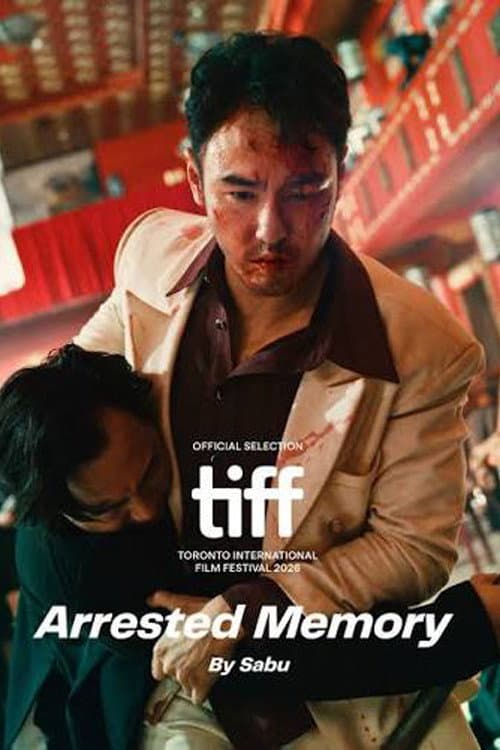
Taipei’s premier detective, a man whose instincts once cracked the city’s toughest cases, now finds himself hiding a terrifying secret: his own memory is dissolving. That is the premise of Arrested Memory, the new film from Japanese director Sabu, which debuted on September 7, 2026. The movie, a 100-minute blend of action, comedy, and drama, follows Lee, a celebrated police star who loses his entire team during a harrowing investigation.
The guilt from that tragedy proves too heavy. Lee is subsequently reassigned to a quiet rural station, where the psychological fallout manifests as amnesia. Rather than admit his condition, he chooses to conceal it, navigating each day as a tightrope walk between professional duty and personal deterioration. The stakes escalate when a high-profile case lands on his desk: the kidnapping of a Japanese businessman’s son. With his memory fading by the hour, Lee has little left to trust except his gut - and, remarkably, those instincts keep pointing him toward the culprits.
Sabu, known for his kinetic style and offbeat character studies, here fuses the mechanics of a kidnapping thriller with the absurdity of a cop who cannot remember what he just learned. The tonal mix is deliberately jarring: one scene plays for anxious suspense, the next for wry humor as Lee fumbles through introductions he has already had that morning. Beneath the laughs, however, sits a darker meditation on trauma and identity. Lee is not just chasing criminals; he is racing against the erasure of himself.
The film’s cast brings together talent from across the region. Ethan Juan leads as Lee, anchoring the chaos with a wary, watchful energy. Moon Lee, Reika Kirishima, Shinichi Tsutsumi, Hsieh Ying-shiuan, Daisuke Tsukahara, Kent Tsai, and Akira Huang round out the ensemble, each adding texture to a world where no one is quite sure what the hero will remember next. The original-language dialogue is Chinese, though the production’s reach and market positioning carry an international, Hollywood-oriented industry tag.
Early audience response has been strong, with the film holding a 7 out of 10 rating on TMDb. That score suggests viewers are responding to the unusual blend - appreciating that the movie refuses to settle into a simple genre lane. For some, the comedy might undercut the gravity of Lee’s loss; for others, the humor makes his tragedy more bearable. Sabu seems content to let that tension sit unresolved, trusting the audience to find their own balance.
What makes Arrested Memory particularly interesting is its central gamble: relying on instinct as a narrative engine. Screenplays typically reward logic, deduction, and recalled clues. Here, the hero is stripped of all that. Lee cannot piece together evidence because he forgets it moments later. Instead, he acts on a visceral level, a kind of muscle memory built from years on the force. This approach risks frustration - how does a detective function without a working memory? - but it also frees the plot from conventional procedural beats. The chase becomes reactive, almost primal.
The rural setting amplifies the character’s isolation. Taipei’s neon chaos is gone, replaced by quieter streets and smaller stakes. Yet the kidnapping case yanks Lee back into the kind of danger he swore he left behind. His guilt over his lost team shadows every decision, and the amnesia functions as both punishment and refuge. He cannot fully grieve because he cannot fully remember. The film asks whether forgetting might be a form of mercy - or a dereliction of the very duty that defined him.
Director Sabu has long explored men pushed to extremes by circumstance, often with a surreal edge. Arrested Memory continues that fascination, but grounds it in a more accessible story than some of his earlier works. The kidnapping plot provides structure, the comedy provides relief, and the drama provides weight. If the film stumbles, it is perhaps in juggling so many moods at once; some transitions land with a snap, others with a thud. Still, the central performance and the sheer originality of the concept carry the day.
For audiences tired of formulaic thrillers where the hero is always one clue away from solving everything, Arrested Memory offers a refreshing counterpoint. Here is a protagonist who cannot rely on recollection, only on the unshakeable pull of his own training. Whether that proves enough to crack the case - or merely to survive it - is the film’s quiet, compelling question. With its limited runtime and swift pacing, it never overstays its welcome, leaving viewers with a lingering thought: what would remain of us if we lost our past, and would our instincts still know the way home?
Arrested Memory is now playing in theaters following its September 7, 2026 release.
Source: The Hollywood Reporter