Hollywood’s Next Obsession? TIFF Curator’s Backrooms Clues
Advertisement
TIFF’s Midnight Madness curator reveals vital clues on Hollywood’s frantic search for the next 'Obsession' - and why 'Backrooms' matters.
The hunt for the next big horror obsession in Hollywood has become a frantic, high-stakes scramble, and according to the curator of the Toronto International Film Festival’s celebrated Midnight Madness program, the answer might not lie in a familiar franchise or a tried-and-true formula. Instead, the genre's future is being forged in the darker, weirder corners of the internet - and in the unsettling, liminal spaces of a digital phenomenon known as the Backrooms.
With studios desperately seeking the next Obsession-level breakout - a film that captures the cultural zeitgeist and turns a modest budget into a global talking point - the pressure is on to identify what audiences will crave next. For Peter Kuplowsky, the seasoned programmer behind TIFF's Midnight Madness, the clues are already visible in the kinds of projects that are generating buzz among genre fans and emerging filmmakers alike. The Backrooms, a creepypasta that has evolved from a single 4chan image into a sprawling multimedia mythos, represents exactly the kind of organic, community-driven world-building that traditional Hollywood development often struggles to replicate.
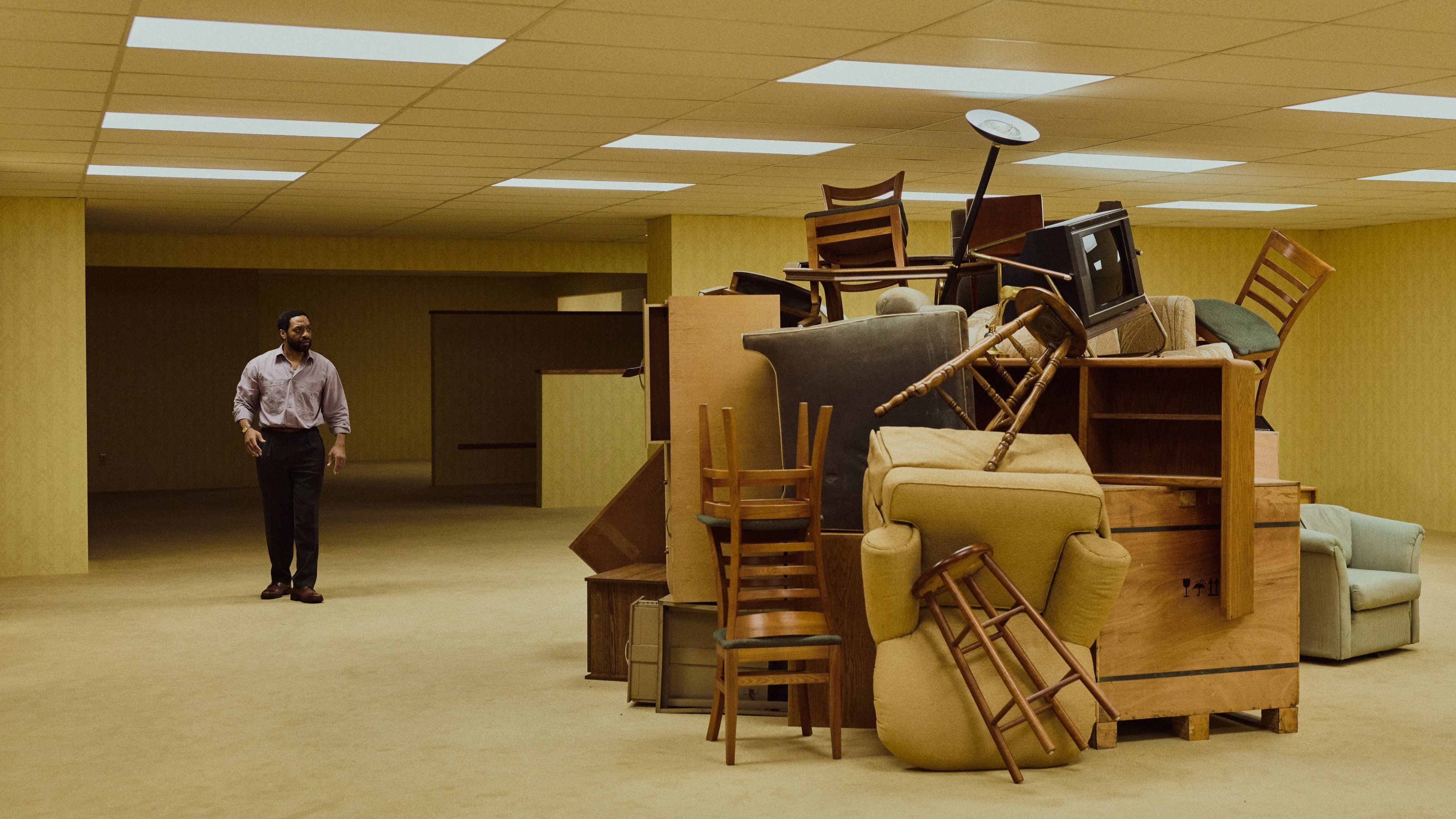
The Backrooms began as a simple, eerie photograph of a yellow, endlessly repeating office space, accompanied by a caption describing the sensation of "noclipping" out of reality into a hostile limbo. What started as a viral image has since grown into a vast narrative universe, complete with its own lore, levels, entities, and a dedicated fan base that creates its own found-footage videos, video games, and short films. This is not a pre-existing intellectual property with a built-in story arc; it is a collaborative, ever-expanding canvas that feels inherently modern and deeply unsettling. For a curator like Kuplowsky, whose mandate is to showcase films that push boundaries and provoke strong reactions, the Backrooms represents a perfect storm of internet-age creativity and primal horror.
The appeal is not difficult to understand. The Backrooms tap into a very specific, contemporary anxiety about the mundane spaces we occupy - the fluorescent-lit corridors of offices, the endless hallways of hotels, the sterile emptiness of parking garages. It is a horror that is not supernatural in the traditional sense, but rather a distortion of the everyday, a feeling of being trapped in a bureaucratic nightmare that has no exit. This resonates with a generation that has grown up with the anonymity of the web and the isolating architecture of modern life. Hollywood has taken note, with high-profile adaptations of the Backrooms already in development, but the core challenge remains: how to translate a collaborative, non-linear internet mythology into a cohesive, satisfying feature film without losing the very thing that makes it so compelling.
Kuplowsky’s perspective, honed through years of programming some of the most electrifying and transgressive cinema at TIFF, is that the industry's obsessive search for the next big thing often misses the point. The next phenomenon will not be something that is reverse-engineered in a boardroom, but rather something that emerges from the fringes, gaining a life of its own before Hollywood even notices. The success of films that have premiered in the Midnight Madness slot over the years - titles that have gone on to become cult classics and critical darlings - is a testament to this approach. The program has long served as a barometer for what will resonate with audiences who are tired of predictable scares and are hungry for something that feels genuinely new.
The frenzy for the next obsession has also led to a more cautious, almost defensive approach in the industry, where the fear of missing out can lead to panic-buying of any property with a modicum of online traction. But Kuplowsky’s suggests that the more fruitful path is to support filmmakers who have a singular vision, who understand the source material on a fundamental level, and who are not simply trying to capitalize on a trend. The Backrooms, in its purest form, is a testament to the power of collective storytelling, a horror that is felt rather than explained. The director who can capture that intangible dread of being lost in an infinite, soulless complex will likely have the next obsession on their hands. For now, the clues are all there, flickering in the glow of a thousand computer screens, waiting for someone brave enough to walk into the yellow rooms and not come back.
Source: The Hollywood Reporter
Advertisement
Advertisement