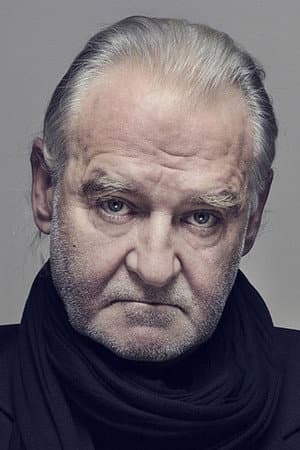
Béla Tarr's Legacy Celebrated at Sarajevo Film Festival
A cinematic tribute to Béla Tarr’s masterwork premieres at Sarajevo, exploring his enduring influence on modern film.
Director
Béla Tarr
Advertisement
A cinematic tribute to Béla Tarr’s masterwork premieres at Sarajevo, exploring his enduring influence on modern film.
Sarajevo, Bosnia and Herzegovina - The Sarajevo Film Festival is set to honor one of cinema’s most singular and influential voices, with a comprehensive retrospective dedicated to Hungarian director Béla Tarr. The tribute, announced Wednesday, will spotlight the filmmaker’s enduring impact on world cinema, anchored by his acclaimed final feature, The Turin Horse. While full programming details have not yet been revealed, the festival’s homage underscores Tarr’s status as a master of slow cinema and a profound influence on a generation of contemporary auteurs.
Tarr, who has not directed a feature since The Turin Horse in 2011, has long been celebrated for his stark, black-and-white imagery and meticulously crafted long takes. His work, which often explores themes of decay, isolation, and the crushing weight of daily existence, has earned him a devoted following among cinephiles and a reputation as a demanding, uncompromising artist. The news of the retrospective arrives as Tarr re-emerges in the public sphere through his educational initiatives, including his film school in Sarajevo, which has positioned him as a mentor to emerging filmmakers from the region and beyond. The festival’s decision to celebrate his legacy locally feels particularly apt, given his recent focus on fostering new talent in the Balkans.
The retrospective is expected to offer audiences a rare opportunity to experience Tarr’s filmography on the big screen, likely spanning his early, more narrative-driven works through the monumental, seven-hour epic Sátántangó and the bleak, mesmerizing Werckmeister Harmonies. For many festival-goers, the highlight will undoubtedly be The Turin Horse, a stark, elemental story about a farmer, his daughter, and their ailing horse, set against an unrelenting wind. The film, which Tarr has described as his final statement on cinema, is a work of profound pessimism but also staggering formal beauty, with its hypnotic, circling camera and grinding, minimalist score. It serves as a perfect distillation of his career-long obsession with the end of the world, both personal and cosmic.
The tribute also serves as a reminder of Tarr’s complex relationship with the festival circuit. He has been a fixture at major European festivals for decades, winning the Silver Bear at the Berlin International Film Festival for The Turin Horse and receiving the FIPRESCI Prize at Cannes for Sátántangó. Yet, his work has always felt marginal to the mainstream, a fact he has embraced with a kind of sour, philosophical grace. In a 2012 interview, Tarr famously remarked that he made films "for the people who are interested in the truth, which is not very many." That refusal to compromise, paired with an almost monastic dedication to his craft, has made him a figure of near-mythic status among film students and a touchstone for directors like Gus Van Sant and Tsai Ming-liang, both of whom have cited his influence on their own meditative styles.
For Sarajevo, a city that has itself become a symbol of endurance and artistic defiance since the war-torn 1990s, Tarr’s aesthetic of grim beauty resonates with particular force. The festival, which has grown from a wartime initiative into one of the most important cultural events in Southeast Europe, has long championed bold, politically engaged cinema. Tarr’s work, with its unflinching look at societal collapse and human suffering, aligns neatly with that mission. His presence in Sarajevo is not just that of a visiting legend but of a dedicated educator; he has been involved with the city’s film school, the CineLink and the "Film Factory" program, for years, helping to cultivate a new wave of regional storytelling that does not shy away from the region’s complex history.
Organizers have hinted at additional events surrounding the screening series, including potential talks with collaborators who have shaped Tarr’s singular visual language, such as cinematographer Fred Kelemen and composer Mihály Víg, whose droning, repetitive music is nearly as iconic as the director’s imagery. While those details remain under wraps, the focus will remain firmly on the films themselves. For those who have never experienced Tarr’s hypnotic, punishingly rigorous cinema, the retrospective offers a gateway into a worldview that is both devastating and strangely illuminating. For his longtime devotees, it is a chance to witness a master receive his due in a city that understands the weight of history and the necessity of looking at it directly.
The Sarajevo Film Festival is scheduled to run later this month, and the full lineup, including the exact dates and venue information for the Tarr retrospective, is expected to be announced in the coming days. For now, the announcement alone serves as a testament to a filmmaker who has spent his career resisting the ephemeral, proving that true art, even at its bleakest, has a way of persisting.
Source: Variety
Advertisement
Advertisement