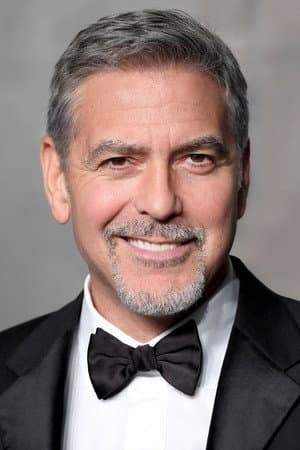
VENICE - George Clooney used his platform at the Venice Film Festival on Tuesday to deliver a pointed rebuke of authoritarian regimes, telling an audience of filmmakers and journalists that storytelling itself poses a fundamental threat to those who govern through fear. The actor and director’s remarks, which drew sustained applause, came during a press event on the Lido, where he framed cinema as an essential counterweight to political repression.
“Stories are always dangerous to people who peddle in fear,” Clooney said, speaking slowly to let the weight of the words settle. He did not name specific leaders or governments, but the implication was unmistakable given the festival’s international stage and the industry’s ongoing battles with censorship in several markets.
Clooney, who has long balanced mainstream stardom with politically engaged filmmaking, appeared to be speaking from personal conviction rather than promoting a specific project. No film was attached to his appearance, and festival organizers presented the event as a masterclass-style conversation rather than a premiere. That lack of a studio hook gave his comments an unusual, almost unfiltered quality - he was not selling anything, just making a case.
The 65-year-old Oscar winner traced the arc of his own career, noting that some of his most resonant work - whether about wartime journalism, political spin, or the moral compromises of power - had its roots in a simple belief: that audiences can handle complexity. “The moment you start telling people what to think, you’ve already lost the argument,” he said. “Authoritarians know that. That’s why they come for the arts first.”
His speech arrives at a moment when several European and Asian governments have tightened controls on film content, and when streaming platforms have increasingly faced pressure to pull or alter projects deemed politically sensitive. Clooney acknowledged that artists often face more subtle threats than outright bans - funding cuts, distribution barriers, and the chilling effect of self-censorship. “It’s not always a knock on the door at midnight,” he said. “Sometimes it’s just a quiet suggestion that you should be careful. And that’s when we have to be the most uncareful.”
The actor, who has directed films such as Good Night, and Good Luck and The Ides of March - both steeped in political themes - drew a direct line between the paranoia of the McCarthy era and contemporary movements to restrict speech. He referenced the power of journalism and art to expose uncomfortable truths, noting that fear-driven governance invariably seeks to control the narrative. “If you’re only telling stories that make the powerful comfortable,” he said, “you’re not telling stories at all. You’re doing PR.”
Clooney’s appearance was not without lighter moments. He joked about the absurdity of his own celebrity and the privilege of being able to speak out “without worrying about my next meal,” a luxury he acknowledged many artists around the world do not share. He urged the assembled industry professionals - directors, producers, and critics - to use their positions to amplify voices from regions where dissent is costlier. “We can’t just make movies about freedom,” he said. “We have to actually practice it. That means platforming people who risk everything just to get their work seen.”
The Venice Film Festival has long been a venue for political statements, but Clooney’s remarks stood out for their directness. Several attendees noted afterward that he appeared to be addressing not just external authoritarians but also the internal pressures of an industry increasingly risk-averse. In an era of franchise dominance and algorithm-driven content, Clooney’s call for dangerous storytelling felt like a challenge to his own peers as much as to politicians.
“We’ve gotten very good at making things that are safe,” he said near the close of the event. “Safe is fine for a Tuesday night. But it’s not going to change anything. And it’s not going to scare anyone who needs to be scared.”
He concluded with a direct appeal: “Tell the story that’s hard to tell. Make the film no one wants to finance. Write the line that gets you in trouble. Because that’s the one that matters.” The room rose in applause, a rare moment of unanimity at a festival often divided by taste and commerce.
Clooney, who won two Academy Awards earlier in his career - one for acting in Syriana and one for producing Argo - has increasingly focused on behind-the-camera work in recent years. While he did not announce any new projects during the Venice appearance, his words suggested a man still intent on using his considerable influence for more than box-office returns.
The festival continues through mid-September, with numerous premieres still scheduled. But for those in attendance on Tuesday, Clooney’s speech may well prove the most memorable moment of the entire program - a reminder that, in an industry often consumed by spectacle, the simple act of telling an unwelcome truth remains the most radical gesture of all.
Source: The Hollywood Reporter