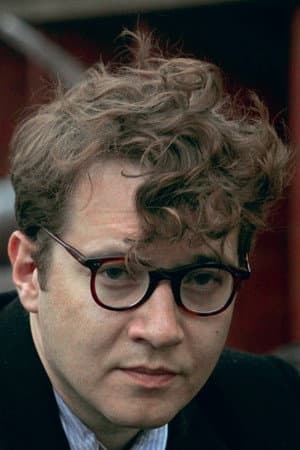
VENICE - Ilya Khrzhanovsky, the director behind the sprawling “DAU” project, has broken his silence on the controversy that has trailed him to the Venice Film Festival, offering a direct message to Ukraine amid the ongoing war.
Speaking to reporters in the Italian city, where he is presenting work tied to his decade-spanning art-and-cinema experiment, Khrzhanovsky addressed the backlash head-on. He expressed a wish that the Ukrainian government would “save the country and win this war,” a statement that arrives after weeks of criticism from Ukrainian cultural figures and international observers who have questioned his position on Russia’s invasion.
The director, who has long been a polarizing figure in European cinema, did not elaborate on the specifics of the criticism but acknowledged the weight of the moment. His remarks came during a press availability that at times grew tense, with several journalists pressing him on his past statements and associations.
A Controversial Figure at a Politically Charged Festival
Khrzhanovsky’s “DAU” project, which began as a film but expanded into an immersive, years-long simulation of a Soviet research institute, has always been a lightning rod. Shot over several years with hundreds of participants, the project blurred the line between documentary and fiction, and its release was repeatedly delayed. Now, as the festival circuit grapples with the cultural fallout of the war in Ukraine, Khrzhanovsky has found himself in a difficult spotlight.
Critics have accused him of maintaining ambiguous ties to Russian state institutions and of being slow to condemn the invasion. Ukrainian journalists and artists, in particular, have been vocal, arguing that figures associated with the Russian cultural establishment should not be platformed at major Western festivals while their country is under attack.
Khrzhanovsky, who was born in Moscow and has worked extensively in Russia, did not directly address those accusations on Tuesday. Instead, he framed his comments around the war itself, offering what appeared to be an appeal for a Ukrainian victory.
The remark appeared to catch some attendees off guard, given that Khrzhanovsky has previously avoided direct political statements about the conflict. In prior interviews, he has often deflected questions about his nationality or the political implications of his work, preferring to focus on the artistic and philosophical ambitions of “DAU.”
The Festival’s Balancing Act
Venice has emerged this year as a key stage for war-related statements, with several filmmakers and actors using their appearances to voice support for Ukraine. The festival has also faced its own scrutiny over which Russian artists are welcome and how their work is framed.
Khrzhanovsky’s presence has added another layer to that conversation. Some festival-goers have defended his participation, arguing that art should be judged separately from politics. Others contend that his history - including reports of difficult working conditions during the “DAU” shoot - makes him an unsuitable figure for celebration, regardless of his current statements.
His comment on Ukraine, however, seemed designed to draw a clear line: he wants the Ukrainian government to prevail. Whether that will satisfy his critics remains an open question.
In the room, the reaction was mixed. A portion of the audience applauded. Others remained silent, and a handful of journalists later pressed him on whether his words were sufficient given the scale of the destruction. Khrzhanovsky did not respond to those follow-ups in detail, instead reiterating his hope for a swift end to the conflict.
A Career Defined by Extremes
Khrzhanovsky has never been a mainstream figure. The “DAU” project consumed more than a decade of his life, involving thousands of participants and resulting in dozens of hours of footage. It has been screened in pieces, released online, and exhibited as an installation, but it has never had a conventional theatrical release.
That unconventional path has made him a cult figure among cinephiles and a source of fascination for those interested in the limits of performance and reality in art. It has also made him a target for criticism, with former participants alleging psychological manipulation and unsafe conditions during the making of the project. Khrzhanovsky has denied those allegations.
At Venice, he appeared determined to redirect the conversation toward the war. Whether the festival audience will accept that pivot is unclear. What is certain is that Khrzhanovsky will continue to be asked about Ukraine - and about his own relationship to Russia - for as long as the conflict continues.
For now, his message is on the record: he wants Ukraine to win. The rest, he suggests, is up to history.
Source: Variety