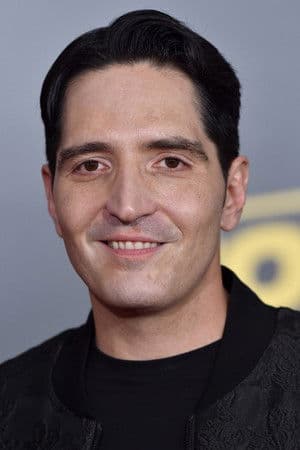
David Dastmalchian is expanding his footprint in the horror space beyond the screen. The actor and producer's production company, Good Fiend Films, has launched a publishing arm dedicated to genre literature, marking the company's first major move into the world of books.
The new division will focus on horror, science fiction, and dark fantasy, according to the company. It arrives at a moment when Dastmalchian has become one of the more recognizable faces in contemporary genre entertainment, having appeared in films ranging from "The Dark Knight" to "Dune" and "Oppenheimer," while also carving out a reputation as a champion of horror cinema through his work in front of and behind the camera.
Dastmalchian, who co-founded Good Fiend Films, has long spoken about his affection for the horror community and the genre's capacity to explore grief, obsession, and otherness. Extending that mission into publishing is a logical step for a company that has positioned itself as a home for dark storytelling across multiple mediums.
The imprint is expected to develop original novels and novellas, with an emphasis on voices that might otherwise struggle to find a home in traditional genre publishing. Details about specific titles and release dates were not immediately available.
The move places Good Fiend Films in a growing cohort of entertainment companies that have decided owning the source material is preferable to competing for it. With film and television adaptations of genre books continuing to drive the marketplace, a production company that also controls a publishing pipeline can develop intellectual property in-house, then shepherd those stories to the screen under one roof.
For Dastmalchian specifically, the launch reinforces an identity that has become central to his public persona. He is not simply an actor who appears in horror films; he has become a curator and advocate for the form, frequently using his platform to spotlight independent filmmakers, genre festivals, and the craftspeople who make scary movies work.
The timing is notable. Horror publishing has enjoyed a sustained boom in recent years, with readers gravitating toward both established authors and a wave of debuts that blur the line between literary fiction and genre. Independent presses have thrived by targeting dedicated readers who buy directly and spread titles through word of mouth, a model that suits a filmmaker-led imprint with an existing audience.
Whether Good Fiend's publishing venture will mirror that independent ethos or aim for broader commercial distribution remains an open question. The company has not indicated how many books it plans to release annually or whether it will operate through a traditional publishing partner or release titles independently.
What is clear is that Dastmalchian's ambitions continue to widen. In recent years he has balanced studio tentpoles with lower-budget passion projects, and he has been candid about the personal stakes of working in a genre that helped him navigate his own struggles. A publishing division allows him to engage with that material in a form that requires no cameras, no crew, and no runtime.
For writers, the emergence of a new genre imprint backed by a working filmmaker could represent a meaningful opportunity, particularly for those whose work sits at the intersection of horror and the more experimental corners of speculative fiction. Production-company imprints often come with the implicit promise of adaptation consideration, though such arrangements vary widely and rarely guarantee a screen commitment.
Good Fiend Films has not yet announced an editorial team or submission guidelines. Authors and agents seeking information will likely need to wait for further details as the division takes shape.
The broader significance may be what it signals about the current state of genre entertainment, where the boundaries between publishing, film, television, and even podcasts have grown increasingly porous. Dastmalchian is far from the first figure to cross those lines, but his credibility within the horror community gives the venture a certain cultural weight that a purely corporate imprint might lack.
For now, the announcement stands as another indication that the actor's most enduring project may not be any single performance, but the infrastructure he is building around the stories he loves.
Source: The Hollywood Reporter