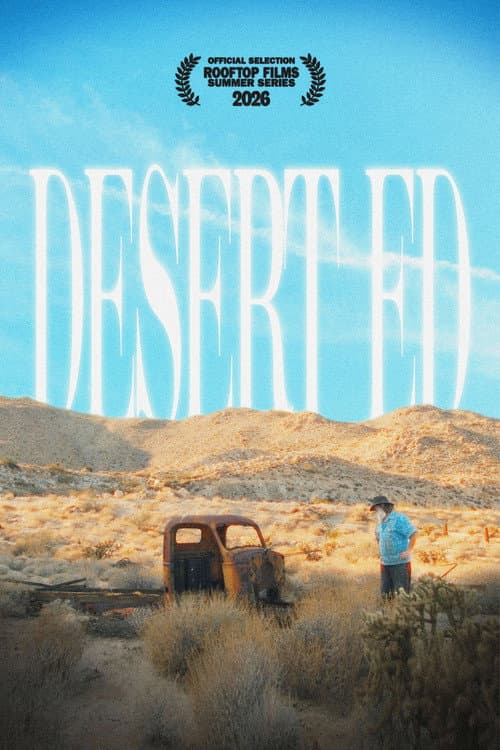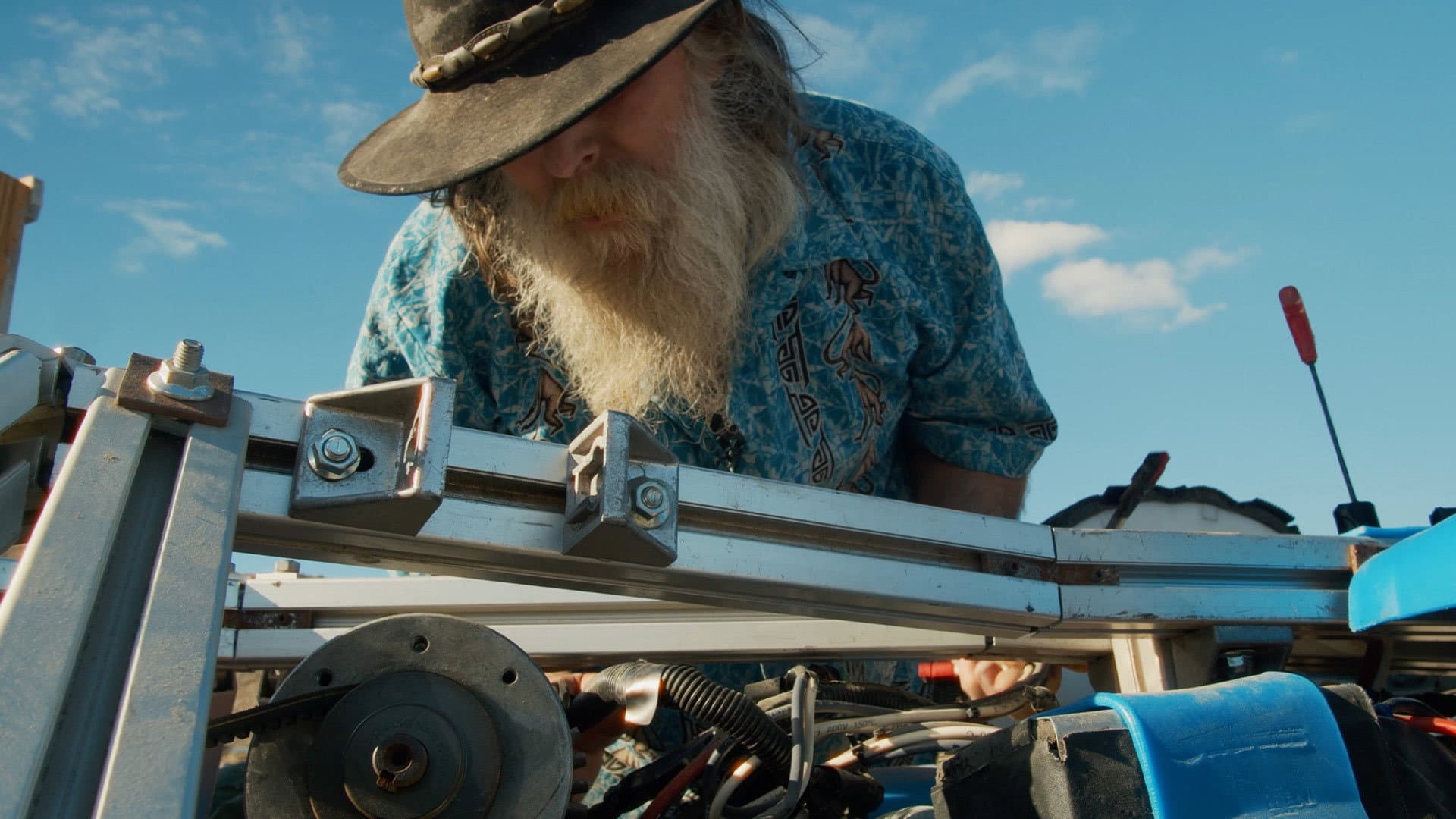
The desert has always been a place for reinvention, for stripping away the noise until only the essential remains. For Ed Robinson, the miles of sand and silence represent something more specific: a necessary distance from the roar of the arena, the smell of burnt wiring, and the ghost of a partnership that defined his professional life. Today, August 17, 2026, USA Film News takes a look at “Desert Ed,” a compact but emotionally resonant documentary that trades the spectacle of combat robotics for the quiet, difficult work of introspection.
Release Date & Where to Watch
“Desert Ed” arrives today, August 17, 2026, but don’t expect a traditional theatrical rollout. This is a festival-circuit documentary - the kind of short that finds its audience through curated screenings and word-of-mouth buzz before landing on a streaming platform. As of this writing, the film is scheduled for a number of regional film festivals throughout the fall, with a VOD release expected by early winter. Given its 11-minute runtime, it's ideally suited for the streaming era, where viewers can slot it between longer features without commitment. Keep an eye on the film’s official social channels for announcements regarding a digital premiere, and check your local independent cinema’s shorts program - this one has the kind of intimate scale that plays beautifully in a darkened room with strangers.
Cast & Crew
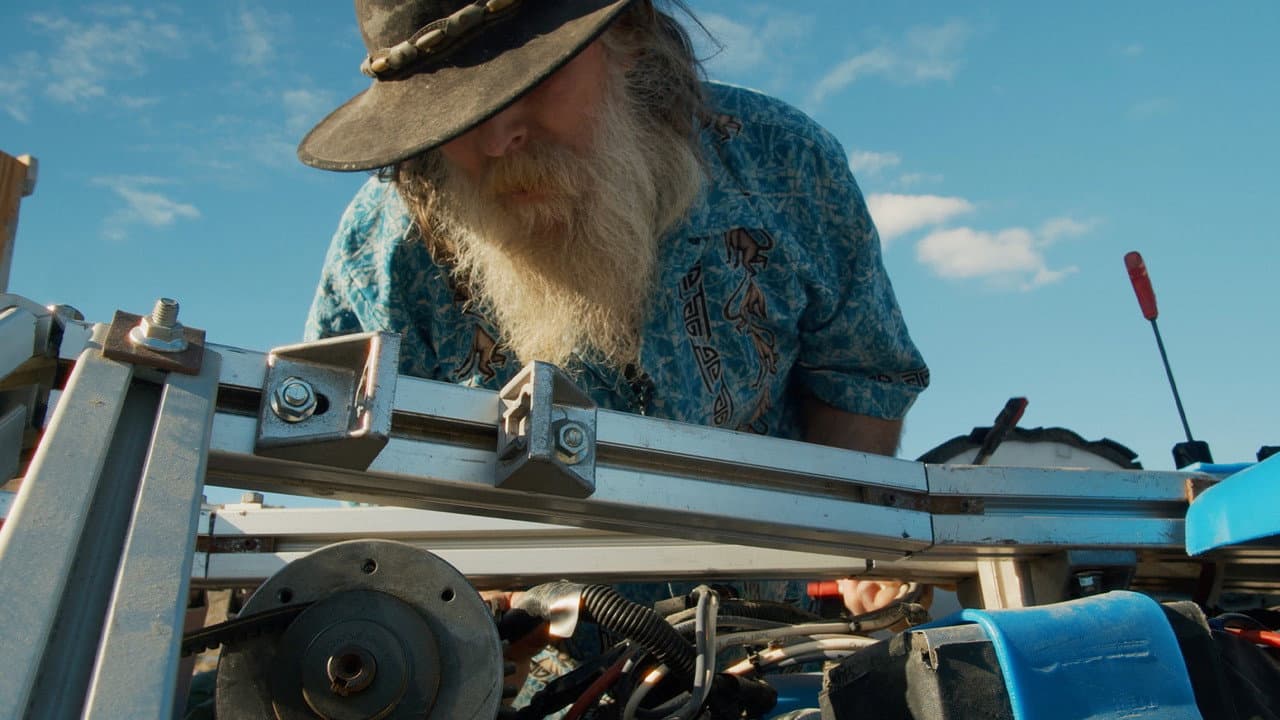
The film is the work of director Christian Hurley, a name that may be familiar to admirers of verité-style portraiture. Hurley has a knack for letting subjects reveal themselves through their environment, and in “Desert Ed,” he finds a uniquely visual muse. The sole credited cast member is Ed Robinson, playing himself - a crucial distinction here. This is not a dramatization with actors approximating a life; it’s a record of a man in his own space, speaking his own truths. The decision to keep the production this lean - one subject, one director, a small crew - gives the film an unfiltered quality, a sense that we’re eavesdropping on a private reckoning rather than watching a manufactured narrative. Robinson is not a professional performer, and that’s precisely the point. His hesitations, his long pauses, the way he handles a wrench or stares at the horizon - these are the raw materials of the piece. Hurley wisely steps back, letting the silence do the editing.
Story & What to Expect
The central event that propels Robinson to the desert is a death. His longtime teammate on BattleBots, the competitive robot-fighting television series that became a cult phenomenon, has passed away. The film opens with a stark acknowledgment of this loss, then cuts to the arid landscape where Robinson has chosen to live. The overview states he "adapts a new hermetic lifestyle," and the documentary treats that transition with respect and a degree of ambiguity. We don’t get a neat narrative arc of grief resolved. Instead, we watch a man sorting through the physical and emotional debris of a shared career. There are boxes of trophies, coils of wire, and spare motors - artifacts of a life lived in engineering and competition.
What’s striking is the contrast between the cluttered, high-voltage energy of the BattleBots arena and the stark minimalism of his new home. Hurley captures this visually, cutting between archival-style footage (or Robinson’s own descriptions) of roaring, spinning blades and the near-total stillness of a desert afternoon. The 11-minute runtime is tight, almost poetic. It doesn’t overstay its welcome, and it doesn’t force closure. Expect long takes of Robinson tinkering, his hands moving with a lifetime of muscle memory, while his voiceover reflects on what it meant to build something destructive with someone you trusted implicitly. The film grapples with a specific question: what happens to an engineer’s identity when the partnership dissolves - not through argument, but through silence? Robinson’s response is to build a new life, but the film wisely suggests that the old one is never fully dismantled. Parts of it remain, rusting in the sun, waiting to be repurposed.
Why It's Worth Watching
In an era where documentaries often balloon to multi-episode true-crime epics, “Desert Ed” is a refreshingly modest counterprogramming. Its brevity is a strength, forcing a concentration of emotion that a longer film might dilute. For fans of BattleBots, this offers a rare, unvarnished look at the human cost and companionship behind the high-tech spectacle. The show was always about the machines, but Robinson’s story foregrounds the fragile, human circuitry that made those machines possible. He’s not a celebrity in the traditional sense, and that’s what makes him so compelling. He’s an artisan, a builder, someone whose grief manifests in the meticulous organization of his workshop.
But you don’t need to know a weaponized Roomba from a spinning bar to be moved by this film. At its core, “Desert Ed” is about the universal experience of losing a professional partner - the person who understood your shorthand, shared your victories, and tolerated your obsessions. That bond, often underappreciated in our culture, is given tender, unadorned scrutiny here. The film asks what remains when the collaborative spark is extinguished, and whether solitude can be a viable substitute for synergy. Robinson’s answer is not triumphant; it’s tentative, honest, and grounded. He’s not the same man who once stood in the arena, but he’s learning to live with the echoes. “Desert Ed” is a quiet, 11-minute meditation that lingers long after the credits roll, a small but potent reminder that some of the most dramatic battles are fought not with blades, but with memory. For those willing to sit with its stillness, it’s one of the more affecting shorts of the year.