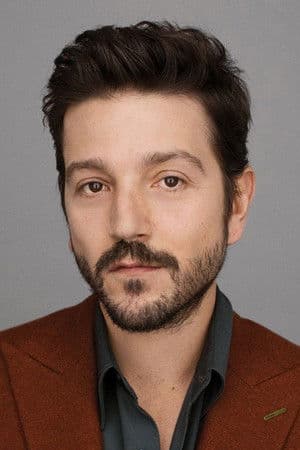
The 2026 Morelia International Film Festival is shaping up to be a major battleground for Mexican cinema, with organizers confirming that three of the country’s most prominent filmmakers - Diego Luna, Nicolás Pereda, and Rodrigo Plá - will all be in official competition this October. The announcement, made public this week, positions Morelia as the definitive showcase for the current wave of ambitious, author-driven work coming out of Mexico.
Luna, best known globally for his role as Cassian Andor in Rogue One: A Star Wars Story and its spin-off series, has long balanced his acting career with a robust producing and directing portfolio. His inclusion in the competitive slate marks a homecoming of sorts, as the festival has historically been a launchpad for his more personal projects. While specific plot details for his latest film remain under wraps, the festival’s programming committee emphasized in a statement that the selection represents "a bold and intimate turn" in his directorial work, one that moves away from the scale of his Hollywood commitments to focus on the subtleties of human connection. Luna’s return to the festival circuit also carries symbolic weight, as Morelia was where he premiered his celebrated 2010 directorial debut Abel, a film that established him as a serious craftsman behind the camera.
Joining Luna in the main competition is Nicolás Pereda, the Mexico City-born auteur whose minimalist, formally daring films have made him a favorite among critics and festival programmers worldwide. Pereda’s cinema rarely follows conventional narrative arcs; instead, his work tends to explore the quiet rhythms of daily life, often blurring the lines between documentary and fiction. His latest project, which has been in development for over two years, is expected to continue that exploration, focusing on a family’s struggle with an inherited rural property. Pereda’s presence in Morelia is particularly significant given his recent string of awards at European festivals, cementing his reputation as one of the most intellectually rigorous voices in contemporary Latin American cinema. The festival’s decision to put him in direct competition with more commercially oriented figures like Luna suggests a deliberate effort to highlight the full spectrum of Mexican filmmaking, from the accessible to the experimental.
Rodrigo Plá, a Uruguayan-Mexican director known for his socially charged dramas, completes the trio of high-profile competitors. Plá has long used cinema as a tool for political critique, with films like La zona and The Delay examining class divisions and systemic injustice with a forceful, unflinching eye. His upcoming feature, set in the gritty periphery of a large Mexican city, reportedly follows a community organizer who uncovers a web of corruption while fighting for access to clean water. Plá’s work is often characterized by its raw energy and moral urgency, a style that should provide a stark counterpoint to the more introspective approaches of Pereda and the more humanistic touch of Luna.
The trio’s convergence in Morelia’s competition lineup is a deliberate statement from the festival’s artistic director, who told press that the slate reflects "the diverse narratives that define modern Mexico - stories of identity, struggle, and resilience." She added that the selection committee was particularly struck by the "fearlessness" of this year’s submissions, noting that "all three directors have taken significant creative risks, and we believe their new films will spark vital conversations." The festival, which has grown in international stature over the past two decades, has increasingly become a destination for industry executives scouting new talent, and this year’s high-wattage competition is expected to draw record attendance and distribution deals.
Beyond the obvious star power of Luna, the collective announcement is a reminder of a broader renaissance in Mexican cinema, one that has flourished despite systemic challenges that continue to face the national film industry, including funding cuts and distribution bottlenecks. Festivals like Morelia remain crucial lifelines for independent productions, offering a rare platform for films that might otherwise be relegated to festival-only screenings. The competition also highlights the importance of creative collaboration between directors from different generations and backgrounds, a theme that resonates throughout the festival’s wider programming.
As August turns to autumn, anticipation will only build for the festival’s official schedule, set to be released in full next month. The competition jury, which will be announced in the coming weeks, will face a difficult task in judging what is already shaping up to be one of the most compelling lineups in Morelia’s history. For Luna, Pereda, and Plá, the stakes are high - a prize in Morelia carries significant prestige across the Spanish-speaking film world, often serving as a springboard for international awards consideration. For audiences, the prospect of seeing three such distinct voices in one competitive frame is a rare cinematic treat. The festival is scheduled to run from October 17 to 26 in the historic city of Morelia, turning the picturesque capital of Michoacán into the undisputed heart of Latin American cinema for ten days.
Source: Variety