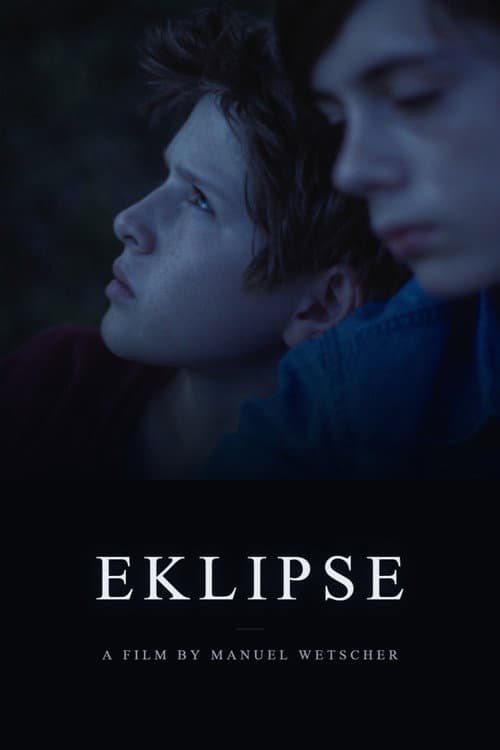
Director Manuel Wetscher’s upcoming German-language drama Eklipse is set for its release on September 14, 2026, bringing a deeply personal story about the late-1990s AIDS crisis and adolescent identity to the big screen. The film, which runs 91 minutes, centers on a twelve-year-old boy navigating a summer friendship under the shadow of a looming solar eclipse - all while grappling with the stigma attached to his father’s illness.
Wetscher, working within the Hollywood industry sphere, has crafted a narrative that draws on his own biography to examine how fear and silence can fracture even the strongest bonds between children. The story follows Tomy, played by Moritz Hohlrieder, as he spends the summer of 1999 on a remote alpine pasture with his best friend Chris, portrayed by Finley Brown. Their idyllic time is disrupted when Chris becomes aware that Tomy’s father is hospitalized with AIDS, triggering a collapse of their friendship and thrusting Tomy into a painful conflict between maintaining the secrecy his family requires and facing the social consequences of the truth.
The film’s official synopsis highlights this central tension: as Chris learns about Tomy’s father’s condition, their relationship deteriorates, and Tomy finds himself isolated, caught between exclusion from his peer and the hidden reality at home. The narrative uses the historic solar eclipse of 1999 as a symbolic backdrop - a rare moment of darkness that mirrors the emotional eclipse occurring in Tomy’s own life. That celestial event, which briefly turned day into night across parts of Europe, serves as a potent metaphor for the shadows cast by disease, shame, and social rejection.
The cast features a mix of young talent and seasoned performers. Hohlrieder and Brown anchor the film as the two boys whose friendship is tested, while Hannes Perkmann, Lenz Moretti, Lisa Schützenberger, and Barbara Romaner fill supporting roles. Though the project is being produced under the Hollywood banner, it remains authentically grounded in German-language storytelling, with its alpine setting providing a stark, beautiful contrast to the emotional turmoil unfolding among the characters.
For Wetscher, this project is clearly more than a standard coming-of-age drama. The director has previously spoken about the importance of mining autobiography for cinematic truth, and Eklipse reportedly grows directly out of recollections from his own childhood. The choice to set the story in a specific historical moment - the summer of 1999 - allows the film to explore how AIDS was understood at a time when public knowledge was still mixed with deep-seated fear and prejudice. At that point in history, effective treatments were emerging, but the social stigma surrounding the disease remained powerful, particularly in rural or close-knit communities where privacy was scarce and gossip was swift.
The film’s focus on the friendship between two boys adds another layer of emotional complexity. Rather than presenting a didactic lesson about disease, the story zeroes in on the cruel dynamics that arise when children inherit the prejudices of the adult world. Chris’s reaction to Tomy’s family secret is not presented as simple villainy but as a symptom of the broader social panic of the era. Meanwhile, Tomy is left to reconcile his love for his father with the shame that others project onto him.
The production’s modest runtime suggests a tightly focused character study rather than a sprawling family saga. At 91 minutes, Eklipse packs its themes into a compact structure, allowing the tension between the two boys to build without unnecessary subplots. The alpine pasture setting - remote, isolating, yet strikingly open - serves as a microcosm of the larger world, where the characters cannot escape the rumors and judgments that follow them even into the mountains.
The film arrives at a moment when revisiting the cultural history of AIDS remains relevant. While the medical landscape has transformed dramatically since 1999, the film’s exploration of what happens when families are forced to hide illness out of fear can still resonate with audiences who have witnessed similar dynamics around other conditions. By filtering these issues through the eyes of a twelve-year-old protagonist, Wetscher ensures that the emotional core remains accessible rather than weighed down by historical context.
The supporting cast members, Perkmann, Moretti, Schützenberger, and Romaner, are expected to bring depth to the adult roles surrounding the boys - parents, relatives, or community figures who either enable or challenge the climate of secrecy. Details about their specific characters have not been fully outlined, but the ensemble suggests a film that cares about the ecosystem of a small community.
Eklipse enters the 2026 film calendar with limited advance buzz, given its lack of festival circuit pedigree so far. Its TMDb rating currently stands at 0 out of 10, unsurprising for a release that remains weeks away from any public screening. The film’s success will likely hinge on word-of-mouth from those drawn to its difficult subject matter and its representation of a moment in history that many might prefer to forget.
The title itself, spelled Eklipse rather than the more common “eclipse,” points to a deliberate artfulness. This subtle linguistic choice may hint at the way memory distorts experience, or how the characters’ own understanding of their situation is incomplete. What is clear is that Wetscher aims to blend the specific and the universal, using the personal details of his own life as the raw material for a story about fear of the other - and the price that children pay when adults cannot find the courage to speak openly.
Source: The Hollywood Reporter