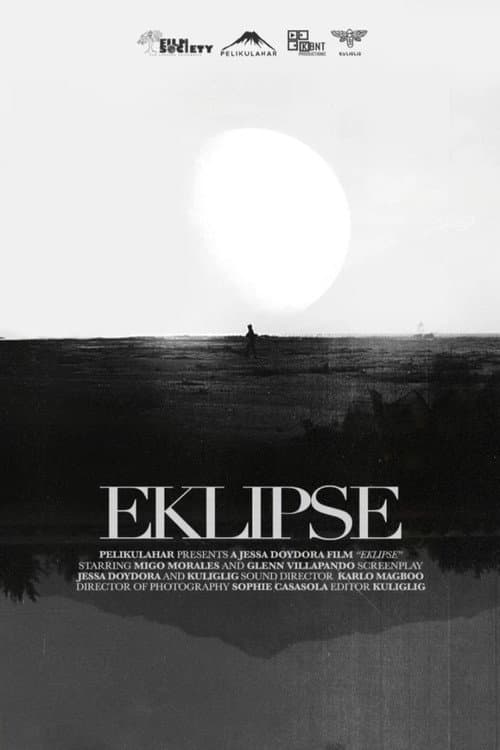
The short film Eklipse tackles the painful fallout of a family secret through the eyes of a teenager, and an exclusive clip has surfaced ahead of its wider release. Directed by Jessa Doydora, the project runs a compact eight minutes and centers on a strained father-son dynamic.
In the newly shared footage, the central character, played by Migo Morales, is seen contending with the icy silence of his household after his father - portrayed by Glenn Villaplando - is diagnosed with what is referred to in the story as "the gay disease." The phrase is a pointed, stigmatizing label that drives the narrative’s emotional core. The clip emphasizes how the teen’s attempts to connect are met with rejection, not just from peers but from a parent who appears to be grappling with his own shame.
A Compact Story With Heavy Themes
Though Eklipse is brief in runtime, its scope is clearly ambitious. The film’s official logline describes it as a tale about an industrious farmer and a deceptive monkey, which suggests a layer of allegory or folkloric storytelling beneath the contemporary drama. That synopsis, while initially puzzling when placed alongside the exclusion clip’s raw domestic tension, hints that the movie may use metaphor to explore how truths get distorted - and how trust is broken in subtle, damaging ways.
Director Jessa Doydora, who has not yet attached a formal release date or trajectory for wider distribution, appears to be positioning the work as a character study. The two-person core cast keeps the focus tight, forcing the narrative to rely on performance and atmosphere rather than spectacle. Morales and Villaplando share nearly all of the screen time, and the clip suggests an uneasy chemistry - one marked by avoidance more than confrontation.
The Stigma at the Center
The term "the gay disease" is not used casually here. Within the context of the clip, it functions as a weaponized phrase that the father may have internalized or that others have cast upon him. The teen’s struggle is not just with his father’s illness, but with the social and emotional quarantine that follows the diagnosis. The film appears to interrogate how homophobia can warp family bonds, especially in settings where masculinity is narrowly defined and illness is unfairly moralized.
There’s a quiet desperation in Morales’s performance as the son. He looks for openings - a glance, a word, any acknowledgment - but the father remains walled off. Whether that wall cracks by the film’s end is unknown, but the clip is deliberately withholding, letting the silence speak volumes.
What We Know and Don’t Know
Given the early stage of the project’s publicity, certain details remain fluid. The genre is listed as unknown, and the film currently holds no formal rating on TMDb, sitting at a placeholder 0/10. There is no confirmed theatrical or streaming release date as of today, August 27, 2026. What is clear is that Eklipse is being shaped as an intimate, low-budget piece that prioritizes emotional tension over conventional plot mechanics.
The logline’s mention of a "deceptive monkey" is worth noting. It could be a literal element or a symbolic one - perhaps a representation of the lies families tell themselves, or an external figure who complicates the father’s situation. Given the clip’s focus on silence and rejection, the monkey may be the agent that exposes the condition, or it may be a red herring that the short film uses to pivot its tone.
A Filmmaker Watching for a Breakthrough
Jessa Doydora is not a household name, but Eklipse could serve as a calling card. The project’s willingness to sit with discomfort - to show a parent’s rejection of a child during a vulnerable moment - suggests a director unafraid of messy, real-world conflicts. The eight-minute format is often used for festival circuits, and it would not be surprising to see Eklipse appear in queer cinema showcases or short-film competitions in the coming months.
For now, the exclusive clip gives audiences a taste of what the full film may offer: a quiet, agonizing study of a family falling apart not from a single explosive event, but from the slow rot of unspoken judgment. The father’s diagnosis may be the catalyst, but the real disease on display is the refusal to accept a loved one as they are. Whether the son finds a way through that rejection - or whether the father ever opens his eyes - remains the question Eklipse is built to answer.
Source: The Hollywood Reporter