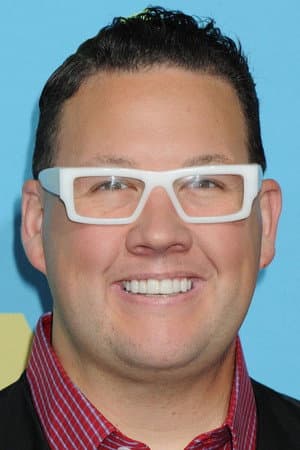
Elliot Graham, the film editor whose precise, emotionally attuned cutting on "Milk" earned him an Academy Award nomination, has died at the age of 50. The news was confirmed by a representative for the editor, though no cause of death was immediately released.
Graham was best known for his collaboration with director Gus Van Sant on the 2008 biographical drama about Harvey Milk, the San Francisco supervisor and gay-rights pioneer. The film starred Sean Penn in an Oscar-winning performance and was nominated for eight Academy Awards, including a Best Film Editing nod for Graham. It was the only Oscar nomination of his career, but it capped a body of work that spanned independent cinema, studio dramas, and documentary storytelling.
A Career Built on Intimate, Character-Driven Cuts
Graham came up through the independent film world of the 1990s, learning his craft on modestly budgeted features where editors often wore multiple hats. His early credits included work on small dramas and documentaries, and he developed a reputation for finding the emotional spine of a scene - often by removing dialogue rather than adding it. Those who worked alongside him described an editor who preferred quiet observation to flashy technique.
That sensibility made him a natural fit for Van Sant, whose films often linger on faces and silences. Before "Milk," Graham had edited second-unit and additional material on Van Sant projects, and the two built a working rapport based on trust rather than ego. When Van Sant began assembling the Harvey Milk biopic from a screenplay by Dustin Lance Black, Graham was brought on to shape the film's sprawling timeline, which jumps between Milk's early years in New York, his move to San Francisco, and his final, fatal term on the Board of Supervisors.
The editing challenge was formidable. "Milk" blended archival footage with reenactments, and it needed to honor the historical record while still functioning as a character study. Graham threaded the needle by keeping the focus on Penn's performance, allowing long takes to breathe and resisting the temptation to over-cut moments of political speech. The result was a film that felt both documentary-like and deeply personal - a balance critics credited largely to the editing.
A Quiet Influence on a Generation of Editors
Though Graham rarely gave interviews, his work was studied in editing circles. He was known for his meticulous handling of montage sequences, particularly the film's final act, which interweaves Milk's assassination with candlelight vigils across the city. Colleagues said he spent weeks refining the rhythm of that sequence, testing different music cues and cutting back and forth until the emotional payoff felt earned rather than manipulated.
After "Milk," Graham continued to work steadily, alternating between narrative features and documentary projects. He edited films for emerging directors and took on consulting roles for younger editors, often without public credit. He was a member of the Academy of Motion Picture Arts and Sciences and the American Cinema Editors, though he avoided the awards-circuit spotlight that his Oscar nomination might have invited.
His collaborators remembered him this week as a generous presence in the cutting room - someone who could sit with a scene for hours, resisting the urge to "fix" it with gratuitous cuts, and who believed that an editor's job was as much about protecting the director's intent as it was about technical skill. One director described him as "the least noisy person in a noisy business," a compliment Graham reportedly treasured more than any trophy.
A Legacy of Restraint
In an era when rapid-fire editing became a default style in mainstream filmmaking, Graham's restraint stood out. He favored cuts that served story and performance, and he trusted audiences to sit with discomfort rather than slicing it away. That philosophy gave "Milk" a textured, human quality that has aged well - the film is frequently cited as one of the best political biopics of its decade, and its editing is often singled out as a key reason.
Graham is survived by family and a wide network of friends and colleagues in the film community. No public memorial plans have been announced. In lieu of specifics, those who knew him have shared memories of a man who preferred the quiet of the edit bay to the red carpet - and whose best work will continue to speak for itself.
For USA Film News, this is a reminder that some of cinema's most essential artists work behind the scenes, shaping what audiences feel without ever stepping into the frame. Elliot Graham was one of them.
Source: The Hollywood Reporter