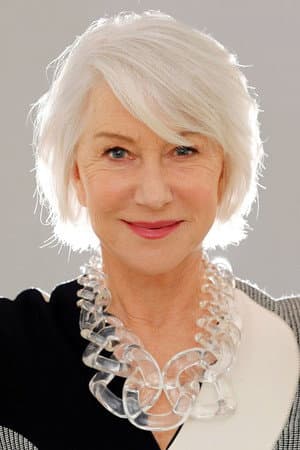
Helen Mirren has opened up about the toughest assignment of her career playing a real person, and the honor goes to a crime novelist whose personal conduct she describes in less than glowing terms. The Oscar-winning British actress said Patricia Highsmith, the author behind the Tom Ripley novels, ranks as the most difficult real-life figure she has ever portrayed, calling the writer "very abrasive."
Mirren's assessment lands with some weight given how often she has stepped into the shoes of actual historical figures. Her filmography includes turns as Queen Elizabeth II, as the Russian empress Catherine the Great, and as the Israeli prime minister Golda Meir, among others. Each of those roles required careful study of public records, known mannerisms and the historical record. Highsmith, by contrast, presented a different kind of challenge, one rooted less in research than in temperament.
The actress's remark echoes a reputation Highsmith carried through much of her life. Born in Fort Worth, Texas, in 1921 and raised largely in New York, Highsmith built a body of work that reshaped the psychological thriller, most famously with "The Talented Mr. Ripley" and its sequels tracing the amoral exploits of a charming con artist and killer. Her debut, "Strangers on a Train," became an early Alfred Hitchcock film. Critics and readers prized her cool, unsettling prose and her refusal to supply easy moral comfort.
Away from the page, the author was widely described as difficult company. She drank heavily, harbored sharp prejudices, and kept a famously complicated inner life that later diaries and biographies exposed in uncomfortable detail. Mirren's use of the phrase "very abrasive" fits neatly within that established portrait, and it suggests that capturing Highsmith on screen meant grappling with qualities that are not especially sympathetic.
For an actor, that is both the trap and the opportunity. Playing a revered artist whose private behavior invites disapproval forces a performer to locate the humanity underneath, or to decide deliberately not to. Mirren's career has been defined by a willingness to find contradictions in formidable women, whether they wore crowns or wielded a typewriter. Her comment implies that Highsmith's contradictions were extreme enough to stand apart even from that crowded field.
The actress has never been shy about ranking her own experiences. Over decades of interviews she has reflected on the physical and emotional toll of certain parts, and on the peculiar strain of embodying someone whose surviving record is rich in flaws. Real people, unlike invented characters, come with a paper trail. Every gesture an actor chooses can be measured against what the subject actually did, and every omission can be noticed.
There is also the matter of legacy. Highsmith died in 1995, but her influence has only grown. The Ripley stories have been adapted repeatedly for film and television, and each new version draws fresh attention to the mind that produced them. Audiences who admire the work often arrive curious about the woman behind it, and portrayals of her necessarily wrestle with the gap between artistic genius and personal cruelty. Mirren's blunt description suggests she did not attempt to smooth that gap over.
What remains unclear is the broader context of the remark, including when and where the actress made it and what specific production prompted it. No verified film project has been tied to the headline, and Mirren has not offered further public detail in the material available. That leaves her characterization standing largely on its own, a brief but pointed judgment from one of the most respected performers of her generation about one of the most complicated writers of the last century.
For now, the takeaway is simple. In a career spent resurrecting the famous and the infamous alike, Helen Mirren says Patricia Highsmith was the hardest of them all, and the reason appears to have had little to do with the writing and everything to do with the woman who did it.
Source: The Hollywood Reporter