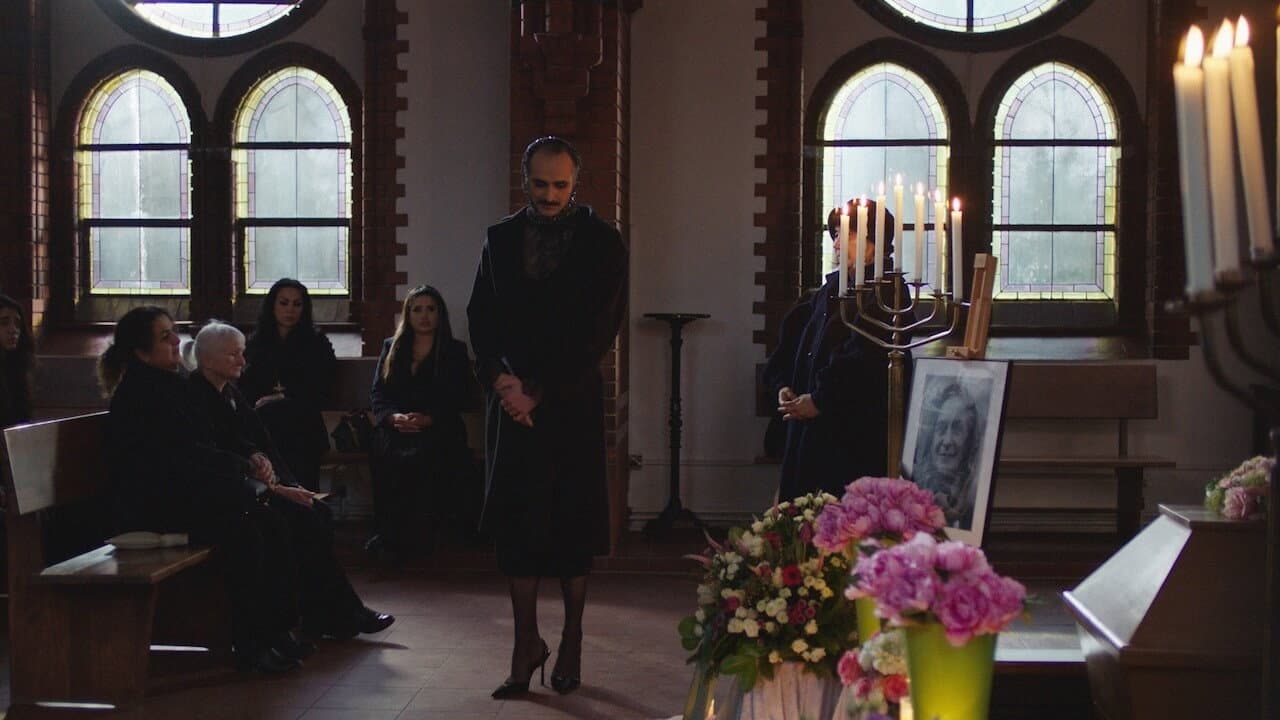
The line between memory and invention is a slippery one, and the new film I Plant My Hand in the Garden seems determined to make audiences feel that instability firsthand. The project, which is set to premiere at the Venice Film Festival, arrives with a freshly unveiled trailer that signals a deeply personal, formally restless work - one that refuses to sit comfortably in the categories of documentary, memoir, or pure fiction.
At its core, the film is an examination of identity, seen through the fractured lens of family history. The title itself evokes a gesture of both rootedness and strangeness, suggesting a physical act of belonging that is also slightly surreal. The trailer, shared exclusively ahead of the festival screening, offers a glimpse of a narrative that shifts between recreated home-movie footage, staged scenes, and more elliptical, impressionistic imagery. It is a work that appears to be less concerned with telling a single, coherent story than with interrogating how any of us constructs a coherent story at all.
The director, whose approach here is fundamentally autobiographical yet deliberately unreliable, has framed the project as a question rather than an answer. The camera frequently lingers on faces, objects, and landscapes that feel loaded with private significance, but the context is always just out of reach. This is not a film that explains itself; it is one that asks the viewer to sit with uncertainty, to accept that the person on screen may be both the filmmaker and a character the filmmaker has created.
That slippage is the engine of the piece. By weaving together what appears to be genuine archival material with carefully staged reenactments, the director blurs the boundary between what actually happened and what was remembered, misremembered, or reconstructed. The result is a meditation on how family stories are passed down - through objects, through gestures, through the gaps in what we are willing to say out loud.
The trailer itself is a patient, atmospheric montage. There are long takes of domestic interiors, shot with a soft, naturalistic light that feels like late afternoon. There are hands - on fabric, on soil, on the back of a chair. There is a voice, occasionally, that seems to be speaking directly to the viewer, though it is never clear whether the words are a confession, a warning, or an apology. The music is minimal, almost hesitant, as if it too is unsure of what will happen next.
Early buzz from the festival circuit suggests that the film has divided audiences, which is likely exactly what the filmmaker intended. Some have praised its courage in exposing the mechanics of memory so nakedly, while others have questioned whether the constant self-awareness becomes a kind of cage, preventing the emotional release that a more traditional narrative might provide. Both responses feel valid. The film seems designed to provoke that very debate, to make the act of watching it a conversation about how we separate truth from performance in our own lives.
The setting, while not explicitly identified, carries a sense of the Mediterranean - dry earth, white-washed walls, a particular quality of heat that feels both welcoming and oppressive. This backdrop becomes more than scenery; it functions as a character in its own right, a place that holds the family’s history in its soil and architecture. The title’s image of planting a hand suggests a desire to leave something permanent in that ground, even as the film acknowledges that permanence is an illusion.
For the director, this project represents a significant departure from more conventional work. The decision to place the self so directly at the center of the frame - and then to question that self at every turn - carries a level of vulnerability that is rare in contemporary cinema. There is no distance here, no ironic remove. The filmmaker is fully present, which makes the film’s deliberate distortions all the more unsettling.
The Venice premiere will likely be a defining moment for the film, offering the first opportunity for a wider audience to engage with its complexities. Whether it is embraced as a breakthrough or scrutinized for its ambiguities, I Plant My Hand in the Garden has already established itself as one of the more provocative entries in this year’s festival lineup. It is a work that demands patience, rewards attention, and refuses to offer the comfort of a simple conclusion.
In an era of increasingly polished and predictable studio fare, this film stands as a reminder that cinema can still be a place for genuine inquiry. It may not provide answers about identity or family, but it makes a compelling case that the questions themselves are worth sitting with - even if, like a hand planted in a garden, they are destined to grow into something we cannot fully recognize.
Source: The Hollywood Reporter