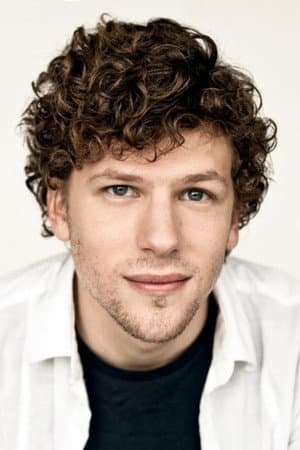
Jesse Eisenberg has spent more than two decades in front of cameras, earning an Oscar nomination and steady acclaim along the way. Yet the actor now says that for a long stretch of his career, he quietly harbored a dim view of his own profession. In a recent conversation, Eisenberg characterized his younger self as holding "a negative opinion" of acting, framing the job as overpaid and the people who do it as driven by vanity.
The remarks amount to a rare dose of self-criticism from a performer who has rarely chased the traditional trappings of stardom. Eisenberg, who broke through as a young actor in the late 1990s and became a household name in the 2000s through roles in films such as "The Social Network" and "Zombieland," has often described himself as uneasy with the public side of the business. His latest comments push that ambivalence further, suggesting the discomfort ran deeper than red-carpet jitters.
The actor's assessment was blunt. He said he used to feel that actors are paid far too much for what they do, and that the pursuit itself is rooted in vanity. "They pay us too much, we're vain," he said, summarizing the attitude he once carried. The line lands as both a confession and a critique, aimed as much at himself as at the industry around him.
That kind of skepticism is unusual in a field where even mild doubt can be read as ingratitude. Eisenberg, though, has built a public persona around exactly that sort of friction. He has spoken before about anxiety, about finding press obligations draining, and about preferring the controlled environment of a set to the noise that surrounds a release. The new comments give that reputation a sharper edge: this was not merely nervousness about fame, by his account, but a genuine distaste for the work's underlying values.
His career résumé complicates any simple reading of the remarks. Eisenberg earned an Academy Award nomination for his portrayal of Mark Zuckerberg in "The Social Network," a performance built on verbal velocity and barely contained contempt. He has since moved between studio projects and smaller, more personal films, and he has written and directed features of his own, including "When You Finish Saving the World." That pivot behind the camera suggests a performer who eventually found a way to engage with storytelling on terms he could live with.
A shift from disdain to something more workable
The actor's account implies that his outlook has changed over time. A person who once dismissed acting as vain and overcompensated does not typically stay in the business for twenty-plus years without arriving at some revised understanding. Eisenberg's more recent choices, particularly his writing and directing work, point to a figure who has renegotiated his relationship with the craft rather than walked away from it.
There is a practical dimension to that evolution. Writing and directing offer a different kind of authorship, one less dependent on being looked at. For someone who has described discomfort with attention, the appeal is obvious. Eisenberg has also been candid about how much he values the collaborative, problem-solving aspects of a production, elements that have little to do with vanity and everything to do with craft.
His comments also touch a nerve that runs through the wider profession. Questions about pay disparities, about the gap between celebrity earnings and the wages of crew members, and about the moral status of a business built on visibility are not new. Eisenberg's framing - that actors are overpaid and vain - condenses those debates into a single, uncomfortable sentence. Coming from someone with his credentials, it carries more weight than the same observation from a critic.
An industry that rarely rewards introspection
Hollywood tends to reward confidence and punish ambivalence. Actors are expected to sell their projects with enthusiasm, and candid doubts about the value of the enterprise can read as biting the hand that feeds. Eisenberg's willingness to articulate his former contempt suggests either unusual honesty or a calculated distance from the expectations of promotion.
Either way, the remarks add texture to a career that has never followed a conventional arc. Eisenberg has alternated between high-profile studio roles and intensely personal projects, and he has spoken openly about the psychological cost of both. The negative opinion he describes was not a passing mood, by his account, but a settled judgment about what acting asks of people and what it gives back.
For now, the actor continues to work on both sides of the camera. His comments stand as a reminder that not everyone who succeeds in front of an audience does so out of love for the spotlight. Sometimes the job is simply a job - one that, in Eisenberg's earlier estimation, paid too well and rewarded the wrong instincts.
Source: The Hollywood Reporter