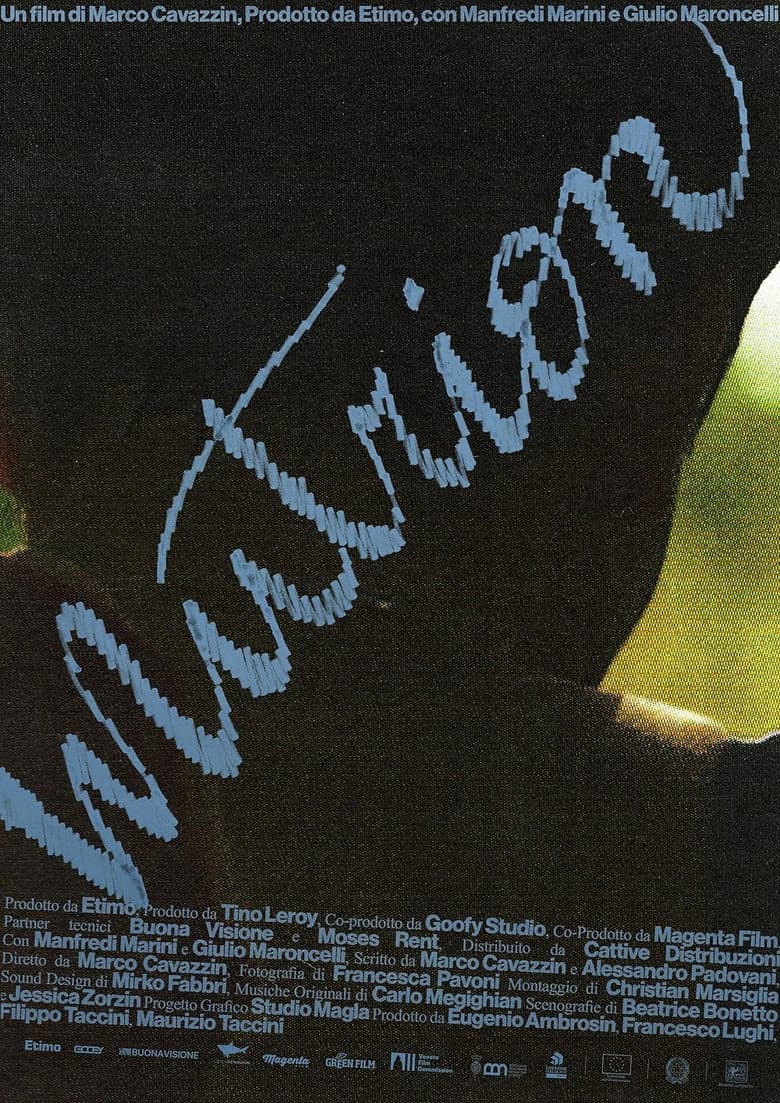
The waters of the Venice Lagoon have proven fertile ground for emerging filmmakers, as Italian director Marco Cavazzin’s Mutrion claimed the Leopards of Tomorrow Director Award at the Locarno Film Festival. The prize, handed out on Saturday, marks a significant milestone for a project deeply rooted in the fragile, shifting landscape between the mainland and the sea.
Cavazzin, who also serves as the film’s star, has crafted a work that has been generating quiet buzz since its premiere in the festival’s competitive section for debut and second features. Mutrion takes its name - and, reportedly, its visual and thematic inspiration - from the mudflats and marshlands that emerge and vanish with the tides of the northern Adriatic. Early reviews from Locarno have praised the director’s ability to meld a stark, almost documentary-like naturalism with a more meditative narrative pulse, though specific plot details remain tightly under wraps.
The Leopards of Tomorrow award is historically a springboard for directors whose first or second features show bold stylistic ambitions. In handing the prize to Cavazzin, the jury signaled a preference for a work that feels both local in its specificity and universal in its emotional reach. Set almost entirely within the ambiguous terrain of the lagoon, where solid ground is always a temporary condition, Mutrion reportedly uses its environment not merely as a backdrop but as an active participant in the story’s drama.
For Cavazzin, the recognition is undoubtedly a validation of a long and patient production. The Venice Lagoon is a notoriously difficult location to shoot, with its unpredictable weather, changing light, and the logistical challenge of moving crew and equipment across the water. That the director chose to place himself both behind and in front of the camera adds another layer of personal investment to the project. It is an approach that suggests a singular artistic vision - one that the Locarno jury clearly felt deserved to be spotlighted on the international stage.
The film’s quiet arrival in the festival circuit stands in contrast to the louder studio announcements typical of August. Yet its win underscores a broader trend in European cinema: a return to landscapes as emotional repositories, where the physical world carries the weight of memory and loss. In that sense, Mutrion aligns with recent works from neighboring regions that have used the brittle beauty of coastal zones to examine themes of impermanence and human isolation.
As with most festival winners at this stage, no distribution details have been announced for Mutrion beyond its festival footprint. U.S. audiences may need to wait for a major acquisition or a slot in a stateside showcase such as New York’s Film Comment series or the Los Angeles Film Festival’s international strand. Historically, Leopards of Tomorrow winners have found modest but dedicated U.S. release paths through art-house distributors specializing in auteur-driven work, though nothing is guaranteed in the current specialty market.
What the award does guarantee is attention. The Locarno seal has a proven track record of accelerating careers - several past recipients have gone on to screen at Cannes or Venice with their subsequent features. For Cavazzin, the path is now open. The fact that he is a leading presence in his own film will only intensify curiosity about him as a dual threat, much in the way that Kelly Reichardt and John Cassavetes built their reputations on such dual roles.
Back in the lagoon, the tides will continue to shift the landscape that inspired Mutrion. But for a few days in August, the festival’s jury made sure that this particular piece of that world received international notice. The film’s future bookings and critical afterlife remain to be seen, but its place in this year’s Locarno canon is secure. With a title that echoes the local dialect and a setting that refuses to be pinned down, Mutrion has arrived as one of the more intriguing calling cards of the year - an open invitation to watch where its creator goes next.
Source: Variety