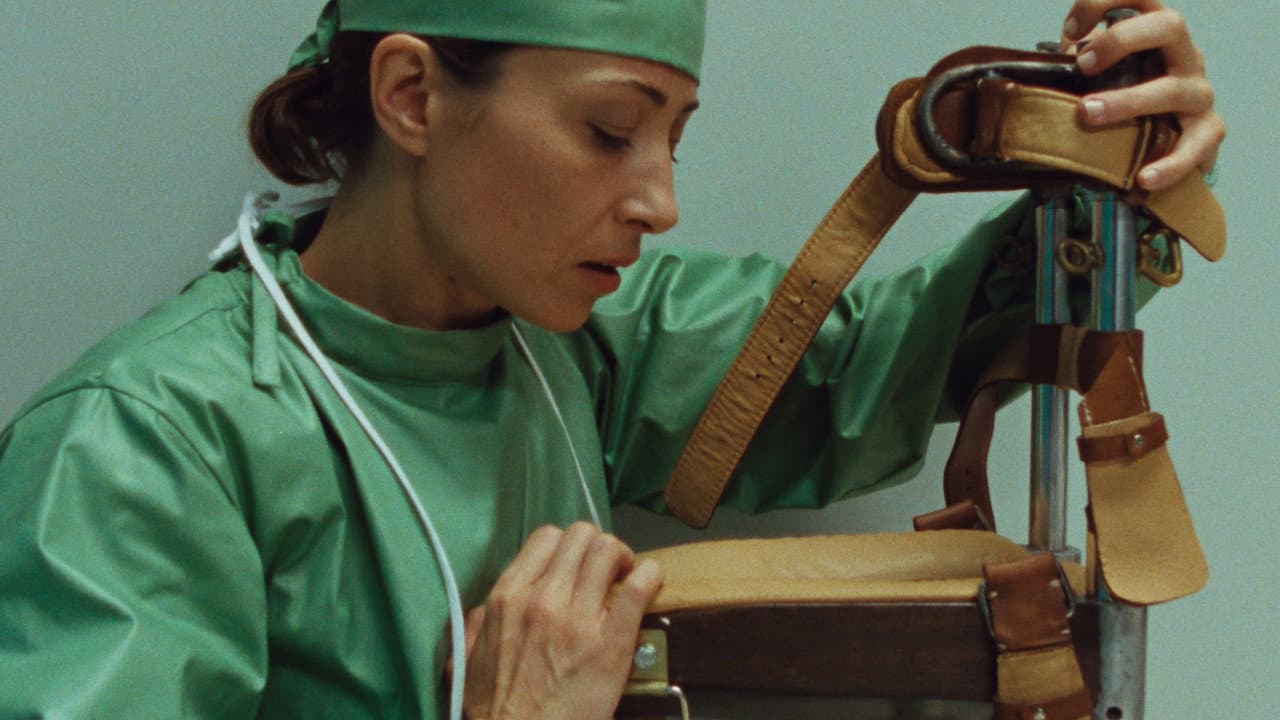
The debut of director Ann Oren’s feature Objet a lands in theaters on August 11, and the film’s intimate focus on human touch arrives with a grimly relevant thesis: we may now spend more time swiping and tapping than we do connecting with the people next to us. The 95-minute drama, which premieres this week, centers on a pair of hand surgeons whose obsessive relationship distorts their professional and personal lives in ways that blur the line between reverence and objectification.
At the heart of the story are Ingeborg and Adam, portrayed by Aenne Schwarz and Louis Hofmann, two visionary medical professionals bound not only by their craft but by a complicated web of love and control. Ingeborg is driven by an unstoppable compulsion to steal objects, while Adam harbors a strange fixation: he wishes he himself could become an object. Their delicate equilibrium shatters when an accident brings the mysterious Gaia - played by Simone Bucio - into their orbit, and new cravings begin to reshape everything they thought they understood about desire.
Oren, whose prior work in short films often explored the body as a site of transformation, here trades in a quieter, more unsettling currency. The film does not present its characters as villains or victims but as people caught in the gravitational pull of their own impulses. That ambiguity is central to the movie’s power, particularly as the surgeons’ daily work - healing the very hands that reach out for connection - stands in stark contrast to their inability to truly touch one another.
The supporting cast rounds out a world that feels both hyper-specialized and strangely universal. Nico Dinkel appears as Lotta, while Nilton Martins, Georg Friedrich, Dorothée Neff, and Dodzi Dougban fill out the ensemble. Their presence grounds the more surreal edges of the script, offering moments of brittle humor and quiet desperation that keep the film from tipping fully into abstraction.
Objet a takes its title from a concept in psychoanalysis - the "object cause of desire" - and Oren does not shy away from that intellectual weight. The film asks what happens when we transfer our longing from people to things, and what it costs us to do so. The central metaphor, the hand, functions on multiple levels: it is the instrument of both creation and theft, of tenderness and control, of healing and harm. Ingeborg’s kleptomania is never played for laughs; instead, it reads as a symptom of a deeper inability to hold onto anything real. Adam’s wish to be an object, meanwhile, suggests a surrender of agency that is both tragic and, in his mind, liberating.
Their world is upended by Gaia, whose arrival is less a narrative twist than a slow unraveling. She does not simply disrupt the couple’s routine; she forces them to confront the fact that their "fixations" were never about the objects themselves but about the void they were trying to fill. Oren’s direction keeps the camera steady and close, often lingering on hands performing delicate work - suturing, threading, stealing - so that the audience feels the weight of every gesture.
The film’s release date, August 11, places it in the late-summer window usually reserved for quieter, awards-adjacent dramas. It is a deliberately paced work, one that trusts its audience to sit with discomfort rather than chase easy resolution. There are no grand monologues or cathartic confrontations; instead, the tension builds through what is left unsaid, through the objects that move from one character’s possession to another, and through the growing dread that none of them will ever get what they truly need.
At its core, Objet a is a meditation on control - how we exert it, how we surrender it, and how it can poison even the most loving relationships. The surgeons are masters of their domain, able to repair the most delicate structures of the body, yet they remain helpless in the face of their own compulsions. Oren does not offer easy answers, but she does hold up a mirror to a culture that increasingly prefers the flat, glowing surface of a screen to the warm, imperfect reality of another person’s skin.
For audiences willing to sit with its ambiguities, the film offers a bracing counterpoint to a world of constant distraction. It is a reminder that the most meaningful connections are the ones that leave marks - not the kind that come from a notification, but the kind that come from actually reaching out.
Source: The Hollywood Reporter