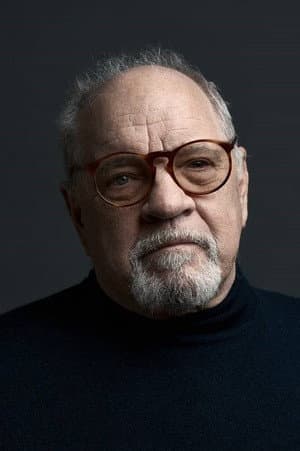
Paul Schrader has built a five-decade career on films that refuse to ask for forgiveness, and his latest public statements make clear that posture hasn't softened with age. The writer-director behind Taxi Driver, Raging Bull, and a string of uncompromising character studies has reasserted his creative independence in a way that feels less like a battle cry and more like a simple statement of fact: he doesn't need anyone's permission to make the art he wants to make.
The news cycle around Schrader this week isn't tied to a specific new production or an upcoming release. There is no confirmed project attached to the headline, no cast list to report, no release date on the horizon. What has emerged instead is a portrait of the filmmaker at a moment when the industry around him seems perpetually unsure how to handle a voice that has never cared much for trends, studio notes, or the polite decorum of Hollywood deal-making. Schrader, now in his late seventies, continues to operate as a singular figure - someone who can pivot from a meditation on faith to a grim portrait of online radicalization without missing a beat.
His recent comments, made across interviews and public appearances, strike a familiar chord for anyone who has followed his trajectory. Schrader has long positioned himself as an outsider even when working inside the system. He came up writing scripts for other directors, most notably Taxi Driver for Martin Scorsese, before stepping behind the camera himself with Blue Collar in 1978. That film, about auto workers who rob their own union, set the template for much of what followed: working-class grit, moral ambiguity, and a refusal to offer easy catharsis.
The current conversation around Schrader seems fueled in part by the reception of his recent films. Works like First Reformed (2017), The Card Counter (2021), and Master Gardener (2023) form what many critics have called a loose trilogy about men wrestling with guilt, redemption, and the possibility of grace in a fallen world. Each film found a distributor and an audience, but none came without struggle. Schrader has been candid about the difficulty of financing these smaller, character-driven pictures in an era dominated by franchises and IP. That he has managed to keep making them anyway is a testament to the very stubbornness he's now celebrating.
What makes Schrader's position notable, beyond the sheer fact of his endurance, is the way he talks about the creative process. He has never hidden his influences - the French existentialists, the Japanese director Yasujiro Ozu, the Scandinavian stylist Carl Theodor Dreyer all loom large in his thinking. He's equally open about his own methods, which include writing screenplays in a disciplined, almost mechanical fashion before bringing them to life through a distinctly American brand of stoic realism. In a recent interview, he dismissed the notion that a filmmaker needs to wait for permission from gatekeepers, whether those are executives, festival programmers, or critics. The implication is clear: the work comes first, and the conversation about whether it should exist comes second - or not at all.
That attitude has occasionally put him at odds with the more cautious elements of the industry. Schrader has never shied away from controversial subject matter. His 1980 film American Gigolo courted scandal with its frank depiction of male prostitution. Cat People (1982) pushed a studio horror premise into stranger, more erotic territory. And First Reformed, which earned him his first Academy Award nomination for Original Screenplay, dealt with environmental despair and radical political violence in ways that made many distributors uneasy before it became one of his most acclaimed works. The pattern is consistent: Schrader makes the film he wants to make, finds an audience on his own terms, and then moves on.
The news peg for this story is arguably less about any single announcement and more about the ongoing public conversation Schrader is generating simply by continuing to exist as an active, opinionated, and unapologetic artist. In an era when many veteran directors have retreated into television prestige projects or reimagined their own earlier hits, Schrader remains committed to original screenplays and lean productions. He has said repeatedly that he has no interest in sequels or remakes of his own work, even as others revisit the territory he helped define. That refusal to look backward, combined with a willingness to speak plainly about the state of cinema, makes him something of a rare breed.
There is also a generational dimension to the current Schrader discourse. Younger filmmakers have increasingly cited him as a key influence, not just for the films he directed but for the screenplays he wrote in the 1970s and 1980s - stories about isolated men and the violent or transcendent acts that break their routines. His willingness to work with unconventional actors, to embrace long takes and spare visual compositions, and to trust the power of dialogue over spectacle has inspired a wave of indie directors who see in him a model for sustainable, personal filmmaking. Schrader, for his part, seems pleased but unsurprised by the attention. He has always expected his work to find its audience eventually; the timeline just hasn't always cooperated with expectations.
Looking ahead, there is no confirmed project on Schrader's slate, at least not one that has been publicly verified. What the current moment offers instead is a clearer sense of his philosophy. He has often said that a film should feel like a question mark, not an exclamation point - something that lingers and unsettles rather than offering tidy resolutions. That ethos, applied to his own career, suggests a filmmaker who will keep working as long as he has something he needs to say. Whether the industry gives him permission is beside the point. He never asked for it, and he doesn't intend to start now. For audiences who value cinema as a medium of tough, searching ideas, that stubbornness is worth celebrating - not as an act of defiance for its own sake, but as a model of how to remain true to one's own artistic compass.
Source: The Hollywood Reporter