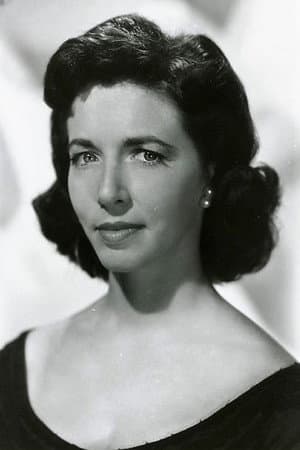
Peggy Webber, a versatile actress whose career spanned the golden age of radio into film and television work with directors like Orson Welles and Alfred Hitchcock, has died at the age of 100. Her passing marks the end of an era for a performer whose voice and presence helped define mid-century American entertainment.
Webber, best known to modern audiences for her role in Hitchcock’s 1956 thriller The Wrong Man, built a reputation long before Hollywood called. She was a mainstay of old-time radio, a medium that demanded rapid-fire emotional range and precise vocal timing. Her resume in that field was staggering, including frequent appearances on anthology dramas, crime serials, and comedy programs, often playing multiple characters within a single episode - a skill that separated the truly gifted from the merely competent.
The actress’s connection to Orson Welles came during his legendary years in radio, a period when the young genius was reshaping audio storytelling. She performed in several of his productions, absorbing the demanding, improvisational atmosphere he fostered. That experience translated well to the screen when Welles later cast her in Macbeth (1948) and Touch of Evil (1958), though her roles in those films were comparatively small. Still, the association with Welles added luster to a career that already prized versatility.
Her work with Hitchcock on The Wrong Man placed her in a different kind of spotlight. In that film, starring Henry Fonda as a man mistakenly accused of armed robbery, Webber took on a supporting role that contributed to the picture’s suffocating realism. Hitchcock, known for his control and meticulous planning, found in Webber a reliable professional who could deliver under the pressure of his famously precise direction. While she never achieved major movie stardom, her filmography reads like a survey of classy, mid-tier productions - a mix of noir, westerns, and dramas that showcased her adaptability.
Born in Oakland, California, in 1925, Webber began acting as a child and never really stopped. Her early radio work in San Francisco led to a move to Los Angeles, where the networks and studios concentrated their power. By her early twenties, she was a working actor in the most competitive market in the world, landing parts on Lux Radio Theater, Suspense, and Escape, among dozens of other programs. Colleagues often remarked on her ability to shift from a frightened heroine to a brittle comic foil in the space of a single broadcast.
The transition to television, beginning in the 1950s, came naturally. Webber appeared in countless episodic series, from Gunsmoke to Perry Mason, her face familiar if not always name-checked. She also worked behind the scenes, writing and producing for local Los Angeles theater, and later taught acting workshops, passing along the craft she had learned from some of the greatest directors of the twentieth century.
In an industry that often discards older actresses, Webber continued performing into her later decades, taking voice work and stage roles as they came. She remained a vivid conversationalist, known for sharp memories of Welles’s chaotic brilliance and Hitchcock’s dry, cutting wit. In a 2015 interview, she recalled that Welles treated radio like a theatrical stage, demanding total commitment from everyone in the booth, while Hitchcock approached actors with clinical detachment, more interested in the final composition than the process of getting there.
Her death, confirmed by family members who asked for privacy, brings a quiet close to a story that connects the microphone studios of the 1940s to the Hollywood soundstages of the 1950s. She was not a household name, but she was the kind of actor that made the great productions possible - someone who showed up, hit her marks, and elevated every scene she touched.
Reflecting on her longevity, Webber once said that the secret to surviving in show business was simple: keep working, keep being reliable, and never take the small parts for granted. That pragmatism carried her through a career that outlasted nearly all of her contemporaries.
She is survived by a legacy of recorded radio broadcasts, many of which survive in archival collections, and a filmography that includes some of the most respected directors of the American studio era. For fans of classic entertainment, her voice remains a time capsule - clear, expressive, and utterly of its time.
A private memorial is planned, with a public celebration of her life to be announced later. In lieu of flowers, the family has requested donations to the Paley Center for Media, which preserves the radio and television history she helped shape.
Source: The Hollywood Reporter