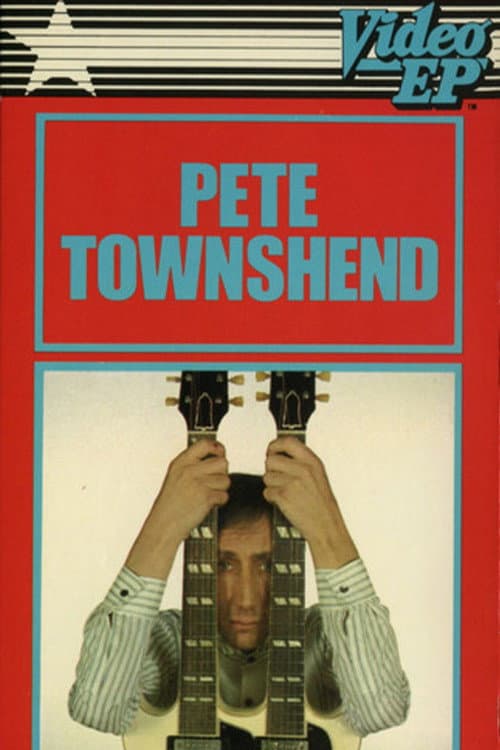
Frank Marshall and Nigel Sinclair have teamed up to bring a long-dormant piece of rock history back into the spotlight, announcing their involvement in the newly surfaced documentary Pete Townshend: Behind Blue Eyes. In an exclusive conversation, the veteran producers shed light on the project, a 30-minute music film that originally premiered in 1982 before fading into relative obscurity. Directed by Chalkie Davies and featuring Townshend himself, the documentary offers an intimate, era-defining snapshot of the Who’s frontman during a pivotal stretch of his career.
The film, which clocks in at a tight half-hour, was shot at the height of Townshend’s creative evolution, capturing him both as a solo artist and as the driving force behind one of rock’s most enduring bands. According to Marshall and Sinclair, the documentary stands out not for its grand scale but for its unvarnished intimacy - a quality that makes its rediscovery all the more compelling for fans and newcomers alike. The pair, whose producing credits span decades of music-driven storytelling, emphasized that the project feels remarkably fresh despite its age, a testament to Davies’ eye for candid moments and Townshend’s willingness to lay himself bare on camera.
In their discussion, Marshall and Sinclair noted that the documentary’s structure eschews conventional rock-doc tropes in favor of a loose, almost impressionistic flow. The film weaves together a series of segments - titled “Prelude," "Face Dances Part 2," "Communication," "Stardom in Action," "Exquisitely Bored," "Slit Skirts," and "Uniforms" - that function as thematic chapters rather than a strict chronological narrative. That approach, the producers explained, mirrors Townshend’s own restless artistic temperament, a man perpetually questioning his role in the culture even as he helped define it. The result is a work that feels less like a retrospective and more like a living conversation with the artist at a moment when his sound was shifting.
A Window Into a Transformative Era
The documentary arrives from a fascinating juncture in Townshend’s output. The early 1980s found him navigating between his work with the Who and a growing body of solo material, a period marked by experimentation and introspection. Marshall and Sinclair pointed out that Behind Blue Eyes captures this transition with unusual clarity, presenting Townshend less as a larger-than-life rock star and more as a working musician grappling with the demands of fame, creativity, and identity. The title itself, drawn from the Who’s 1971 classic, hints at the emotional core of the film - a desire to see past the public persona and into the private struggles that fueled his writing.
For Sinclair, the documentary’s value lies in its authenticity. He spoke about how Davies, known primarily as a photographer for the music press, brought a visual journalist’s instinct to the project. Rather than staging elaborate set pieces, Davies allowed the camera to observe, catching Townshend in rehearsals, interviews, and unguarded moments. That fly-on-the-wall sensibility gives the film a documentary purity that Marshall and Sinclair believe will resonate with contemporary audiences accustomed to more polished, often sanitized celebrity profiles. The producers’ interest in reviving the piece stems partly from that rawness, an antidote to the over-produced music documentaries that dominate streaming platforms today.
The new attention on the film also raises questions about its place in Townshend’s broader legacy. At just 30 minutes, it offers a condensed yet potent look at an artist who had already spent nearly two decades reshaping rock music. The segments touch on themes that would become signature concerns for Townshend - the burden of stardom, the search for meaningful communication through art, and the tension between commercial success and personal expression. Marshall noted that even within that brief runtime, Davies manages to sketch a portrait that feels both complete and open-ended, a quality that invites repeated viewing.
A Rediscovery for Modern Audiences
Marshall and Sinclair’s involvement signals a deliberate effort to reintroduce the documentary to a wider public, leveraging their combined experience in the industry to ensure it receives the attention it deserves. While they declined to outline specific distribution plans, they hinted that the film’s compact length and universal themes make it an ideal candidate for festival screenings or curated streaming collections focused on music history. The producers also expressed admiration for Davies’ vision, crediting him with having the foresight to document Townshend without interference or hagiography.
That said, the documentary is not without its quirks. Its 1982 release date places it firmly in a specific moment of rock’s timeline, complete with the aesthetic and production values of the era. Marshall and Sinclair acknowledged that some contemporary viewers might find the film’s pacing or visual style dated, but they argued that this only adds to its charm. In their view, the grainy textures and lo-fi feel serve as a time capsule, preserving not just Townshend’s words and music but the vibe of an entire cultural landscape. For those willing to engage with it on its own terms, Behind Blue Eyes offers a rare, unhurried glimpse into a mind that rarely slowed down.
The project’s journey to this point has been anything but linear. Originally released in the summer of 1982, the film seems to have slipped through the cracks in the decades since, overshadowed by Townshend’s more famous recordings and the Who’s blockbuster catalog. Marshall and Sinclair’s decision to champion it now reflects a broader industry trend of mining archival material for hidden gems, a practice that has gained momentum as streaming services hunger for exclusive content. By bringing this documentary to light, they’re betting that audiences still care about the stories behind the music, especially when told with an intimacy that big-budget productions often lack.
For Townshend devotees, the news arrives as a welcome surprise. For the uninitiated, it promises a concise entry point into his world, one that prioritizes substance over spectacle. As Marshall and Sinclair made clear, their goal is not to inflate the film’s importance but to share it - trusting that Davies’ quiet observation and Townshend’s candid honesty will speak for themselves. With any luck, Pete Townshend: Behind Blue Eyes may finally claim the audience it missed on its first go-around, finding new life as a small but essential piece of rock’s documentary canon.
Source: The Hollywood Reporter