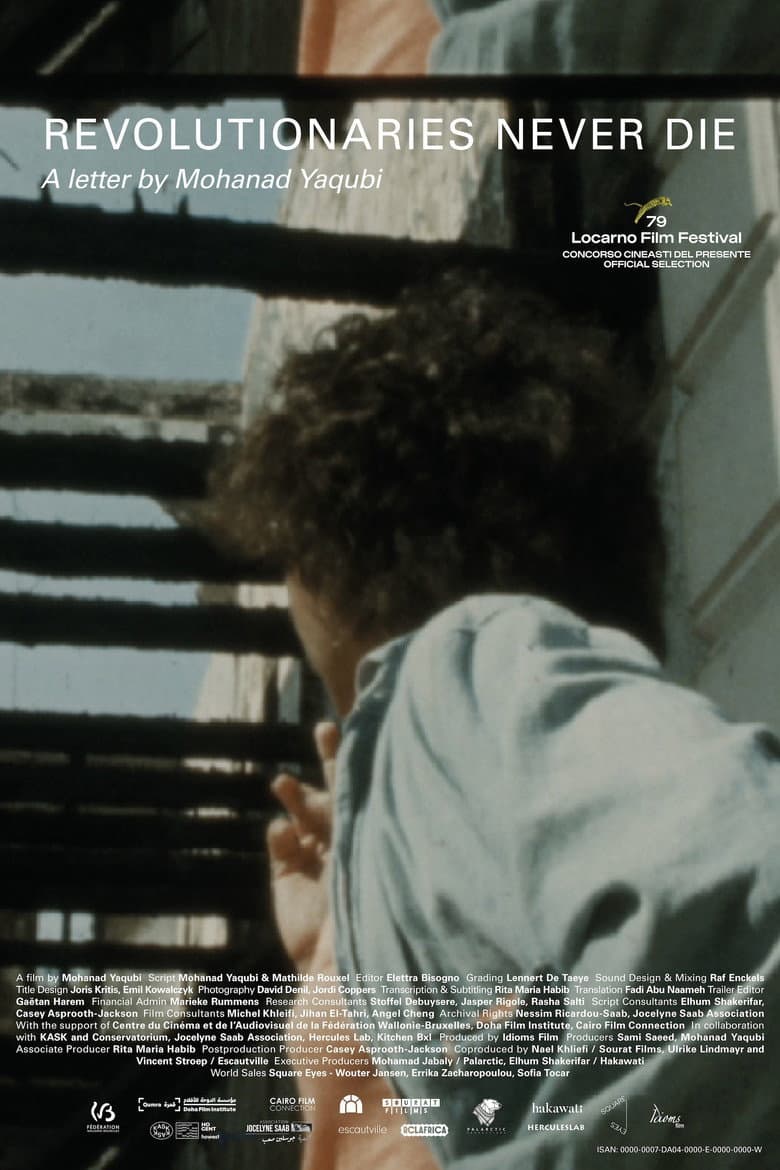
'Revolutionaries Never Die': Tribute to Jocelyne Saab
Advertisement
A cinematic homage to Lebanese pioneer Jocelyne Saab, this film revives her legacy, blending archival power with revolutionary spirit.
A new documentary feature is set to honor the enduring legacy of Jocelyne Saab, the trailblazing Lebanese filmmaker whose career spanned war zones, artistic experimentation, and tireless cultural advocacy. The film, titled Revolutionaries Never Die, serves as a cinematic tribute to Saab, who passed away in 2019 after a prolific career that made her a singular voice in Arab cinema.
The project arrives as a timely reminder of Saab’s contributions, particularly at a moment when archival film preservation and the documentation of Middle Eastern histories are gaining renewed urgency. Directed with evident reverence, the documentary weaves together rare footage, interviews with contemporaries, and excerpts from Saab’s own filmography to construct a portrait that is both intimate and sweeping.
Saab first made her mark in the early 1970s as a war correspondent, embedding herself in conflict zones across Lebanon and the wider region. Her early documentaries, shot amidst the chaos of the Lebanese Civil War, were groundbreaking not just for their subject matter but for her sheer presence as a female journalist in a male-dominated field. She did not merely document events; she immersed herself in them, often risking her life to capture the human cost of political upheaval.
That fearless approach defined her career, but Saab refused to be pigeonholed. Over the decades, she expanded her repertoire to include feature films, experimental shorts, and video art, constantly challenging both Western stereotypes of the Arab world and the constraints of traditional narrative cinema. Her work often blurred the lines between fiction and documentary, exploring themes of memory, displacement, and women’s agency with a poetic, dreamlike visual language.
Revolutionaries Never Die reportedly does not shy away from the complexities of her life. It examines her evolution from a journalist chasing breaking news to a mature artist who questioned the very nature of images and their power to shape truth. The documentary also underscores her role as a mentor and institution-builder, particularly through her efforts to support younger Lebanese filmmakers and to preserve the nation’s cinematic heritage against the backdrop of recurring crises.
A central thread of the film is Saab’s relationship with Beirut itself. The city appears not merely as a setting but as a character in her story - a place of both devastation and creative ferment. The documentary captures how Saab transformed the traumas of her homeland into a deeply personal, formally inventive body of work that resonated far beyond the region. Her films, such as A Suspended Life and Once Upon a Time, Beirut, are examined here not as historical artifacts but as living documents that continue to speak to contemporary audiences.
For those unfamiliar with Saab’s oeuvre, the documentary serves as both an introduction and a compelling argument for her significance. It places her within a global context, drawing parallels with other politically engaged filmmakers of her generation while emphasizing what made her approach unique. The archival material, much of it restored and previously unseen, is likely to be a major draw for cinephiles and scholars alike.
The release of Revolutionaries Never Die also coincides with a broader reassessment of Middle Eastern cinema’s foundational figures. As regional film industries undergo transformations and streaming platforms open new distribution channels, there is a growing appetite for stories that challenge dominant narratives about the Arab world. Saab’s work, with its insistence on complexity and its refusal of easy answers, fits squarely within that demand.
Though the documentary does not offer a comprehensive chronology of her life, it instead aims for a more impressionistic approach, echoing the very style of its subject. The director has spoken in interviews about the challenge of condensing Saab’s vast output and complicated biography into a single film, choosing instead to focus on key moments and relationships that illuminated her core principles. That choice, while perhaps frustrating for those seeking a straightforward biography, honors the spirit of a filmmaker who never followed a predictable path.
Already generating early festival buzz, Revolutionaries Never Die is positioned to reintroduce Saab to a new generation of viewers while reminding older audiences of her singular vision. It stands as a testament to the idea that revolutionary art does not simply fade with the passing of its creator - it continues to provoke, inspire, and unsettle long after the final frame. As Lebanon and the wider region continue to navigate profound change, the film makes a case for Saab’s work as more relevant than ever, a defiant and compassionate chronicle of resilience in the face of rupture.
Source: The Hollywood Reporter
Advertisement
Advertisement