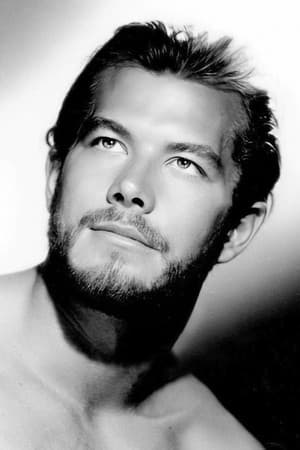
Richard Harrison, the American actor who became a fixture of Italian genre cinema in the 1960s and 1970s, appearing in dozens of spaghetti westerns and sword-and-sandal epics, has died at the age of 90. News of his death was confirmed in reports circulating Wednesday, though no additional details about the circumstances were immediately available. Over a screen career that spanned roughly three decades, Harrison carved out a niche as a rugged, stoic leading man - the kind of square-jawed presence that Italian producers reliably built films around during the boom years of Cinecittà, when low-budget Westerns and muscle-bound costume adventures were selling tickets across Europe and beyond.
From Hollywood Hopeful to Italian Genre Stalwart
Born in Salt Lake City in 1931, Harrison came to acting by an unconventional route. He spent time as a boxer and a sailor before landing minor roles in Hollywood in the mid-1950s, including small parts in films such as Kronos and The Man Who Knew Too Much. But steady work in Los Angeles proved elusive, and like a number of American actors of his generation, he found opportunity in Italy just as the country's film industry was ramping up production on genre pictures aimed at international markets.
His breakthrough came in 1961 with The Invincible Gladiator, one of the many sword-and-sandal productions that followed in the wake of Ben-Hur and Spartacus. The film cast him as a heroic strongman in the mold that Steve Reeves and Gordon Scott had popularized, and it opened the door to a steady stream of similar roles - Gladiators 7, Messalina, The Revolt of the Slaves - in which Harrison wielded a sword, flexed for the camera, and generally saved the day against Roman tyrants or barbarian hordes.
A Familiar Face in the Spaghetti Western Boom
As the peplum cycle faded, Harrison pivoted smoothly into the spaghetti western, a genre that would define his career for a generation of cult film fans. He starred in Gunfight at Red Sands in 1963, one of the earliest entries in the cycle, with a score by Ennio Morricone - a full year before Sergio Leone's A Fistful of Dollars made Clint Eastwood a star. More Westerns followed: 100,000 Dollars for Ringo, Vengeance, Blood at Sundown, and Between God, the Devil and a Winchester, among many others. He also appeared in Django the Condemned and worked steadily with directors like Duccio Tessari and Sergio Sollima. By the mid-1960s Harrison was one of the most recognizable American imports in Italian Westerns, even if he never quite achieved the marquee fame of Eastwood, Franco Nero, or Giuliano Gemma.
He occasionally returned to Hollywood productions, including a role in The Longest Day and later in the science-fiction film The Last Man on Earth alongside Vincent Price. But Italy remained his professional home, and he embraced the industry's fast-paced, often improvised working methods.
A Second Act Behind the Scenes
In the 1970s, Harrison's leading-man days began to wind down, though he continued to work in Italian cinema - including a memorable appearance in The Godfather's Friend - and took on supporting roles in action and adventure films. He eventually transitioned into producing and writing, and in later years he was a familiar figure at genre film festivals in Europe and the United States, where his work was celebrated by fans of cult cinema.
Harrison was also known for an outspoken streak. In interviews he could be candid about the limitations of the quickie productions that made him a name, describing them as boot-camp filmmaking that taught him everything about the business. In one famous episode, he turned down a role that Leone had offered him - a decision he later said he never regretted, even as the director's films became canonical. He also had a small role in the 1990 film Return to Justice, and he appeared in documentaries about the spaghetti western era, serving as a link to a particularly colorful chapter of film history.
A Legacy in Cult Cinema
For a certain kind of moviegoer, Harrison's face is inseparable from the sun-baked Spanish deserts and foam-rubber rocks of mid-century Italian genre film. He was never a critical darling, and he never won major awards, but he worked constantly - by his own count, in more than a hundred productions - and he embodied a specific, durable kind of screen masculinity that kept audiences coming back.
He is survived by his family and by a filmography that remains a treasure trove for devotees of European popular cinema. A private service is expected.
Source: The Hollywood Reporter