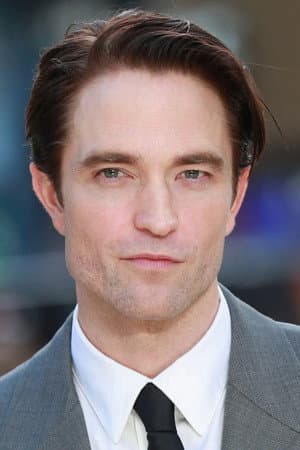
Robert Pattinson has poured a little cold water on the idea of his version of Batman crossing paths with the wider DC Universe, saying that making such a meeting work would be a difficult proposition.
The actor, who first donned the cape and cowl in 2022's "The Batman," was asked about the possibility of his Dark Knight appearing alongside the characters being assembled by DC Studios co-chief James Gunn. His answer suggested that a crossover is far from a simple matter.
In comments that have circulated widely among fans, Pattinson described the prospect as "tough," indicating that the grounded, brooding world his character inhabits does not naturally line up with the more fantastical, interconnected storytelling that has become the hallmark of comic book movie franchises. His remarks, while brief, cut to a creative tension that has followed his tenure in the role almost from the moment it began.
A Batman Rooted in a Different World
Pattinson's Bruce Wayne was introduced in a film that deliberately sidestepped the supernatural. Matt Reeves' take on Gotham City was rain-soaked, noir-inflected and populated by gangsters and serial killers rather than gods and aliens. The movie leaned into detective fiction and psychological unease, and its central villain, the Riddler, was a domestic terrorist rather than a metahuman threat. When supernatural elements did appear, they were kept at the edges, treated ambiguously enough that a viewer could almost miss them.
That approach stood apart from the strategy that has driven most successful shared universes, where solo films function as launchpads for team-ups and post-credits teasers. Pattinson's Batman was never positioned that way. No other heroes appeared in his film, and the story ended without dangling threads pointing toward a larger gathering of costumed characters.
The sequel, also shepherded by Reeves, has been in development since the first film's release. Pattinson has spoken before about the challenge of building a character whose psychology is defined by isolation and obsession. Dropping that version of Batman into a room full of superpowered colleagues would, by his own account, create a tonal problem that no amount of scriptwriting can easily solve.
Why Crossover Talk Keeps Coming Back
The question keeps resurfacing for a reason. DC's film and television output now sits under a single creative leadership, and Gunn has been open about his intention to build a more unified continuity across movies, television and other media. That raises an obvious question: what happens to characters created outside that framework?
Pattinson's Batman is the most prominent example of a DC hero operating in a self-contained lane. Audiences have repeatedly shown appetite for seeing him share a screen with figures like Superman or the various members of the Justice League. Fan campaigns and speculative casting discussions have followed every major DC casting announcement for the past several years.
Pattinson himself has never ruled out the possibility entirely, which may be why his latest characterization of it as "tough" rather than impossible has attracted so much attention. Actors in franchise roles are often coached to keep doors open, and his careful phrasing leaves room for interpretation. But the practical obstacles are substantial.
What This Means for the Future
There are two Batmen currently in play, and that alone complicates any crossover conversation. One exists in Pattinson's grounded corner. Another has been announced for the broader DC Studios slate. Keeping both versions running simultaneously is unusual, but it is a route the studio has chosen, at least for now.
For Pattinson, the calculus may be as much about craft as continuity. He has built a career on unpredictable choices, shifting between blockbusters and small, auteur-driven projects. Returning to Gotham for a sequel already required convincing. Committing to a larger web of films and appearances would mean a different kind of obligation, one that ties an actor to a schedule and a creative direction he does not control.
That does not mean a meeting is off the table forever. Studios have reversed course before, and audience demand has a way of reshaping plans. But Pattinson's comments suggest that if it happens, it will not be a casual afterthought. It would require filmmakers to reconcile two visions of the character that were designed to pull in opposite directions.
For now, the actor's stance is best read as a note of caution rather than a flat refusal. He has not said no. He has said it would be hard. In an industry where nearly everything is negotiable, that distinction may be the most revealing part of his answer.
Source: The Hollywood Reporter