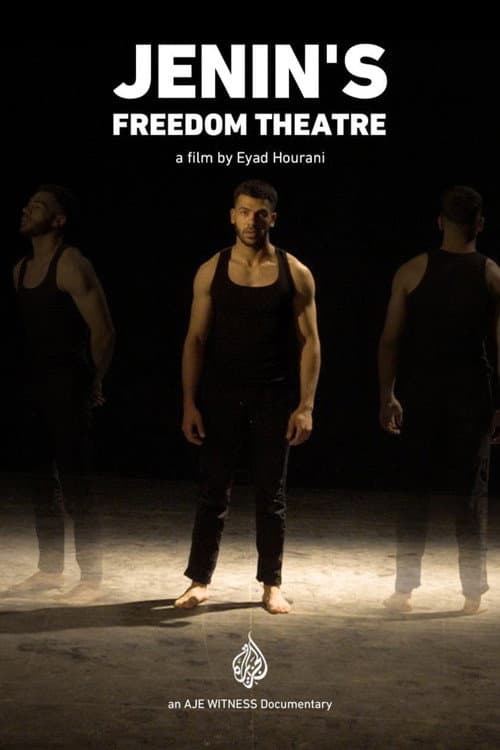
Rock icon Roger Waters has signed on as an executive producer for “Freedom Theatre,” a documentary chronicling the efforts of young Palestinian actors in the Jenin refugee camp to stage a production amid ongoing military operations. The project, directed by Eyad Hourani, centers on Mahmoud Abu Aita, who leads a troupe of aspiring performers rehearsing for what they hope will be a trip abroad despite the constant threat of violence around them.
The film, which runs 25 minutes and was released on January 1, 2024, takes its name from the actual cultural institution in Jenin that has served as a creative haven for local youth. According to the filmmakers, Israeli military activity in the occupied West Bank camp has escalated significantly since October 7, with incursions, shootings, demolitions, and drone strikes becoming routine parts of daily life. Against this backdrop, the theater functions as a sanctuary where young people can channel their experiences into artistic expression.
Waters, best known as the co-founder and primary songwriter of Pink Floyd, has a long history of political activism, particularly regarding the Israeli-Palestinian conflict. His involvement in this project extends his outspoken stance on Middle East issues into the documentary realm, lending his name and platform to a story that might otherwise struggle for visibility. The announcement arrives with the documentary already completed and available, though Waters’ attachment could bring renewed attention to its subject matter.
The central narrative follows Abu Aita and his students as they prepare a play with ambitions of performing beyond Jenin’s borders. The director’s stated approach emphasizes the therapeutic potential of this creative work - art as a means of processing trauma and expanding perspectives for young people who have grown up surrounded by instability. Mahmoud, himself a survivor of violence, is described as maintaining optimism about what the journey might offer his students, even as the practical obstacles to leaving remain considerable.
Those obstacles form a core tension of the film. The documentary reportedly illustrates how the occupation’s grip can make something as simple as obtaining permission to travel extraordinarily difficult, transforming what should be a straightforward rehearsal schedule into a logistical challenge with life-or-death stakes. The film’s Arabic-language dialogue and intimate access to the theater’s daily operations offer a ground-level view of how culture persists under duress.
Waters’ participation places him within a broader tradition of musicians lending their celebrity to documentary causes, though his specific history with this topic has frequently generated controversy. The former Pink Floyd member has compared Israel’s policies to apartheid, called for cultural boycotts, and faced accusations of antisemitism - charges he has consistently denied, insisting his criticism targets government actions rather than Jewish people as a whole.
For the filmmakers, having Waters attached could provide a significant boost in reaching international audiences who might not otherwise encounter a 25-minute documentary about a theater troupe in a West Bank refugee camp. The film’s modest runtime suggests an intended format conducive to festivals, streaming platforms, or broadcast slots rather than theatrical release, making the visibility that comes with a high-profile name particularly valuable.
The project also arrives at a moment when cultural institutions in conflict zones have drawn increased global scrutiny. The Freedom Theatre itself has faced challenges beyond the general dangers of living under military occupation - its founder, Juliano Mer-Khamis, was assassinated in 2011, and the theater has weathered repeated disruptions to its programming over the years. That the institution continues to operate, and now serves as the subject of a documentary with a rock legend attached, speaks to its resilience.
Details about the film’s distribution plans remain scarce, and no information about additional casting has been made public. The TMDb rating of zero suggests the documentary has yet to accumulate significant viewer reviews, placing it in the category of a recent release still finding its audience.
The timing of the announcement, coming nearly two years after the documentary’s initial release, suggests a strategic push to reintroduce the film to the public conversation. For Waters, whose recent tours have featured political imagery that has drawn both praise and protest, aligning with a project like this reinforces his ongoing commitment to using his platform for political expression.
Whether the documentary will reach the wide audience its producers clearly hope for remains to be seen. What the film offers, based on the available description, is an intimate look at a specific community’s struggle to maintain dignity and creativity in circumstances that would crush many artistic endeavors entirely. The fact that it required the involvement of a 1970s rock legend to potentially bring attention to that story says as much about the media landscape as it does about the film itself.
Source: Variety