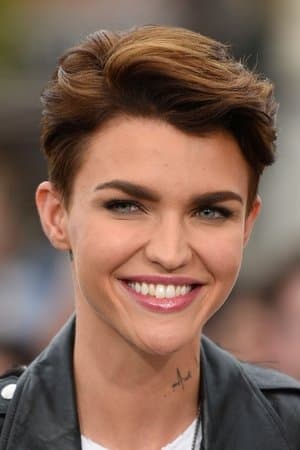
Ruby Rose has come forward with allegations against British actor and filmmaker Noel Clarke, describing what she calls a pattern of predatory behavior, just as Clarke faces formal criminal charges in the United Kingdom. The Australian actress, known for her role in the John Wick franchise and the CW's Batwoman, made her statements public in the wake of news that Clarke has been slapped with multiple charges by British prosecutors.
The accusations from Rose add a new and prominent voice to the growing list of women who have spoken out against Clarke, who is perhaps best recognized for his long-running role on Doctor Who and his work as the creator and star of the crime drama series Bulletproof. Clarke, who is 50 years old, was formally charged last week by the Crown Prosecution Service in England, following a lengthy investigation into allegations of sexual misconduct and harassment. The charges include several counts of sexual assault and harassment, spanning incidents that allegedly occurred between 2011 and 2019.
Rose took to social media to share her own experiences, writing that she had encountered Clarke earlier in her career and that his behavior toward her was unsettling and inappropriate. While she did not specify whether her allegations are part of the criminal case now moving through the British courts, she made clear that she felt emboldened to speak publicly now that legal action has been initiated. "I remember meeting him and feeling like I needed to get out of the room as fast as possible," she wrote. "I'm glad that there is finally some accountability."
The actress did not provide granular details of her encounter, but her decision to attach her name to the matter carries weight, given her platform and the fact that she has been open in the past about navigating difficult dynamics in the entertainment industry. Rose has spoken candidly in interviews over the years about instances of sexism and unwanted advances, and her latest comments have been interpreted by many in Hollywood as a gesture of solidarity with the other women who have accused Clarke of misconduct.
Clarke's fall from grace has been swift and steep. For years, he was celebrated as a rare Black British success story in the industry, a man who had broken through as both an actor and a producer. He won a BAFTA for outstanding British contribution to cinema in 2020, a recognition that now stands in sharp contrast to the allegations that surfaced just a year later. In April 2021, a joint investigation by The Guardian and the Sunday Times published a detailed report featuring accusations from more than 20 women, all of whom described unwanted touching, groping, and, in some cases, more serious assaults. Clarke denied the allegations at the time, calling them "false and extremely defamatory," but the damage was immediate. He was dropped by his talent agency, suspended by BAFTA, and his production company was shuttered. The BBC, which aired Bulletproof, also halted any further work with him.
The legal process has taken years to reach this point, but the Crown Prosecution Service has now confirmed that Clarke will face trial. He has been charged with seven counts of sexual assault, one count of harassment, and several other offenses. He is scheduled to appear in court in early 2026 to face the charges. His legal team has not yet issued a public statement regarding the formal charges, though Clarke has consistently maintained his innocence since the original allegations were made public.
The timing of Rose's comments is notable. She is not named in the charging documents, and her account appears to be contextual rather than tied to the specific incidents that form the basis of the prosecution's case. Still, her voice adds a layer of pressure and public scrutiny that legal observers say could complicate Clarke's defense, particularly if his team attempts to characterize his accusers as fringe or motivated by financial gain. Rose, who has built a career on playing tough, no-nonsense characters, made clear in her statement that she is not seeking anything other than acknowledgment of what she says she experienced.
"I have never wanted to be a victim," she wrote. "I have wanted to be a survivor and to use my voice for those who haven't been heard yet." She closed her message by thanking the women who had already spoken out, saying that their courage had made it possible for her to revisit her own memories and decide to add her account to the pile.
This case is unfolding against a broader backdrop of reckoning in the entertainment industry on both sides of the Atlantic. While the #MeToo movement has led to high-profile convictions in the United States, the United Kingdom has seen a slower and more uneven legal response. The decision to charge Clarke is being watched closely by legal experts and advocates, who see it as a test of whether the British justice system is finally willing to hold powerful men accountable for alleged behavior that was long whispered about but rarely acted upon.
Rose, for her part, has not said whether she has been contacted by British police as part of their investigation. She has also not indicated any plans to file a formal complaint. Her statement appears to be a moral show of support rather than a legal maneuver. But in the court of public opinion, it carries its own weight.
Clarke remains free on bail pending his court appearance. His career, meanwhile, shows little sign of recovery. The charges he now faces carry the potential for significant prison time if he is convicted, a far cry from the standing he once held as one of the most prominent Black creatives in British television and film. For now, the industry watches and waits, as does Rose, who has made it clear that she no longer intends to stay silent.
Source: The Hollywood Reporter