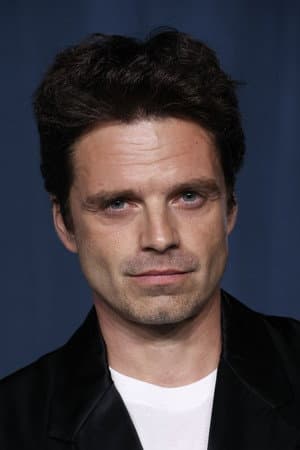
Sebastian Stan isn't interested in meeting hostility halfway. In a newly surfaced set of remarks, the actor took aim at what he described as an increasingly accepted culture of cynicism, arguing that the permission to tear things down tends to come from the top of the ladder rather than the bottom.
Stan framed the issue as a structural one rather than a matter of individual bad manners. Negativity, in his view, is not something that simply bubbles up from audiences or the public at large. Someone with authority, influence or a visible platform has to sanction it first. Once that happens, he suggested, the tone cascades downward and the people watching take their cues accordingly.
The conversation lands at an awkward moment for an industry that depends on enthusiasm. Film promotion has always required stars to sell optimism in public while privately absorbing whatever criticism comes their way. Stan's point seems to be that the permission to be dismissive, snide or reflexively negative has hardened into something closer to a default setting, and that the people with the biggest microphones are the ones modeling it.
His bluntest word for the phenomenon was "lazy." That single adjective does a lot of work. It reframes cruelty dressed up as honesty as something less flattering: a shortcut. Being negative requires no craft, no curiosity and no engagement with what a piece of work is actually attempting. Snark travels fast because it takes almost no effort to produce, which may be exactly why it spreads so efficiently.
Stan has spent enough time inside the machinery to know how the exchange works. He came up through prestige television before becoming a fixture in large-scale franchise filmmaking, an unusual career path that has kept him visible in both the awards conversation and the blockbuster ecosystem. That dual position means he reads the room from two directions at once, and he has never been especially precious about either.
He is also not a newcomer to speaking plainly when the mood strikes. In recent years he has used interviews to push back on how actors are packaged and discussed, questioning the assumption that a performer owes the public an exhaustive account of their private life. His comments on negativity fit that same instinct: a resistance to treating harshness as the mature, clear-eyed position and warmth as the naive one.
There is a practical dimension too. A movie is the labor of hundreds of people, most of whom never appear on a red carpet and have no way to answer back. When the dominant tone around a release turns acidic before anyone has seen it, that tone lands on crews, artisans and support staff as much as it lands on the names above the title. Stan's framing shifts the question away from thin-skinned celebrities and toward the broader cost of a default sneer.
Yet Stan is not calling for a world without criticism. The distinction he appears to be drawing is between evaluation and reflexive sniping. Judgment that comes from actually watching something, thinking about it and arguing for a position is not the problem. Contempt that arrives pre-loaded, often before a project has even screened, is a different animal entirely, and it is the one he seems to be pointing at.
Whether his remarks change any behavior is another matter. Negativity is cheap to generate and reliably rewarded with attention, which makes it structurally difficult to dislodge. But the framing is notable coming from an actor who has navigated both critical adoration and online pile-ons without visibly shifting his approach. If nothing else, it adds a voice to a growing complaint that the loudest reactions in film culture are now the least considered ones.
The takeaway is less a policy proposal than a diagnosis. Somebody at the top has to stop treating disdain as a personality, Stan suggests, before anyone further down the chain feels licensed to do the same. Until that happens, the invitation stays open, and the easy answer keeps winning.
Source: The Hollywood Reporter