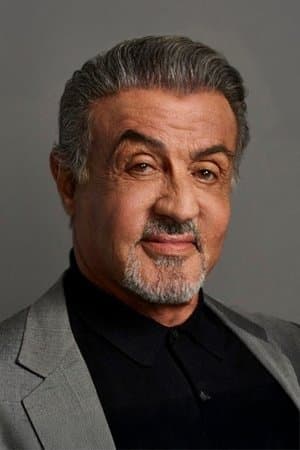
Sylvester Stallone has a message for anyone preparing to dramatize his life on screen: he's still here, and he'd like a word.
The 80-year-old actor and filmmaker responded this week to news of "I Play Rocky," a biopic project centered on his own early career and the creation of the 1976 film that made him a star. In a statement laced with his trademark deadpan humor, Stallone questioned the timing of a movie about a life still very much in progress. "I'm not dead yet," he said. "Aren't we jumping the gun?"
The remark, delivered with the self-aware wit that has defined Stallone's public persona for decades, cuts to an unusual truth about Hollywood's appetite for biography. Most biopics arrive after their subjects have died or retreated from public life. Stallone, by contrast, remains active, visible and seemingly uninterested in being memorialized while he can still weigh in on the script.
A Life That Resists the Third Act
Stallone's objection is more than a punchline. The arc that "I Play Rocky" would presumably cover - a struggling New York actor who wrote a screenplay in near-poverty and refused to sell it unless he could star in it - is only one chapter of a career that has since sprawled across five decades.
After "Rocky" won the Academy Award for Best Picture, Stallone built a second franchise around John Rambo, the traumatized Vietnam veteran introduced in 1982's "First Blood." He directed several entries in the Rocky series himself, wrote most of them, and in recent years returned to both characters with "Rocky Balboa" and the Rambo sequels. A third franchise, "The Expendables," assembled aging action icons into an ensemble that turned nostalgia into a commercial engine. Off screen, he has pursued painting and sculpture, and his family's reality television series introduced him to an audience that never set foot in a theater in 1976.
That sprawling second and third act is the awkward problem for any biopic. Films about living artists tend to freeze their subjects at a defining moment, treating the rest of their lives as an epilogue. Stallone appears to recognize that trap. A movie called "I Play Rocky" implies the story ends when the credits roll on the original film. His career suggests otherwise.
Biopics of the Living Are Nothing New
Stallone is hardly the first public figure to push back on a premature screen treatment. Filmmakers have long wrestled with how to portray subjects who can still grant or withhold cooperation - and who can still object publicly.
When a biopic centers on a living person, the subject often becomes a de facto critic, shaping the narrative through interviews, social media posts or outright denials. Some choose to participate, trading access for influence over how they are depicted. Others keep their distance and let the finished film speak, reserving judgment until they see it.
Stallone's statement fits a third path: acknowledging the project exists while gently mocking its premise. The line "I'm not dead yet" does double duty. It is both a joke about mortality and a claim on the story itself - a reminder that the man who invented Rocky Balboa is still around to say what that character meant.
What Rock(y) Solid Ground Exists?
The biography of Stallone's early years is well documented and dramatic in its own right. Raised in New York and later Maryland, he worked a string of odd jobs before breaking into acting. He wrote the screenplay for "Rocky" and famously held out for the lead role when producers wanted a bigger name. The film, made for a modest budget, became a phenomenon and won Best Picture.
Those facts are public record. What remains unclear is how "I Play Rocky" intends to handle them, who will star, or when it might reach audiences. No studio, cast or release information has been confirmed. Stallone's reaction is, for now, the most concrete piece of news attached to the project.
That vacuum is itself telling. A biopic announced without a star, a director or a distributor is often a project in search of a shape. Stallone's quip may not derail it, but it does set a bar: any actor stepping into his shoes will have to reckon with a subject who is still talking.
A Subject Who Won't Stay in the Frame
There is an irony in a film called "I Play Rocky" that Stallone himself would likely appreciate. Rocky Balboa, the character, was a fighter who refused to stay down. Stallone, the man, has spent fifty years refusing to be written off - by critics, by the industry, by anyone who assumed the Rocky story was over.
Now someone wants to dramatize the beginning of that refusal while the ending remains unwritten. Stallone's response suggests he finds the whole exercise a bit rich. "I'm not dead yet," he said. "Aren't we jumping the gun?"
Whether the filmmakers adjust their aim or proceed regardless, the comment has already done what Stallone has done for decades: turned a promotional moment into a performance. The biopic is about him. The best line in the coverage, so far, is his.
Source: The Hollywood Reporter