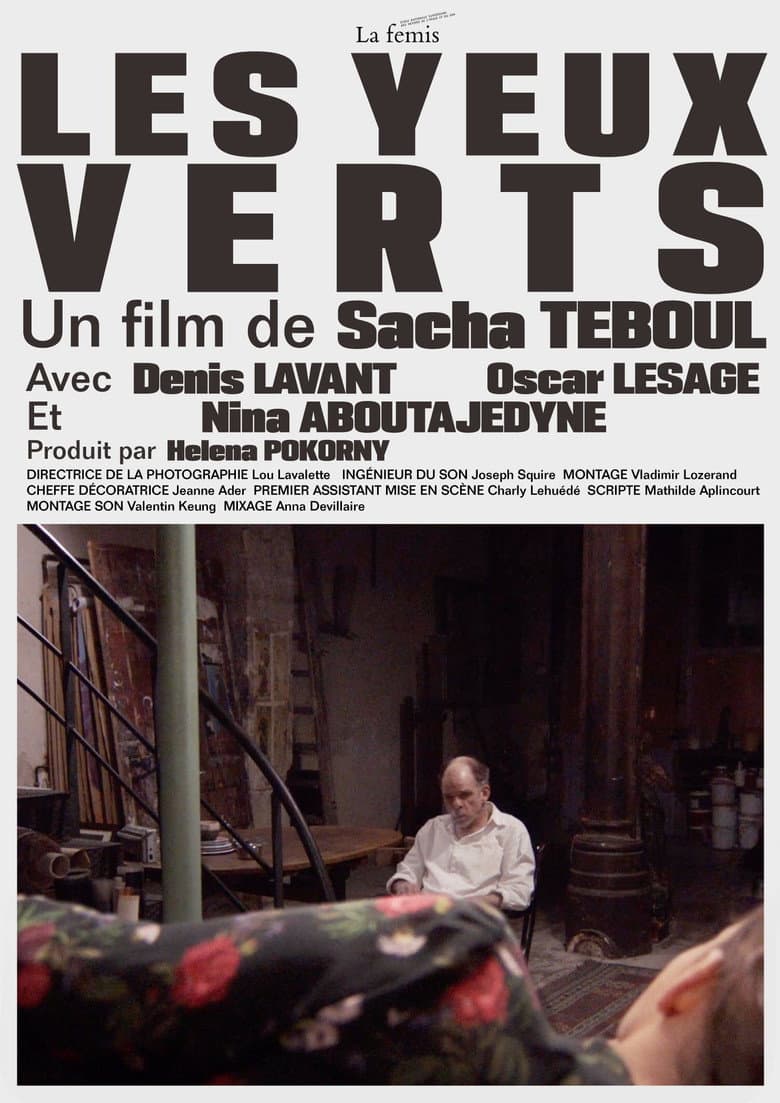
The Locarno Film Festival opened its doors this year with a 29-minute film that aims to do more than tell a story. The Green Eyes, directed by Sacha Teboul and inspired by the real-world phenomenon of resignation syndrome, seeks to reawaken a sense of compassion in audiences by viewing trauma through the eyes of a refugee child. The film, which premiered at the Swiss festival on August 3, 2026, marks a deliberate stylistic and thematic departure from conventional narratives about displacement.
At its core, The Green Eyes is a tale of obsession and loss, centered on Yuri, a sculptor who has spent the 17 years since his wife’s death painstakingly trying to recreate her. The only element he has never been able to replicate is her eyes - until he meets Andreas and sees, with unmistakable clarity, that the young man possesses them. That encounter upends Yuri’s solitary quest, signaling both the end of his search and the beginning of something far more complicated. The film’s cast includes Nina Aboutajedyne, Oscar Lesage as Andreas, and Denis Lavant as Yuri.
The title itself carries a double meaning. On one level, it refers to the literal green eyes that anchor Yuri’s fixation. But the film’s deeper resonance comes from its connection to resignation syndrome, a condition that has been documented among refugee children in Sweden and other Nordic countries. Children who have endured extreme trauma sometimes fall into a state of profound withdrawal, becoming unresponsive and immobile for months or even years. Teboul’s film does not depict that syndrome directly; instead, it uses the emotional paralysis of its adult protagonist as a mirror for the way trauma freezes people in place, cutting them off from the world around them.
What distinguishes The Green Eyes from other festival entries is its narrative perspective. Rather than centering the story on an adult observer, Teboul has constructed the film to unfold largely from the point of view of a child refugee. That choice is intentional, according to the director, who has spoken about the need to strip away the layers of political abstraction that often surround discussions of migration. By positioning the audience inside a child’s limited but piercing awareness, the film works to bypass intellectual defenses and reach viewers on a more visceral level. The goal, as Teboul has stated, is “to try to revive empathy” - a phrase that neatly captures the film’s ambition to do more than elicit sympathy or pity.
The film does not offer easy answers. Yuri’s compulsion to resurrect his late wife is rendered in spare, almost clinical images, and his sudden fixation on Andreas raises questions about projection, appropriation, and the ethics of seeing another person as nothing more than a missing piece. The child’s perspective complicates that dynamic, introducing a vulnerability that cuts against Yuri’s single-mindedness. In that tension, the film suggests, lies the core of genuine empathy: the willingness to see another person not as a solution to one’s own grief, but as a full and separate being.
Locarno has long been a platform for politically engaged cinema, and The Green Eyes fits squarely within that tradition. The festival’s decision to open with such a deliberately small, character-driven work - one sourced from a subject that has rarely been dramatized - signals a continued appetite for films that grapple with the human cost of global crises without resorting to melodrama. Teboul, whose previous work has drawn attention for its quiet observational style, appears to be operating in a mode that prizes restraint over spectacle.
The film’s timing is also notable. As European governments continue to debate asylum policies and the psychological toll on displaced families remains largely invisible in mainstream media, The Green Eyes arrives as a corrective. It does not lecture or editorialize; it simply places a child’s experience at the center and trusts the audience to feel its weight. That trust extends to the performances, with Lavant - a veteran actor known for his intense physicality - delivering a portrayal of grief that is muted yet volatile. Lesage, as the young man with the coveted eyes, brings an unsettling serenity to his role. Aboutajedyne’s work in the film adds a grounding, human counterpoint to the more abstract currents at play.
While the film’s runtime is brief, its implications are not. The Green Eyes is an invitation to sit with discomfort, to ask what it means to truly look at another person, and to recognize that empathy is not a passive feeling but a discipline. At a moment when news cycles reduce refugee experiences to statistics, the film insists on the particular - the individual face, the specific gaze, the unbearable weight of a child’s silence. Whether audiences will accept that invitation remains to be seen, but Teboul’s opening-night statement makes the intent clear enough. He is not making a film about resignation syndrome. He is making a film that asks why we have stopped feeling, and what it might take to start again.
The Green Eyes premiered at Locarno on August 3, 2026. Its broader release plans have not yet been announced.
Source: The Hollywood Reporter