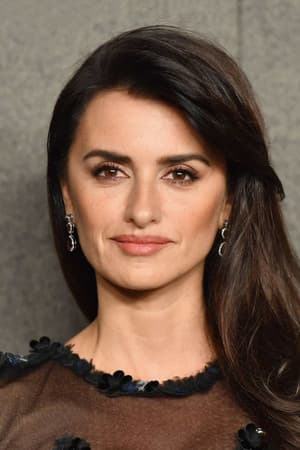
The Hollywood Reporter is heading back to the Toronto International Film Festival this year with a full slate of on-site programming, anchored by a live recording of its "Awards Chatter" podcast featuring Penélope Cruz. The trade publication confirmed its return to TIFF with an editorial portrait studio, a video lounge, and the marquee sit-down with the Oscar-winning Spanish actress, marking another sizable investment in festival-side coverage at a moment when awards-season narratives increasingly begin forming on the ground in Toronto.
Cruz's appearance on "Awards Chatter" puts her in the company of a long line of performers, directors, and craftspeople who have sat for the show's career-spanning conversations. The podcast, hosted by Scott Feinberg, has become a fixture of the awards calendar, with episodes typically spanning a guest's full body of work rather than a single project. Recording live in front of an audience at TIFF adds a layer of immediacy that a studio taping does not, and it gives festival attendees a chance to watch one of the format's better-known interviews unfold in real time.
For Cruz, the stop in Toronto extends a career that has moved fluidly between Spanish-language cinema and English-language productions for more than three decades. She broke through internationally with Pedro Almodóvar's "Women on the Verge of a Nervous Breakdown" in 1988, won an Academy Award for her supporting turn in Woody Allen's "Vicky Cristina Barcelona" in 2009, and has remained a regular presence at the fall festivals. Her collaborations with Almodóvar - including "All About My Mother," "Volver," and "Parallel Mothers" - have made her one of the most recognizable European actresses of her generation, and her range across comedy, drama, and period work has kept her in demand on both sides of the Atlantic.
The portrait studio and video lounge round out what amounts to a small production footprint inside the festival. THR has operated similar setups at TIFF in past years, using them to shoot talent for editorial features and to record video interviews that feed both the publication's website and its social channels. The studio format has become standard practice for entertainment outlets during festival season, when dozens of casts and filmmakers pass through a single city over ten days and access is often limited to tightly scheduled windows.
A Growing Festival Footprint
THR's TIFF presence fits a broader pattern among Hollywood trade outlets, which have increasingly treated festivals as content engines rather than mere assignments. The portrait studio generates a steady stream of images that can be published immediately, while the video lounge produces short-form interviews suited to digital distribution. Together they give the publication a physical hub at the festival - a place where publicists can route talent and where editors can capture material that would be difficult to assemble on a normal news day.
The live "Awards Chatter" recording serves a similar dual purpose. It generates an episode for the podcast's regular audience while also functioning as a festival event, drawing attendees who might not otherwise engage with trade coverage. For Cruz, the timing places her in front of an industry audience during a period when fall festival premieres traditionally set the terms of the awards conversation.
TIFF has long served as a launchpad for films angling for a place in the year-end race, and the festival's September slot gives it outsized influence over which titles gain early momentum. Studios and distributors routinely use the event to gauge reaction before deciding how aggressively to campaign. That dynamic has made Toronto a priority for outlets covering the season, and it explains why THR would commit resources to a sustained on-the-ground operation rather than sending a single reporter.
What the Programming Signals
The decision to pair a portrait studio with a live podcast taping reflects how entertainment journalism has diversified its output. Written features, video interviews, and audio conversations now function as separate products aimed at different audiences, and festivals offer a rare opportunity to produce all three in one concentrated stretch. For readers, the result is often a denser stream of coverage - profiles, red-carpet conversations, and long-form interviews arriving within days of one another.
Cruz's participation also underscores the continued appetite for career-retrospective interviews at a time when promotional cycles have grown shorter and more fragmented. The "Awards Chatter" format trades on depth, asking subjects to walk through their filmographies rather than promote a single title, and that approach tends to produce material that outlasts a given awards season.
Specific details about the recording's timing, location, and ticketing were not included in the initial announcement. THR has not indicated whether additional guests will be added to the TIFF lineup or whether the studio and lounge will operate for the full duration of the festival.
What is clear is that the publication intends to be visible in Toronto, and that Cruz will be among the figures anchoring its presence there. For an actress whose career has spanned art-house landmarks and studio productions alike, a live career conversation on the festival circuit is a fitting setting - and for THR, it is another opportunity to convert festival access into content across three different formats at once.
Source: The Hollywood Reporter