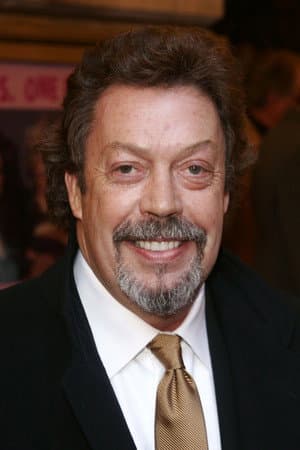
The entertainment world is mourning the loss of Tim Curry, the iconic actor whose career spanned theater, film, and television, with a wave of tributes pouring in from colleagues and admirers. Described by those who knew him best as “a bright fierce flame,” Curry’s impact on popular culture is being remembered through heartfelt statements from a range of stars, including Susan Sarandon, Carol Burnett, Rob Schneider, and Luke Evans. The outpouring of affection underscores the profound mark he left on generations of performers and audiences alike.
Curry, best known for his terrifying yet magnetic portrayal of Pennywise the Clown in the 1990 television miniseries It, built a legacy that defied simple categorization. His performance as the shapeshifting horror villain introduced a new kind of screen menace to millions, but it was merely one chapter in a career that began on the London stage and exploded into global fame with his role as Dr. Frank-N-Furter in The Rocky Horror Picture Show. That 1975 film, in which Curry’s flamboyant, quick-witted mad scientist became a counterculture touchstone, established him as a singular talent who could command a screen with equal parts menace, camp, and vulnerability.
Sarandon, who starred alongside Curry in The Rocky Horror Picture Show, offered a deeply personal reflection on their time working together. In her tribute, she recalled not only his formidable stage presence but also the kindness and intelligence he brought to the set. She noted that his energy was infectious, elevating everyone around him, and that his passing feels like the loss of a vital force in the arts. For Sarandon, who was relatively early in her career when they filmed the cult classic, Curry was a mentor and a friend whose generosity left a lasting impression.
Carol Burnett, who shared the screen with Curry in the 1982 musical film Annie, remembered him as a consummate professional with a playful spirit. Burnett highlighted his ability to switch effortlessly from comedic timing to dramatic depth, noting that his performance as the scheming Rooster Hannigan was both hilarious and genuinely menacing. In her statement, she emphasized how Curry could find the humanity in even the most villainous characters, a skill that made him a favorite among directors and audiences. She described him as a rare breed of performer who made everything look effortless while clearly pouring his entire soul into every role.
From the world of comedy, Rob Schneider offered a more anecdotal tribute, recalling Curry’s surprising warmth during the production of the 1994 film The Flintstones. Schneider, who appeared in the big-screen adaptation, expressed gratitude for having had the chance to watch Curry work up close. He marveled at Curry’s ability to elevate even the most cartoonish material, bringing a Shakespearean gravitas to a prehistoric setting. Schneider’s comments reflect a common theme in the remembrances: Curry never treated any role as beneath him, approaching every project with the same fierce dedication.
Luke Evans, a fellow actor who knew Curry in his later years, spoke to the legacy Curry leaves behind, particularly for performers who found inspiration in his fearlessness. Evans praised Curry for paving the way for actors who wanted to embrace larger-than-life characters without apology. He described Curry’s influence as immeasurable, noting that his unapologetic commitment to his craft, regardless of genre, served as a blueprint for many in the industry. Evans’ tribute is a testament to the enduring power of Curry’s work to inspire future generations who never shared a stage with him but felt his presence through his filmography.
Beyond the celebrity tributes, the broader industry is reflecting on the sheer range of Curry’s body of work. From his voice performance as the sinister but lovable Long John Silver in Muppet Treasure Island to his turn as the butler in Clue, and from his scene-stealing role in The Addams Family to his voice work in numerous animated features, he was an actor who could do it all. His distinctive voice - a rich, theatrical instrument capable of conveying both velvet charm and razor-sharp threat - made him a voice-acting legend in his own right.
Curry’s health struggles in his final years, including a severe stroke in 2012 that limited his mobility and speech, never dimmed the affection his peers held for him. Many noted that even when he could no longer perform, his spirit remained vibrant, and his wit remained sharp. The tributes from Sarandon, Burnett, Schneider, and Evans each capture a different facet of the man: the collaborator, the comedian, the muse, and the icon. What unites them is a profound sense of gratitude for having shared time with someone whose talent was as immense as his generosity.
As the news of his passing spreads, social media has become a flood of clips and quotes celebrating his most famous moments, from the Time Warp to the red balloon. For a generation, he was the stuff of nightmares; for another, he was the spark of a wild, liberating rock musical; for still others, he was the dependable scene-stealer in family films. All of them are now remembering the same thing: a performer of unstoppable energy and unmistakable presence. The phrase “a bright fierce flame” is an apt epitaph for a man who burned so brightly on screen that his light will continue to shine through his work for decades to come.
Source: The Hollywood Reporter