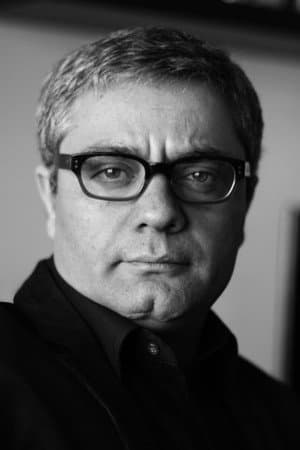
The Tokyo International Film Festival will present its Kurosawa Akira Award to two filmmakers whose careers have traced unusually separate paths through contemporary cinema: the Iranian director Mohammad Rasoulof and the Japanese director Mipo O. The honor, named for the director whose work reshaped global perceptions of Japanese film, recognizes figures whose bodies of work reflect the humanist conviction associated with Kurosawa's legacy.
The award places Rasoulof and O in a lineage of recipients selected less for commercial profile than for sustained artistic seriousness. Tokyo has long framed the prize as a way of acknowledging filmmakers whose work engages moral and social questions without abandoning formal craft. In that sense, the pairing of an Iranian director known for his confrontational examinations of power and a Japanese filmmaker celebrated for intimate studies of marginal lives is deliberate rather than incidental.
For Rasoulof, the recognition arrives after years in which his filmmaking has been inseparable from the conditions under which he has been permitted to work. His films have often centered on the individual pressed against institutional authority, whether religious, judicial, or political. He has built a reputation for a stripped-down visual style and for narratives that withhold easy resolution, asking audiences to sit with ambiguity rather than catharsis. That approach has made him a fixture on the international festival circuit even as his production circumstances at home have remained precarious.
O, by contrast, has developed her reputation through a quieter register. She has consistently returned to characters on the edges of Japanese society - those whose lives are shaped by loss, illness, or the slow erosion of family ties. Her films tend to favor observation over declaration, finding emotional weight in domestic detail and in performances that resist showiness. Critics have often noted her ability to render ordinary settings with unusual attentiveness, a quality that has earned her comparisons to earlier generations of Japanese directors who treated the everyday as a legitimate subject for serious drama.
A Shared Humanism
What links the two filmmakers, despite the distance between their subjects and settings, is a preoccupation with dignity under pressure. Rasoulof's protagonists frequently confront systems that seek to define them; O's characters often confront circumstances that threaten to render them invisible. Both directors have resisted the temptation to sentimentalize that struggle. The Kurosawa Akira Award, in its selection, appears to be signaling an interest in filmmakers who treat cinema as a moral instrument rather than merely an entertainment one.
The festival's decision also reflects a broader shift in how major Asian festivals have positioned themselves over the past decade. Rather than competing solely for red-carpet premieres, Tokyo has increasingly emphasized curation and legacy, using awards like this one to establish a critical throughline between the classical era of Japanese cinema and contemporary work from across the region and beyond. Honoring a director from Iran alongside one from Japan fits that project, framing the award as a statement about cinema's capacity to cross borders even when the filmmakers themselves cannot always do so freely.
Neither filmmaker is a newcomer to international recognition. Rasoulof's work has screened widely at European festivals, and his name has become associated with a strain of Iranian cinema that operates under acute constraint. O has been a recurring presence at Japanese industry awards and has seen her films travel to festivals abroad. The Kurosawa Akira Award adds a different kind of validation, one tied less to any single title than to the shape of a career.
What the Honor Means
Awards of this type rarely alter a filmmaker's working conditions. What they can do is consolidate a reputation, making it easier for programmers, critics, and audiences to see individual films as part of a larger argument. For Rasoulof, whose work is often discussed in political terms that can obscure its formal choices, the prize offers an opportunity to foreground craft. For O, whose films can be overlooked in favor of louder Japanese exports, it provides a platform that may bring her work to viewers who have not yet encountered it.
The festival has not indicated how the two will be recognized during the event, and further details about the presentation are expected as the program is finalized. What is clear is that Tokyo has chosen to pair two filmmakers whose approaches differ sharply but whose underlying concerns overlap. Both have spent their careers looking closely at people whose lives are constrained by forces larger than themselves, and both have refused to reduce those people to symbols.
In an era when festival awards often function as marketing instruments, the Kurosawa Akira Award remains comparatively modest in its commercial ambitions. Its value lies in the conversation it proposes: between a Japanese master's legacy and two living directors who, in their separate ways, continue to test what serious cinema can still do.
Source: The Hollywood Reporter