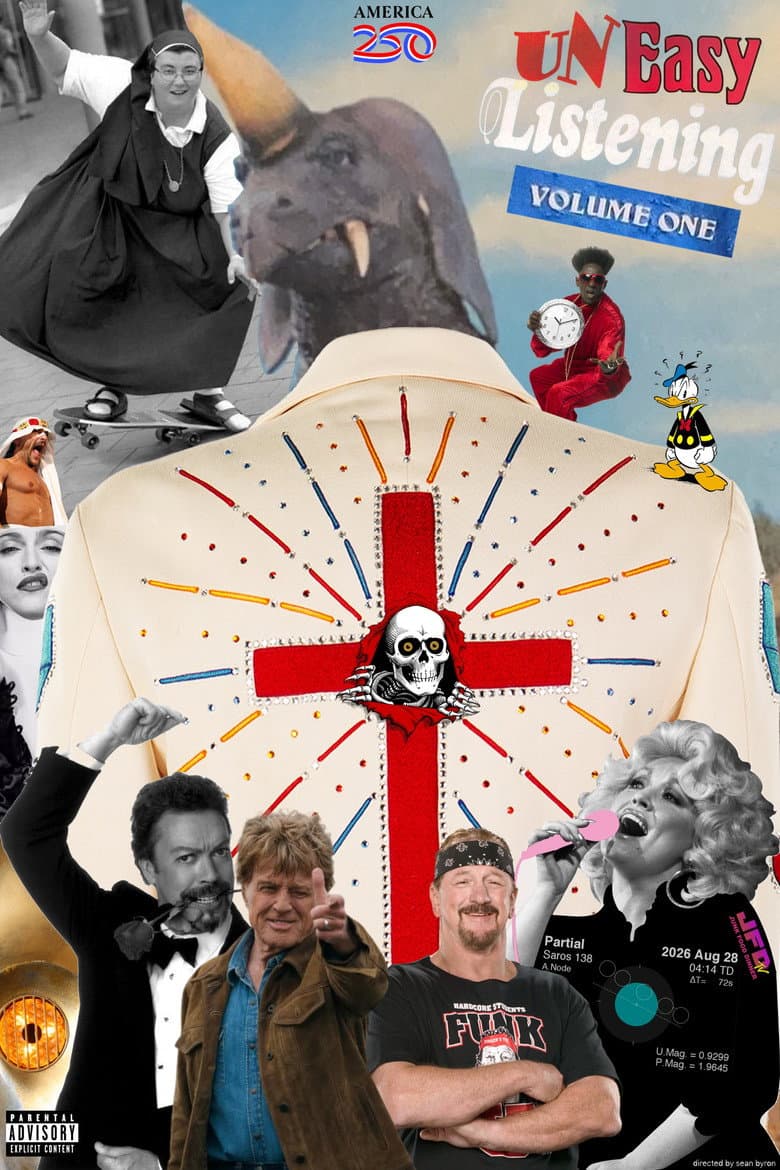
The clock is about to strike midnight on America’s 250th birthday party, and the last song on the turntable promises to be a strange, glorious, and wonderfully chaotic one. While the fireworks have long since faded and the patriotic playlists have been packed away, a final, unexpected coda is arriving in theaters and on your living room screen. Uneasy Listening, Volume 1 isn’t just a movie; it’s a sonic time capsule, a defiantly weird farewell to the nation’s bicentennial-plus-one celebrations. Directed by the enigmatic Sean Byron and produced under the banner of the delightfully odd Junk Food Dinner, this 70-minute fever dream is set to bend genres, expectations, and perhaps a few eardrums.
Release Date & Where to Watch
Here’s the catch - and it’s a fitting one for a project this iconoclastic: the release date remains a deliciously guarded secret. As of today, August 28, 2026, no formal theatrical rollout has been announced, and streamers are circling like vultures around a particularly tasty carcass. Industry insiders suggest that Junk Food Dinner is intentionally courting a "when it drops, it drops" strategy, possibly leveraging a surprise midnight screening circuit before a rapid digital release. Given its tight 70-minute runtime, it’s tailor-made for a platform like Criterion Channel or a late-night slot on Adult Swim, but for now, the only confirmed distribution plan is that there is a plan. Keep your ears to the ground and your RSS feeds on high alert; this is a piece of content that wants to be discovered, not scheduled. If you see a poster with no date, trust that it’s closer than you think.
Cast & Crew
The marquee here isn’t populated by A-list actors; it’s powered by a crew whose names read like a secret handshake. At the helm is Sean Byron, a director whose prior work exists in whispers and film-festival lore rather than in mainstream box office grosses. Byron is known for a visceral, almost ethnographic approach to performance, favoring raw energy over polished line readings. He’s partnered with Junk Food Dinner, a production house that has built a cult following for turning disposable pop culture into heady, often hilarious art installations. The real headliners, however, are the sonic architects: legendary turntablist DJ Z-Trip and the equally formidable DJ P. Longtime collaborators in the art of the mash-up, these two have crafted a soundtrack that isn't just background noise but the film’s beating, syncopated heart. Expect to hear the entire history of American music - from Sousa marches to hardcore punk, from Motown to modern trap - scrambled, reassembled, and weaponized into a single, continuous mix. The "cast," in the traditional sense, is a rotating door of archival footage, street performers, and unsuspecting subjects caught in Byron’s lens, making this less a narrative film and more a kinetic collage of a nation in flux.
Story & What to Expect
There is no plot synopsis, and thank goodness for that. Uneasy Listening, Volume 1 is best described as a cinematic mixtape: a 70-minute, non-linear essay about the fraying edges of the American experiment. The film picks up where the birthday cake has been eaten and the hangover has set in. It’s the morning after the party, and the record player is stuck on a loop, replaying fragments of the national anthem over the sound of collapsing infrastructure and distant arguments. Byron’s camera roams through a landscape of empty parade routes, abandoned fairgrounds, and late-night diners where the jukebox only plays B-sides. It’s a road movie without a road, a documentary without a subject, a narrative without a plot.
Expect to be challenged. The film eschews traditional structure for a rhythmic montage, where images of Mount Rushmore are intercut with skateboarders crashing in empty swimming pools, and speeches by long-dead presidents are re-contextualized over the heavy, propulsive beats of Z-Trip's mix. The "uneasy" in the title is doing double duty: it refers to the dissonance of hearing Beyoncé’s vocals over a John Philip Sousa tuba line, but also to the general, low-grade anxiety of a country that isn't sure what its next act is. The music isn't just a score; it's the narrator, the editor, and the moral compass. When the mix slows down to a haunted, ambient hum, the screen fills with images of quiet suburban decay. When the tempo spikes, so does the chaos on screen. It’s an assault on the senses, but a meticulously crafted one. The 70-minute runtime is a blessing - it’s long enough to build a world, but short enough to leave you breathless and wanting more, like a great punk album that clocks in under thirty minutes.
Why It's Worth Watching
In an era of bloated, $200-million sequels and algorithm-driven content, Uneasy Listening, Volume 1 is a defiant shot of pure adrenaline. It’s not for everyone - the lack of a conventional story will frustrate those expecting a typical feature - but for those willing to surrender to its rhythm, it’s an exhilarating experience. This is a film that demands you feel it in your chest before you can even begin to process it intellectually. The collaboration between Byron and the DJ duo is a masterclass in synchronizing image and sound, creating moments of surprising, gut-punching emotional resonance from the most disparate of parts. It deconstructs the very idea of national identity without succumbing to jingoism or outright cynicism. Instead, it finds a strange, awkward beauty in the collision of cultures and sounds.
Furthermore, its status as the "Final Chapter" of the 250th celebration gives it a historical weight that belies its scrappy production. It’s the official send-off that no government agency could ever commission: a messy, honest, and occasionally hilarious eulogy for a year of commemorations that never quite knew what it was celebrating. With a TMDb rating of 0/10 (having not yet been released), there’s no critical consensus to sway you - only the promise of an avante-garde gamble.
Uneasy Listening, Volume 1 is a film you don't watch; you experience it. You surrender to the beat, to the chaos, and to the weird, persistent hope that even when the music sounds broken, it's still, somehow, a song. It is a bold, incomplete, and utterly fascinating artifact. You may not understand it, but you will not be able to stop listening. Recommended only for those with an open mind, a good sound system, and a willingness to dance to the dissonance.