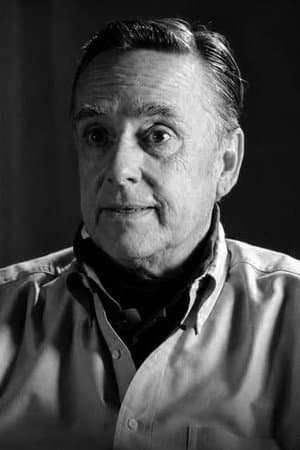
Victor Miller, the screenwriter who conceived the story for the original Friday the 13th and whose name became synonymous with one of horror cinema’s most durable franchises, has died. He was 86. Miller passed away on September 4, 2026, according to his representative. The cause of death was not immediately disclosed.
Miller’s contribution to the genre is singular, though often misunderstood. He did not write the screenplay for the 1980 film that launched a thousand campfire nightmares; rather, he authored the initial story, a deceptively simple premise involving a group of teenage camp counselors being picked off one by one at a summer camp that had been closed for decades. That framework, which he sold for a modest sum under the aegis of producer Sean S. Cunningham, would go on to generate a dozen sequels, a reboot, a television series, and countless imitators. But for all the blood-soaked mythology that followed - the hockey mask, the unstoppable killer, the “final girl” trope codified - Miller’s original vision was leaner, meaner, and, in his own telling, more about grief than gore.
The twist at the heart of his story - that the murderer was not a hulking malevolent brute but a grieving mother seeking vengeance for the drowning of her son decades earlier - was a subversion of slasher expectations before the subgenre had even hardened into formula. That character, Pamela Voorhees, was portrayed by Betsy Palmer in the first film, and her rampage established the template of the lurking, unseen threat that would eventually give way to her son, Jason, in the sequels. Miller, for his part, was famously protective of his original conception. For years, he fought in court for the rights to the story and a share of profits, arguing that his involvement was foundational to the franchise’s existence. A long-running legal battle with Cunningham and Warner Bros. over ownership was settled in 2021, with Miller receiving a substantial payout and, more importantly, a measure of credit that had often been overshadowed by the director’s and the studio’s claims.
Born in 1940 in New Haven, Connecticut, Miller did not set out to become a horror writer. He studied English literature and worked for a time as a teacher, writing plays and short fiction on the side. His path to Friday the 13th came through a chance acquaintance with Cunningham, who was then building a career in low-budget exploitation films after producing Wes Craven’s Last House on the Left. Cunningham had a title - Friday the 13th - and no story to attach to it. He approached Miller in the late 1970s and asked if he could craft something around the unlucky date. Miller, reportedly writing at a borrowed typewriter in a small apartment, drafted a 30-page treatment in a weekend, fueled by newspaper clippings about real-life camp tragedies and his own anxieties about the fragility of youth. The result was a story that Cunningham and his collaborators, including director Sean S. Cunningham and screenwriter Ronn Kurz, expanded into full screenplay form. Miller’s name appeared in the credits as “story by” alongside Kurz, though the exact division of labor has been a point of contention for decades.
The film itself, made on a shoestring budget, became one of the most profitable independent productions of its era, earning tens of millions of dollars against a reported cost of around $550,000. Miller rarely worked in horror again, writing instead for television dramas and independent films that never reached the cultural prominence of his debut. In interviews, he expressed a certain bemused resignation about his legacy. “I wrote it in a panic, and it made a fortune for other people,” he told an interviewer in 2015. “But I’m proud that it scared people. That was the point. Fear is a pure emotion.” He added, with a dry chuckle, “I just never expected Jason to have a second career.”
In his later years, Miller became something of an elder statesman at horror conventions, signing autographs and telling stories with the wry detachment of a man who had seen his work mutate into something far larger than he ever intended. He was also a vocal critic of the violence escalation in later sequels, preferring the suspense of his original story to the more explicit carnage of the 1980s and beyond. He wrote a novelization of the first film, which was published in 1980, and remained active in writers’ organizations, advocating for better contracts and credit protections for screenwriters - a cause that took on personal urgency given his own legal fights.
Miller is survived by his wife, two children, and a handful of grandchildren. Details for a memorial service have not yet been announced. In the annals of horror, his name may not carry the same immediate recognition as that of Jason Voorhees, but the story he told in that frantic weekend continues to echo through the genre. Every time a group of young people wanders into a dark wood, every time an unseen presence watches from behind a cabin’s window, every time a mother’s grief curdles into homicidal rage, Miller’s shadow is there. He did not invent the slasher, but he gave it a distinctly American sensibility - part fable, part nightmare, part sermon on the dangers of letting the past rot in the summertime sun. And for that, horror fans owe a debt they may never fully repay.
Source: The Hollywood Reporter