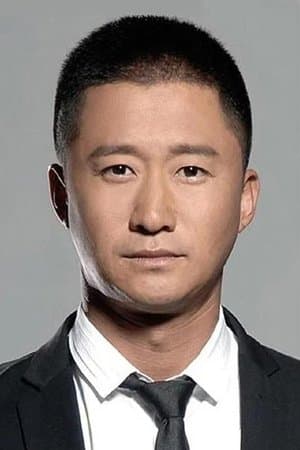
Wu Jing Honored at MIFFest: Hong Kong Action Lives in Wuxi
At MIFFest, Wu Jing was honored and stated that the influence of Hong Kong action cinema still runs through every wuxia film today.
Advertisement
At MIFFest, Wu Jing was honored and stated that the influence of Hong Kong action cinema still runs through every wuxia film today.
Kuala Lumpur - Wu Jing, the Chinese action star best known internationally for his role in Meg 2: The Trench, was honored at the Malaysia International Film Festival (MIFFest) earlier this week, where he used the platform to reflect on the enduring legacy of Hong Kong action cinema. Speaking to the audience after receiving the festival’s tribute, Wu argued that the DNA of Hong Kong’s martial-arts filmmaking tradition remains deeply embedded in every contemporary wuxia picture, despite the genre’s evolution.
“The techniques, the pacing, the choreographic philosophy - Hong Kong action cinema’s influence still runs through every wuxia film today,” Wu said during the ceremony. His remarks underscored a continuity that many younger viewers might overlook, as the swordplay and fantasy elements of wuxia have increasingly merged with digital effects and international production values.
MIFFest Tribute Highlights a Cross-Border Career
MIFFest, now in its eighth edition, has carved a reputation as a key platform for Asian cinema, often honoring figures who bridge markets across the region. Wu Jing’s presence this year was particularly notable given his unusual career arc: he rose to fame as a mainland Chinese actor and director - first with the Wolf Warrior franchise, then as part of the The Wandering Earth ensemble - while also maintaining strong ties to the Hong Kong film industry, where he started out as a stuntman and supporting player in the early 2000s.
Festival organizers presented Wu with a special achievement award, citing his contributions to “the global expansion of Chinese-language action films.” In his acceptance, Wu did not dwell on his own hits but instead directed attention to the mentors and predecessors who shaped him. “I am a product of that Hong Kong system. I learned to fall, to fight, to tell a story through movement from directors and choreographers who had no CGI to fall back on,” he said.
The Hong Kong Echo in Modern Wuxia
Wu’s assertion about wuxia films today may surprise audiences who associate the genre with epic battles on misty mountaintops - think Zhang Yimou’s Shadow or Tsui Hark’s The Flying Swords of Dragon Gate. Yet the choreographic grammar of those films, Wu argued, owes a direct debt to the fast-cutting, wire-assisted, acrobatic style perfected in Hong Kong during the 1980s and 1990s.
He pointed to the way modern wuxia directors stage one-on-one duels: rapid close-ups, fluid camera movements, and a rhythm that prioritizes impact over realism. “That’s not ancient Chinese martial arts,” Wu said. “That’s Jackie Chan and Yuen Woo-ping and Sammo Hung. It’s Hong Kong.” He drew a parallel to the jazz-like improvisation that defined the golden age of Hong Kong action, where stunt teams would often adjust fight sequences on the fly, a spontaneity he believes still informs the best wuxia set-pieces.
Critics have noted that the line between wuxia and pure action has blurred in recent years, partly because the same stunt coordinators - many trained in Hong Kong - work across genres. Wu’s own Wolf Warrior 2, while a modern military thriller, incorporated fight choreography that felt distinctly Hong Kong in its precision and physicality.
A Bridge Between Generations
Wu’s remarks also carried a personal weight. He began his career as a child wushu athlete in Beijing, but his break came when he was cast in Hong Kong productions such as Shaolin and Tai Chi Boxer. There, he absorbed the no-frills, high-risk approach to stunt work that defined the territory’s industry for decades. “I remember jumping off a building for the first time,” he recalled. “No harness. Just a mattress. A Hong Kong stuntman told me, ‘If you’re afraid, you’ll get hurt. If you trust the choreography, you’ll be fine.’ That lesson is in every wuxia film I see today.”
The tribute at MIFFest arrives at a moment when Hong Kong cinema itself is undergoing a generational transition. The old studio system of Shaw Brothers and Golden Harvest is long gone, and the current crop of directors often work on co-productions with mainland China. Wu acknowledged this change but stressed that the craft philosophy remains intact. “The names change. The faces change. But the way we move - the way we make the audience believe a person can fly on wires - that’s still Hong Kong,” he said.
Looking Ahead
Wu did not announce any new projects during the appearance, though he hinted at a return to director’s chair on an upcoming wuxia film that would “respect the old ways” while using modern technology. He also expressed hope that festivals like MIFFest would continue to spotlight the region’s action heritage before it fades from institutional memory.
For now, his comments serve as a reminder that even in an era of global blockbusters and digital spectacle, the imprint of a small, intense film industry on China’s southern coast still shapes how the world watches people fight on screen. As Wu put it: “Every wuxia film is a letter. And the return address is still Hong Kong.”
Source: Variety
Advertisement
Advertisement