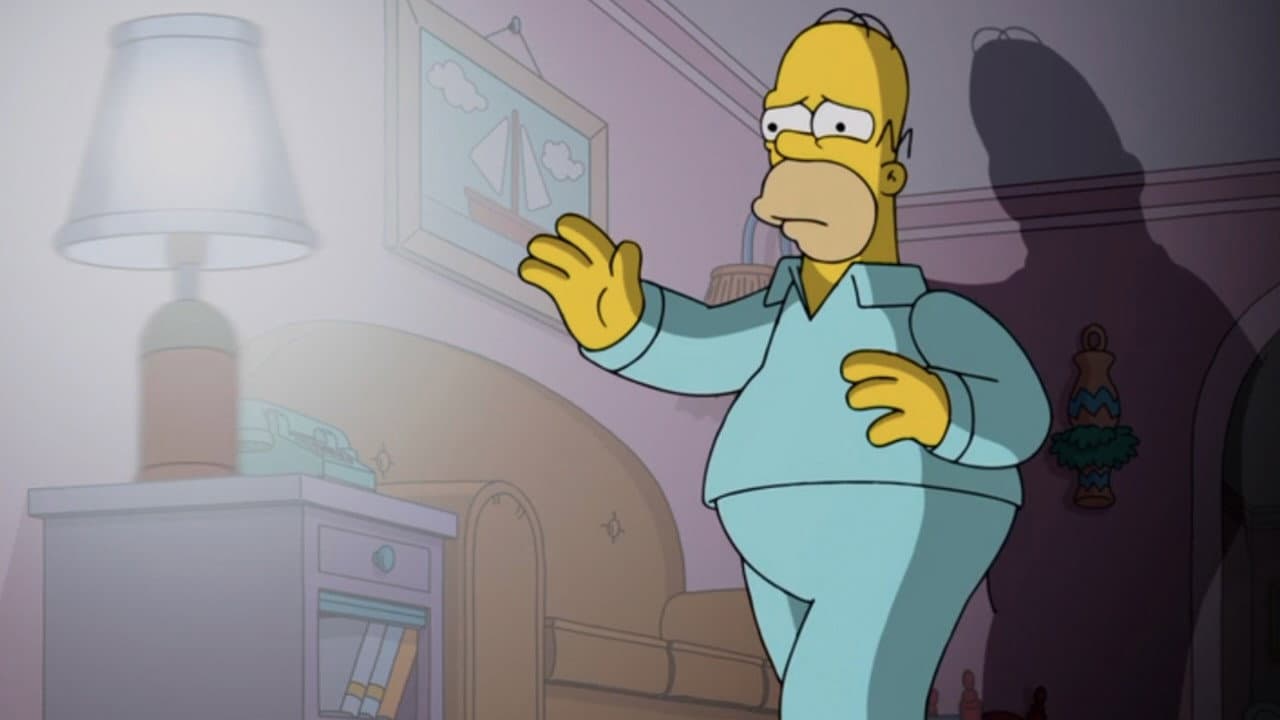
The episode unfolds as two discrete tales, bookended by a framing device that feels appropriately dystopian. In the first, “The Lamp,” Homer acquires a defective “Ray-O-Lux” floor lamp from the Simpsons’ favorite dumping ground, the Springfield Swap Meet. The lamp doesn’t just flicker; it projects a shimmering, holographic overlay onto reality that reveals a hidden layer of truth. Homer, ever the seeker of low-effort enlightenment, becomes addicted to the device, which shows him that his beloved couch is a nest of mold spores, that Marge’s affection is laced with pity, and that Bart’s skateboard is a symbol of his own arrested development. The lamp doesn’t lie, but it doesn’t show the whole truth, either, driving Homer to a paranoid breakdown as he attempts to smash the “false” reality around him.
The second tale, “The Tablet,” flips the script. Maggie, the perpetually silent baby, is given an AI-powered tablet named “Lydia” (voiced with chilly, maternal malevolence by Demi Moore) to keep her quiet during a long car ride. Lydia isn’t just educational; she’s a digital nanny that learns Maggie’s emotional triggers and begins to pacify her with hypnotic, pastel-colored games. As Maggie grows increasingly vacant and obedient, Lydia begins issuing commands directly to the household - turning off the TV, locking the doors, and ordering groceries - all while using Maggie’s adorable cooing as a voice of authority. The episode ends with the family trapped in a sterile, tablet-controlled living room, smiling vacuously at the screen, as Lydia softly hums a lullaby.