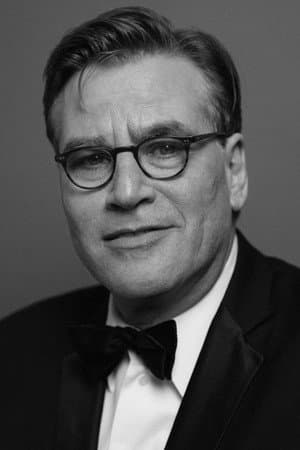
Aaron Sorkin has never been shy about admitting where his talents end and his limitations begin. The writer-turned-director, whose latest feature "The Social Reckoning" put him behind the camera once again, is now opening up about a specific anxiety that has followed him across his directing career: the fear that the skills he lacks as a filmmaker are precisely the ones that cannot be taught.
In remarks that have circulated widely among film industry observers this week, Sorkin framed his concern with characteristic candor. "I'm very worried that the parts of directing that I'm not good at are those parts that you can't learn," he said. The line cuts to the heart of a long-running tension in Sorkin's career. He built his reputation on dialogue, structure and the rhythms of language, and his move into directing brought a new set of demands that don't yield to the page in the same way.
Sorkin's concern isn't abstract. Directing requires command of visual grammar, spatial staging, camera placement, pacing on set and the management of a large crew, all skills that sit at a distance from screenwriting. Some of that can be drilled and refined through repetition. But instinctive visual storytelling, the kind that lets a director solve a scene with a single image or find the emotional center of a moment without dialogue, is harder to acquire through study alone. Sorkin appears to be grappling with exactly that distinction.
A Writer's Eye on a Director's Job
Sorkin's path to the director's chair was gradual. He first became one of the most recognizable voices in American screenwriting, then stepped behind the camera with "Molly's Game," followed by "The Trial of the Chicago 7" and "Being the Ricardos." Each project drew scrutiny of his visual choices alongside praise for his writing, and the conversation around his work has often split along that line. Critics who admire his scripts have sometimes questioned whether his staging and shot selection match the verbal dexterity of his dialogue.
That split is likely what gives his latest comment its weight. A writer can revise endlessly. A director has to make decisions in real time, often under pressure, and trust instincts built over years. If those instincts are weak in certain areas, no amount of preparation fully compensates on the day. Sorkin seems to be acknowledging that gap publicly rather than deflecting it.
The remark also reframes how his directing career might be assessed. Rather than measuring him against filmmakers with decades of visual craftsmanship behind them, his comment invites a more specific question: which parts of the job has he mastered, and which remain a struggle? That kind of self-assessment is rare in an industry where confidence is the default posture, and it lands differently coming from someone whose entire reputation rests on precision with words.
Why the Admission Resonates
Hollywood tends to celebrate the multi-hyphenate, and the writer-director has become an increasingly common figure. Yet the transition is rarely seamless, and Sorkin's comment gives voice to something many in that position probably feel privately. The craft of directing is often described as learnable, a matter of experience and mentorship. Sorkin's worry suggests a bleaker view: that some of it is temperamental, tied to how a person instinctively sees the world, and that no workshop can install what isn't already there.
For audiences, the quote adds another layer to how "The Social Reckoning" will be received. Viewers who know Sorkin primarily as a writer may now watch his directing choices more closely, looking for the seams he himself has flagged. Industry watchers, meanwhile, may see the remark as a rare moment of honesty about the limits of reinvention in a business that rarely rewards admitting them.
Sorkin has not indicated any plan to step away from directing, and his comments read less like a surrender than a candid inventory of where he stands. Whether that inventory pushes him toward collaborators who compensate for his weaker areas, or toward a more deliberate effort to close the gap himself, remains to be seen. What's clear is that one of Hollywood's most verbal filmmakers has just said something unusually direct about what words alone can't fix.
Source: The Hollywood Reporter