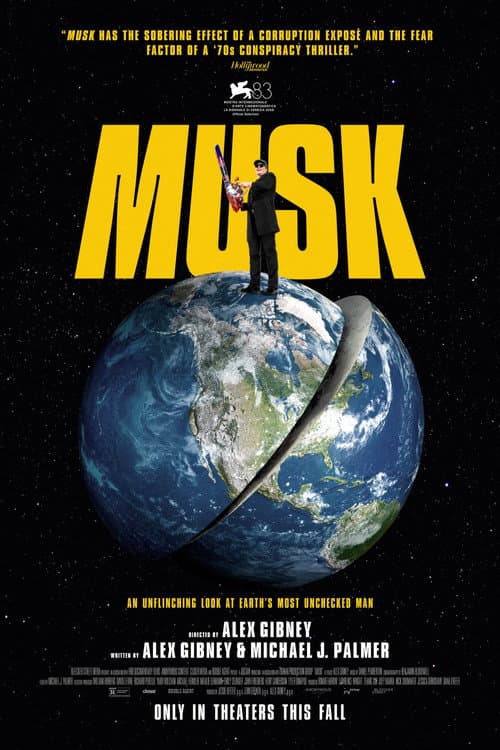
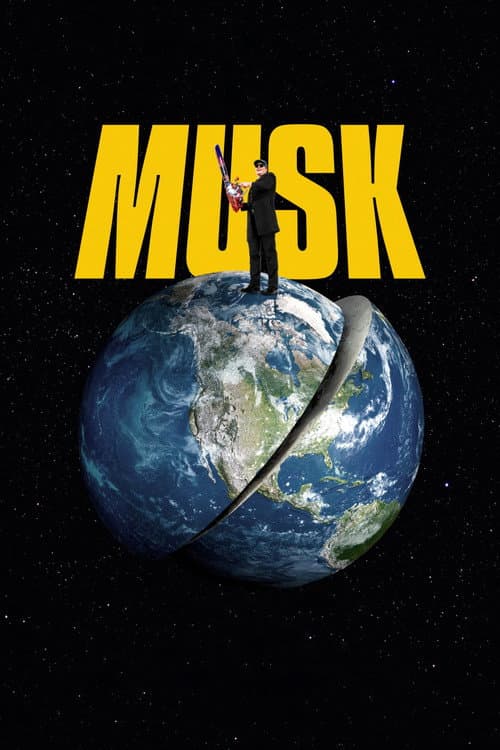
More than two weeks after it opened in theaters, Alex Gibney's documentary "Musk" remains available to audiences - though the path to seeing it has been anything but a conventional wide release. The film, a 235-minute examination of Elon Musk's life and influence, arrived on October 9, 2026, and has settled into a rollout that reflects both the enormous public interest in its subject and the unusual logistics of a four-hour documentary.
For viewers wondering whether the window to see "Musk" has already closed, the answer is no. The film is still screening, and its extended theatrical presence is notable for a nonfiction title of its length. Gibney, a veteran of the documentary form, directs and also provides narration, while Musk himself appears through archival footage rather than in newly conducted interviews. The approach places the film's argument in the hands of assembled record and commentary rather than a sit-down with its central figure.
A Four-Hour Portrait Spread Across a Slow Rollout
At 235 minutes, "Musk" is an outlier among documentaries, most of which run closer to 90 or 100 minutes. That runtime has shaped how the film reaches audiences. Theatrical screenings of a movie that long require careful scheduling, and the release plan has leaned on a gradual expansion rather than a single nationwide launch. The strategy allows the film to build word of mouth while giving exhibitors flexibility in how they program it.
The documentary's overview describes an incisive look behind the legend of Musk, framed as the world's most heralded inventor-entrepreneur and a figure with enormous influence over the world in which we all live. That framing sets up a portrait that is as much about power and reach as it is about biography.
A Cast Drawn From Musk's Orbit and the Tech Press
The on-screen roster is built largely from people who have observed Musk closely or crossed paths with him professionally. Justine Musk, the entrepreneur's former wife, appears as herself. Ashley St. Clair also features as herself, as does Kara Swisher, the longtime technology journalist known for tough questioning of Silicon Valley executives. Martin Eberhard, a co-founder of Tesla, lends the film a perspective from inside the company's early history. Zoë Schiffer, a reporter who has covered Musk's businesses, appears as herself, and Geoffrey Hinton, often described as a pioneer of modern artificial intelligence, rounds out a cast that spans business, media and science.
Gibney's narration is listed as a voice role, positioning the director as the film's guiding presence even as it relies on the accounts of others. The use of archive footage for Musk means the film's version of its subject is assembled from material recorded before the documentary was made, a method that can lend distance and allow context to do the interpretive work.
Where the Film Stands With Viewers
On TMDb, "Musk" currently holds a rating of 7 out of 10, a solid if not stratospheric score for a documentary that has taken a critical stance. Ratings for films about polarizing public figures often reflect the divisions surrounding their subjects as much as the filmmaking itself, and this one appears to be no exception. The film is an English-language Hollywood production, and its genre is listed simply as documentary.
For those who have not yet caught it, the continued availability answers the most immediate question: the release has not been pulled or abruptly ended. Details on additional formats beyond the current theatrical run have not been part of the verified information surrounding the film, so audiences should look to local listings for remaining screenings.
What the Release Plan Signals
The endurance of "Musk" in theaters says something about the appetite for scrutiny of its subject. A documentary running nearly four hours is a demanding proposition for any distributor, yet the film has held on past its opening weekend and into a third week. That persistence suggests a release plan built around targeted bookings and sustained interest rather than a quick, high-volume push.
Gibney's film joins a growing body of work examining the tech industry's most visible figures. Its length allows for depth that shorter documentaries cannot attempt, tracing Musk's trajectory through the voices of those who have worked with him, lived with him, covered him or competed against him. Whether that depth translates into a wider audience remains an open question, but for now, the film is still there to be seen - a fact that, given its subject's ubiquity, may be the most newsworthy detail of all.
Source: The Hollywood Reporter