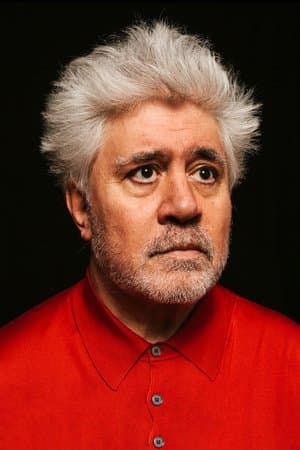
Pedro Almodóvar has spent more than four decades building one of the most recognizable bodies of work in world cinema, and now he is turning his attention to the one subject he has never examined at length: himself. The Spanish filmmaker is developing a project that examines his own life and career, a reflective turn for an artist whose films have long blurred the line between autobiography and invention.
The project, currently known as "Almodóvar's Deep Dive Into … Almodóvar," puts the director in the rare position of looking back rather than ahead. No cast, release date, or production timeline has been confirmed, and details about the format remain unclear. What is certain is that the man behind such enduring characters as Pepa, Raimunda, and Benigno is now prepared to make himself the subject.
For an audience that has followed his work since the punk-inflected comedies of the 1980s, the move feels less like a departure than an inevitable arrival. Almodóvar's films have always carried traces of their maker - his childhood in La Mancha, his years in Madrid after the fall of Franco, his cinephilia, his queerness, his complicated feelings about family and faith. A project that confronts those threads directly would be a kind of summing up.
A Career That Rewrote Spanish Cinema
Almodóvar emerged in the post-Franco era as part of a restless creative explosion in Madrid, a moment later labeled La Movida. His early films were raw, funny, and transgressive, willing to take seriously the lives of people mainstream Spanish culture had long ignored. Over time, his style matured without losing its bite. He became a master of color, of melodrama, of the precise emotional register that can turn a scene from farce to heartbreak in a single cut.
International recognition followed. He won the Academy Award for Best Original Screenplay for "Talk to Her," and his films became fixtures at Cannes and Venice. Alongside his brother Agustín, who has produced much of his work, he built a small, self-contained operation that allowed him unusual independence. That independence is likely to matter for a project this personal, where the temptation to soften or sanitize must be considerable.
Why Now?
Almodóvar has rarely been a nostalgic filmmaker. His recent work has moved in new directions, including his first English-language feature and a series of shorts and essays that suggest a director thinking about legacy, mortality, and the passage of time. A self-portrait would fit that late-career mood.
It also raises practical questions. Almodóvar has always guarded his private life, offering interviews that are warm but carefully controlled. A deep dive into himself would require a different kind of exposure. Whether he intends to conduct that excavation on screen, on the page, or in some hybrid form has not been disclosed.
There is also the matter of how such a project would be received. Filmmakers who turn the camera on themselves risk accusations of vanity, but Almodóvar's body of work is substantial enough to justify the examination. His influence extends well beyond Spain; directors from Latin America, Asia, and the United States have cited him as a formative figure. A reflective project could serve as both memoir and master class.
What Audiences Might Learn
The most intriguing possibility is that Almodóvar will finally explain the mechanics of his own storytelling. His films are often described as melodramas, but that label undersells the precision of their construction. He writes dialogue that sounds spontaneous, yet his plots are engineered with the rigor of a clockmaker. A project about himself could illuminate how those choices are made - where the autobiography ends and the invention begins.
For now, the announcement is more promise than product. No distributor, no collaborators, no schedule. But the title alone invites speculation, and for a director who has spent his career telling other people's stories with uncommon intimacy, the decision to tell his own is significant.
Almodóvar has never been interested in the obvious version of anything. If he is going to examine his life, expect him to do it on his own terms - not with a tidy chronology, but with the same restless, inquisitive energy that has defined his films. The subject may be himself, but the approach will almost certainly be anything but conventional.
Source: The Hollywood Reporter