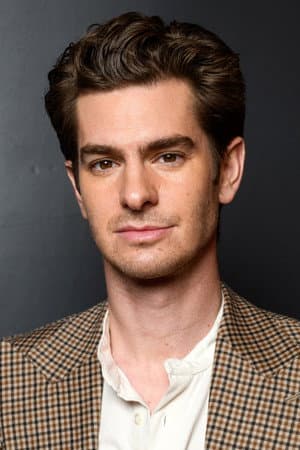
Andrew Garfield spent months trying to get inside the head of one of the most powerful and polarizing figures in technology, and the process owed as much to strangers on the internet as it did to the tools he learned at drama school. The actor has been preparing to portray OpenAI chief executive Sam Altman, a project that has drawn intense interest across Hollywood and Silicon Valley alike, and he has described a research method that blends a very modern kind of group intelligence with a technique that predates the smartphone by decades.
Garfield's approach, as he has outlined it in interviews, began with an admission that traditional preparation would not be enough. Altman is a living public figure whose words are indexed, clipped, quoted and re-quoted across countless platforms, and no single biography or profile could capture the texture of how he actually thinks and speaks. So Garfield turned outward, gathering material from people who have watched Altman closely - journalists, former colleagues, critics, admirers - and letting that collective perspective shape his understanding.
A Role That Resists the Usual Research
What makes the assignment unusual is the sheer volume of available material. An actor playing a historical figure often works from a finite archive: letters, photographs, a handful of recordings. Altman, by contrast, has spent years in podcast interviews, conference appearances and congressional testimony, producing a public record so vast that the challenge is curation rather than scarcity.
That abundance cuts both ways. A performer can study cadence and mannerism endlessly, but the risk is mimicry without interiority - a collection of surface tics standing in for a person. Garfield appears to have recognized that trap early, which is why the crowdsourced element of his research is not simply about accumulating facts. It is about testing his own impressions against the perceptions of others, so that the portrait he builds is not just his private guess about who Altman is.
The Classic Technique Behind the Modern Method
The acting tradition Garfield has leaned on is the kind of character work taught in conservatories for generations: an external, investigative process in which the performer gathers evidence about a subject and then searches for the emotional logic underneath the behavior. Versions of this approach appear in the teachings of major acting schools, and it has long been a staple of actors preparing to play real people.
Applied to Altman, the technique means asking not only what he said, but what he wanted when he said it. What does a person reveal in the pauses between sentences? What does it mean when someone who built a career on projecting certainty suddenly hedges? Garfield has suggested that this is where the crowdsourced accounts became most valuable - not as definitive answers, but as competing interpretations that forced him to refine his own.
The combination is a neat inversion of how actors traditionally prepare. Instead of retreating into isolation with a stack of research, Garfield opened the process to outside voices and then filtered everything through a disciplined, classical craft. The method treats the internet less as a distraction and more as an enormous, messy focus group.
Why the Performance Matters Beyond the Screen
Altman occupies a strange position in contemporary culture: a technologist treated with the deference once reserved for statesmen, yet one whose decisions are scrutinized by regulators, rivals and the public. A dramatic portrayal of him arrives at a moment when debates about artificial intelligence are inseparable from debates about the people directing it. Any actor taking on that role is, whether he likes it or not, entering a conversation about accountability and power.
For Garfield, the appeal may be simpler and more actorly. Altman is a figure of contradictions - publicly calm, privately driven, praised and distrusted in nearly equal measure - and contradictions are the raw material of interesting performance. The crowdsourcing gives Garfield breadth; the classic technique gives him depth. Together, they represent a hybrid research style that may become more common as actors increasingly portray subjects whose entire lives are searchable.
Whether the result lands as a genuine interpretation or an elaborate impression will not be known until audiences see it. What is already clear is that Garfield is not approaching the part casually. He has assembled a portrait from many hands and then set about doing the loneliest part of the job himself: deciding, moment by moment, what it feels like to be the man in the room.
Source: The Hollywood Reporter