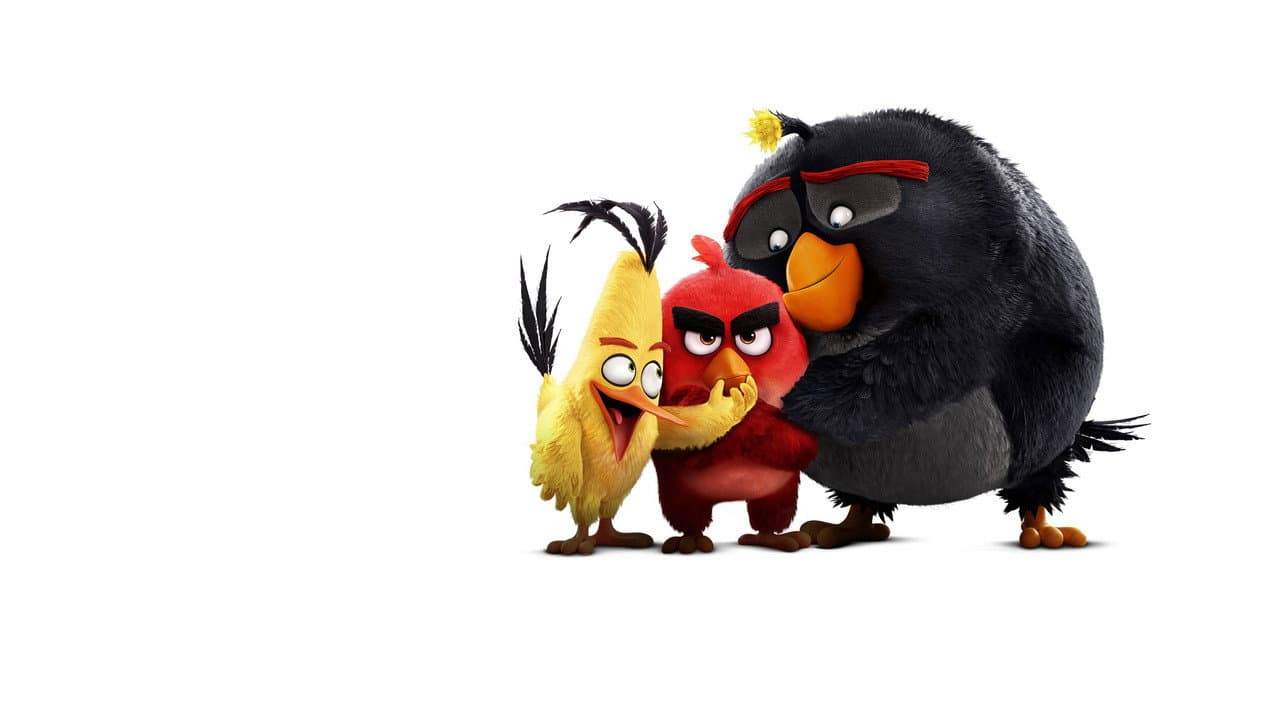
The visual effects team behind "The Angry Birds Movie 3" had to solve a familiar problem: how do you make a character look different without making him a different character? For Red, the hot-tempered bird at the center of the animated franchise, the answer came down to intent rather than reinvention. The film's VFX supervisor says the character's new look is a deliberate evolution, not a break from the past, describing the redesign in terms of choice rather than necessity.
Red, voiced by Jason Sudeikis, has been the emotional engine of the series since the first film, and the new installment keeps his core personality intact. The supervisor explained that the look was adjusted with care, summing up the approach by saying the character "is similar by choice." That phrasing captures the balancing act facing animation teams on long-running franchises, where audiences expect familiarity but also want to see something fresh on screen.
The film's premise remains rooted in the island setting fans know well. The story follows a community of happy, flightless birds living in what amounts to a paradise, with Red, speedy Chuck and the volatile Bomb positioned as longtime outsiders. When mysterious green pigs arrive on the island, the three unlikely heroes take it upon themselves to uncover what the visitors are actually planning.
According to the verified production details, the movie runs 97 minutes and arrives in English as a Hollywood production. Clay Kaytis is credited as director. The voice cast includes Josh Gad as Chuck, Danny McBride as Bomb, Maya Rudolph as Matilda, Bill Hader as Leonard, Peter Dinklage as Mighty Eagle, Sean Penn as Terence and Keegan-Michael Key as Judge Peckinpah. TMDb lists a rating of 6.3 out of 10 for the film, alongside genres spanning animation, adventure, comedy and family.
Automation Takes Over the Character-Effects Pipeline
Beyond Red's redesign, the supervisor highlighted a technical shift in how the production handled character effects. Automation played a larger role in the pipeline this time, allowing the team to manage repetitive or detail-heavy work with less hands-on effort. For an animated feature built around a large cast of birds and pigs, that kind of efficiency matters, since every character carries feathers, fur or other surface detail that must hold up across crowd scenes and close-ups alike.
The emphasis on automation reflects a broader trend in animation, where studios increasingly rely on procedural tools to handle secondary motion and environmental interaction. The goal is not to remove artists from the process but to free them for the creative decisions that software cannot make, such as how a character should feel in a given moment.
A Franchise Built on Unlikely Heroes
The "Angry Birds" series began as a mobile game and grew into a theatrical property with a broad family audience. Its central joke, that cheerful birds and scheming pigs are natural adversaries, has carried the films through multiple installments. The third movie leans on that premise while giving its lead character a refreshed appearance that the effects team insists is rooted in continuity.
Sudeikis leads a ensemble that mixes comedy veterans with distinctive character actors, a combination that has helped the franchise maintain its tone. The supervisor's comments suggest the new film will preserve that identity even as its visuals move forward.
"The Angry Birds Movie 3" is positioned as a family-friendly animated adventure, and the production notes point to a 97-minute runtime that keeps the story tight. With Red's look refined and the character-effects work streamlined through automation, the film appears designed to deliver the spectacle expected of a modern animated release while staying true to the birds audiences first met on the island.
For now, the supervisor's framing offers the clearest signal of the film's philosophy: Red may look a little different, but he remains the same bird by design.
Source: Variety