Ann Hui Wins Busan's Camellia Award | Movie News
Director
Ann Hui
Advertisement
Veteran director Ann Hui is honored with the Camellia Award at Busan Film Festival for her enduring cinematic legacy and impactful storytelling.
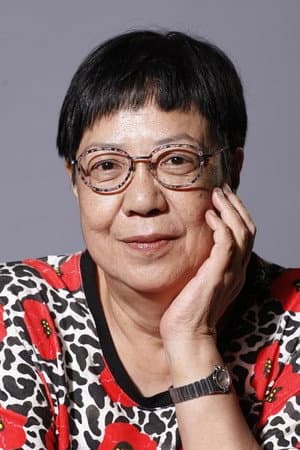
The Hong Kong filmmaker Ann Hui, celebrated for her intimate human dramas including the award-winning A Simple Life, is set to be honored with the Camellia Award at this year’s Busan International Film Festival, organizers announced. The prize, one of the festival’s most distinguished individual honors, recognizes her decades of contribution to Asian cinema and her singular voice as a director.
Hui’s selection marks a continued tradition of the Busan festival spotlighting veteran auteurs whose work has shaped the region’s cinematic identity. The Camellia Award, named after the flower that symbolizes the festival’s host city, is given to figures whose artistic achievements resonate beyond national borders. In Hui’s case, that reach extends from her early New Wave-era features in Hong Kong to her recent, deeply humane portraits of aging, memory, and social displacement.
Perhaps no single work better encapsulates Hui’s strengths than A Simple Life, her 2011 drama that earned her the best director prize at the Venice Film Festival. The film traces the quiet bond between a bachelor film producer and his family’s elderly servant, played by Deannie Yip, whose performance won her the best actress award at Venice. It is a hallmark of Hui’s method - finding profound emotion in everyday routines, and approaching social issues with a gentle, observational touch rather than overt polemics.
Born in Manchuria but raised in Hong Kong, Hui came of age professionally in the late 1970s and 1980s, a period that saw her emerge as a leading figure of the Hong Kong New Wave alongside peers like Patrick Tam and Yim Ho. Her early work, much of it shot for television before moving to feature films, often grappled with the pressures of rapid urban change and the lives of ordinary people caught in political or economic currents. Films such as The Story of Woo Viet and Song of the Exile examined diaspora and identity with a rare blend of personal history and broader societal critique.
Over the ensuing decades, Hui built a filmography equally comfortable with period pieces, literary adaptations, and contemporary character studies. Her 2008 feature The Way We Are offered a quietly devastating look at life in a Hong Kong public housing estate, while the 2017 documentary Keep Rolling turned her lens on the craft of filmmaking itself. Across more than twenty features, she has consistently returned to themes of memory, caregiving, and the silent resilience of women, earning her a reputation as one of Asia’s most humane storytellers.
The Busan festival’s choice of Hui also carries particular weight in 2026, as the event continues to position itself as a bridge between established masters and emerging voices from across the continent. Previous recipients of the Camellia Award include luminaries such as Japanese director Nobuhiko Obayashi and Chinese actress Maggie Cheung, each of whom received the honor in recent years as part of the festival’s effort to celebrate enduring careers while cultivating new audiences for Asian cinema.
Festival director Lee Yong-kwan said in a statement that Hui’s body of work exemplifies the “humanist conscience” of contemporary Asian filmmaking, adding that her films “open a window onto lives that might otherwise remain unseen, with patience and grace.” He also noted that the award underscores the festival’s commitment to recognizing directors whose artistry is matched by a deep social awareness - a combination, he said, that Hui has perfected over four decades.
For her part, Hui expressed gratitude in a prepared response, calling the honor “a surprise and a delight,” and noting that Busan has long been a favorite festival for Asian directors because of its passionate audiences and its willingness to champion unconventional voices. She added that she looks forward to attending the ceremony in person and to introducing her latest work, though festival officials did not clarify whether she would present a new film alongside the tribute.
The Camellia Award ceremony is scheduled to take place during the festival’s opening week in October, as part of the event’s expanded program of retrospectives and master classes. Organizers are planning a special retrospective of Hui’s work, including restored prints of several early films, to accompany the presentation. That retrospective is expected to give younger audiences a chance to discover the full arc of her career, from her abrasive New Wave beginnings to the delicate, meditative style she has honed in recent years.
Beyond the immediate honors, the award also signals a broader conversation about the legacy of Hong Kong cinema at a moment of significant change for the city’s film industry. Hui, who has remained active and vocal about the challenges facing local productions, has often spoken about the need to preserve Hong Kong’s unique cultural memory on screen. In that sense, the Camellia Award could be seen not merely as a personal milestone but as a recognition of an entire generation’s struggle to keep a distinctive cinematic tradition alive against economic and political headwinds.
For now, the focus is on the celebration. The Busan International Film Festival, set to kick off in October, will provide the stage for what is sure to be an emotional tribute to a director whose work has touched audiences far beyond her native shores. With the Camellia Award in hand, Hui joins a select group of filmmakers whose careers have been defined not by commercial scale but by the depth of their empathy - and in that company, she stands as a singular force.
Source: The Hollywood Reporter
Advertisement
Advertisement