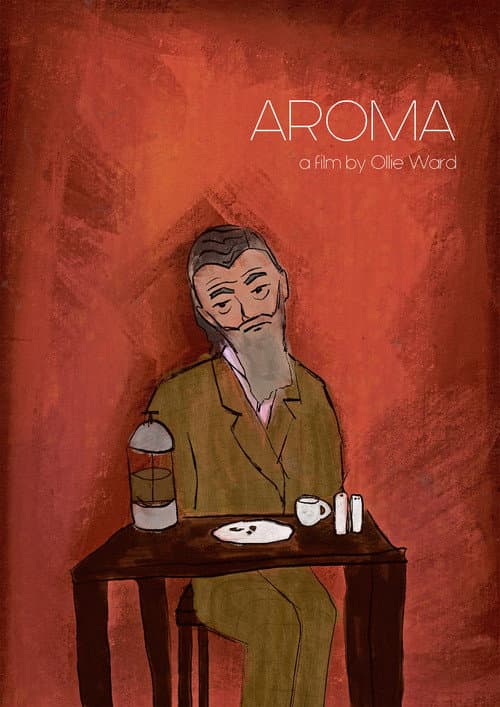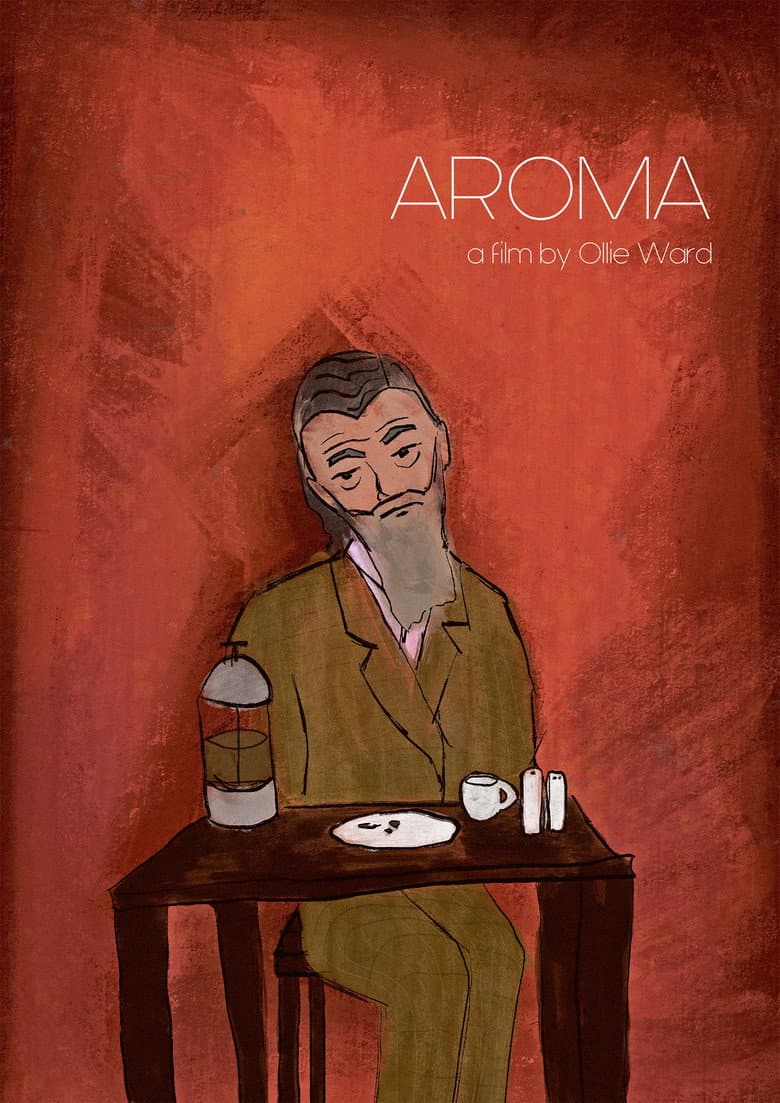
Ollie Ward's short film "Aroma" unfolds largely in a single North London café, where an unhurried elderly man sits and waits for the person he is meant to meet. That simple premise, which runs just ten minutes, is the frame for a story that drifts into loneliness, fantasy and forbidden longing, according to the director. The film has arrived at Tallinn with an exclusive trailer and a conversation with its maker, drawing attention to a small, intimate project with a distinctly unsettled emotional core.
"Aroma" is an English-language Hollywood production, and its cast is led by Andrew Theobald as the Old Man. Yinka Olorunnife plays the Waitress, with Sebastian White as the Young Man and Danielle Quinn-Taylor as the Young Woman. Ward directs. No release date has been announced, and the film carries no rating yet on TMDb, where it currently sits at 0/10 based on too few votes to mean anything. None of this diminishes the interest around the short, which uses its brief runtime to press at the boundary between what its protagonist imagines and what the café actually contains.
A Café, a Waiting Man and a Mind That Wanders
The setup is deliberately modest. An old man takes his time, settles in, and watches the door. The wait is the engine of the piece, and Ward builds his ten minutes around the gap between expectation and arrival. What the man wants is never stated plainly; instead, the film lets desire and memory blur into the ordinary clatter of a café. The title points toward the senses, and the director treats smell, taste and anticipation as the material from which disappointment and fantasy are made.
The presence of a Young Man and a Young Woman in the cast, alongside the Waitress who works the room, suggests a story built on observation and projection. The old man is not alone, yet loneliness is the air he breathes. Ward's interest appears to lie in how a person can be surrounded by other lives, other conversations and other bodies, and still be sealed inside his own head. The film's forbidden-desire thread runs through that isolation rather than through anything explicit, which suits a short of this length.
Tallinn has become a reliable launchpad for compact, formally curious shorts, and "Aroma" fits that profile. The exclusive trailer offers a first look at the film's tone, and Ward's conversation about the project gives context to choices that might otherwise read as elusive on screen. For a director working at this scale, the festival platform matters: ten minutes is enough to establish a voice, but only if the voice is distinctive. Ward's bet is that restraint and sensory detail can carry more weight than plot mechanics.
What the Short Is Reaching For
The premise places a great deal of responsibility on Andrew Theobald's performance. His character spends much of the film waiting, and waiting is difficult to play without either overstating the inner life or flattening it entirely. Around him, Olorunnife's waitress, White's young man and Quinn-Taylor's young woman provide the social texture against which his solitude becomes visible. The film's tension comes from the possibility that the date will never materialize, or that it will, and the reality will fail to match the version he has rehearsed.
Ward's film also belongs to a tradition of London-set shorts that treat the city's cafés as stages for quiet drama. North London here is not a postcard but a room, a table, a window and a clock. The title suggests the story is filtered through the senses rather than through dialogue, and the director's framing of loneliness, fantasy and forbidden desire implies a narrative that moves inward as the clock runs. Whether the man's longing is romantic, remembered or invented is left for the audience to decide.
With no release plan yet in place and a rating that reflects only the absence of votes, "Aroma" remains a festival discovery for now. Its ten-minute runtime makes it a calling card as much as a finished statement, and its slot at Tallinn gives it a chance to be seen by programmers and audiences who value short-form work with an emotional edge. The exclusive trailer and Ward's conversation are the first real windows into the film, and they position it as a study of what happens when a person waits too long and the mind begins to fill the silence.
Source: The Hollywood Reporter