Ava DuVernay brought a warning rather than a victory lap to the world premiere of her new documentary, telling an audience that the constitutional guarantee at the center of the film is under sustained attack. "14th," which examines the amendment that granted citizenship and equal protection under the law, screened for the first time with its director arguing that the stakes extend well beyond any single court ruling.
"We need to fight," DuVernay said during the premiere, framing the erosion of democracy as an active, ongoing process rather than a distant threat. The filmmaker's remarks set the tone for a film that treats the 14th Amendment not as settled history but as a live battleground.
A Reconstruction Amendment, Still Contested
Ratified in 1868 during the turbulent years of Reconstruction, the 14th Amendment established birthright citizenship and barred states from denying any person equal protection of the laws. "14th" traces how that language, written to secure rights for newly freed Americans, has been invoked, tested and challenged across more than a century and a half of American political life. The documentary runs 100 minutes and is classified as a Documentary and History title in English.
DuVernay directs the project, which draws on a roster of voices spanning law, politics, activism and scholarship. Sherrilyn Ifill, the civil rights attorney and former NAACP Legal Defense Fund president, appears as herself. So does Stacey Abrams, identified in the cast as an activist, along with U.S. Representative Alexandria Ocasio-Cortez. The film also includes perspectives from across the political spectrum, among them former U.S. Senator Jeff Flake, U.S. Senator Alex Padilla and U.S. Representative Anna Paulina Luna. Cultural critic Hasan Piker and historian David Blight round out the featured participants.
The breadth of that lineup reflects the amendment's unusual position in American life: it has been a tool for expanding rights and a target for those who want to narrow them, sometimes in the same era.
Premiere Rhetoric Matches the Film's Urgency
DuVernay's call to action at the premiere was consistent with a career spent using film to interrogate systems of power. Her previous work has repeatedly drawn connections between historical injustice and present-day policy, and "14th" appears to continue that project by anchoring contemporary debates over citizenship and equality in their post-Civil War origins.
The timing of the release places the documentary squarely in a charged national conversation. Questions about who counts as a citizen, what equal protection requires and how far states can go in limiting both have moved from law review articles to front pages and courtroom dockets. By assembling legislators, litigators and historians in one film, DuVernay positions the amendment as a contested inheritance rather than a closed chapter.
The premiere itself became part of that argument. Rather than presenting the film as a historical summary, the director used the platform to issue a direct appeal, warning that democratic institutions cannot be taken for granted and urging audiences to engage.
A Wide Release Ahead of a Divided Moment
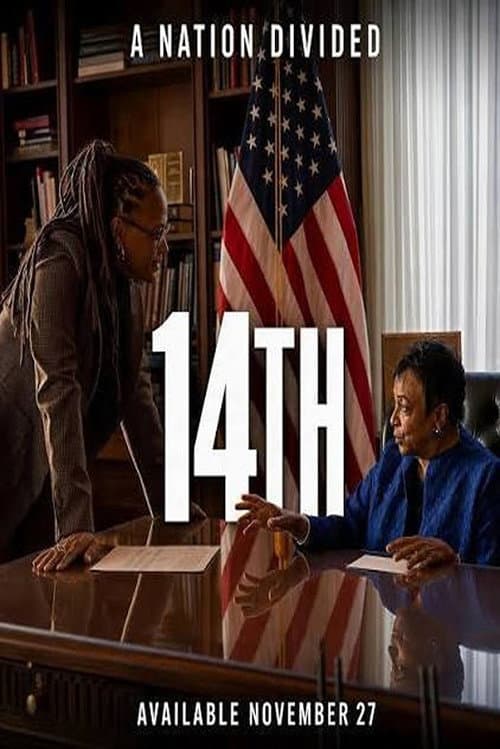
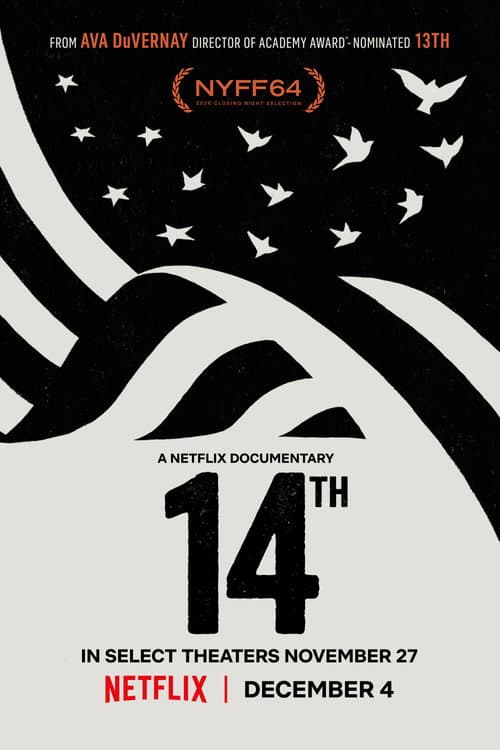
"14th" is scheduled for release on November 27, 2026. The film arrives with no audience rating yet recorded, leaving its critical and public reception still to be determined.
For a documentary built around a 19th-century text, the film's relevance depends on convincing viewers that the amendment's promises remain unfulfilled and its protections vulnerable. DuVernay's premiere remarks suggest that is precisely the case she intends to make. Whether audiences accept the invitation to fight - and what form that fight takes - will unfold after the film reaches theaters.
What is clear from the premiere is that DuVernay does not regard the 14th Amendment as a relic. She treats it as a living provision whose meaning is decided not only by judges but by citizens willing to defend it.
Source: The Hollywood Reporter