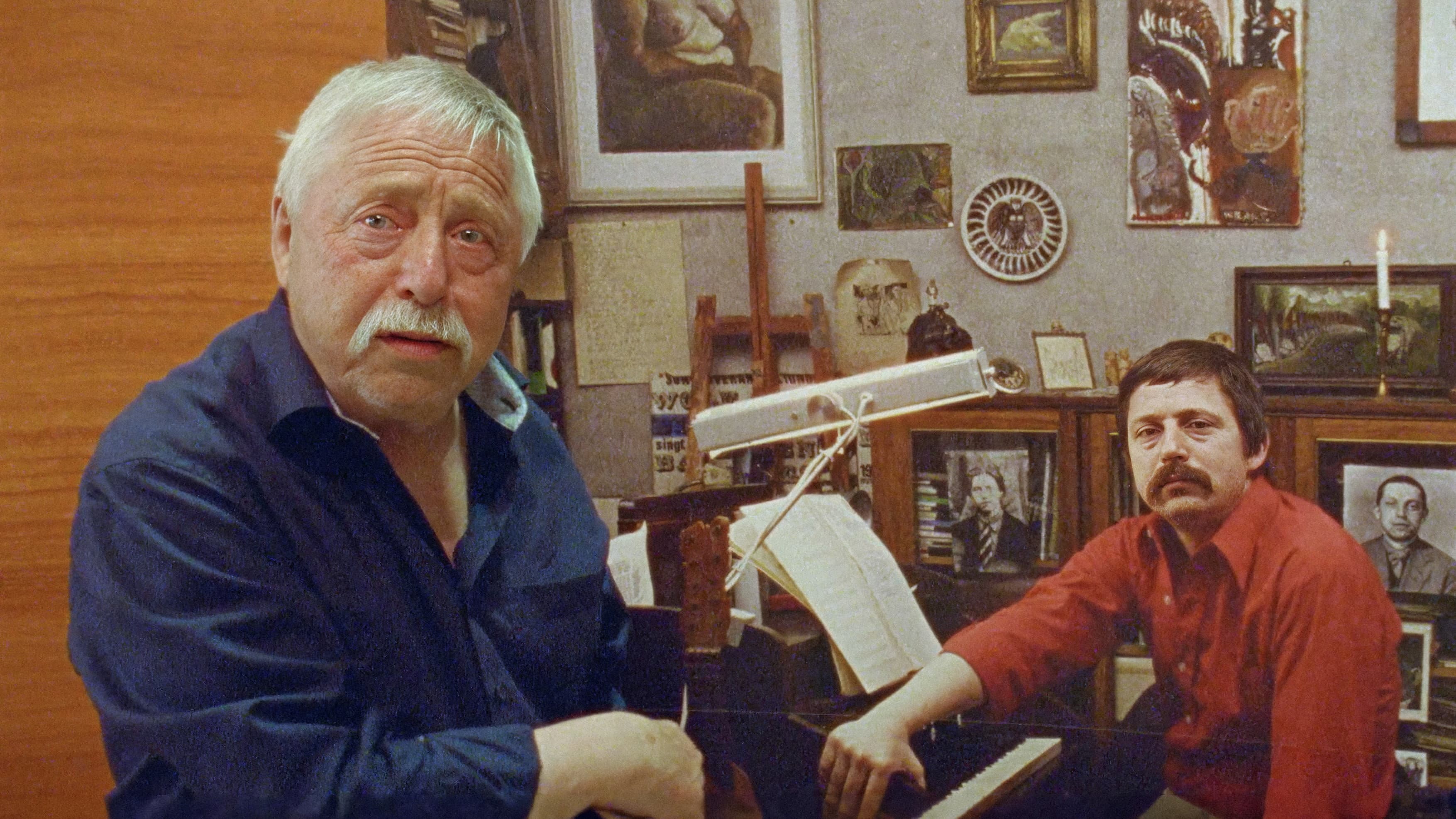
The director of "Biermann," a documentary portrait of the German singer-songwriter Wolf Biermann, says the film's central questions about political art and the cost of dissent speak directly to audiences living through the Trump era. The filmmaker argues that Biermann's long career - spanning persecution in East Germany, a dramatic expatriation, and decades of confrontational performance in the West - offers a template for thinking about what it means to make art under pressure from power, and why that template remains urgent in the United States today.
At the heart of the documentary is Biermann's biography as a political lightning rod. A committed communist who moved to East Germany in the 1950s, he became one of the most prominent critics of the state from within, using satirical songs to skewer the ruling party. His refusal to soften his criticism led to a performance ban, and in 1976 the East German authorities stripped him of his citizenship while he was on tour in West Germany, a decision that sparked wide protests among artists and intellectuals on both sides of the divide. The film traces how those events shaped his subsequent career, including his complicated relationship with his adopted homeland and his continued willingness to aim his pen at whoever holds power.
The director contends that this refusal to settle into a comfortable political alignment is precisely what makes Biermann a useful figure for American viewers now. In his view, the singer's willingness to criticize the left as well as the right - and to accept the personal costs of doing so - challenges the tendency to sort art into partisan camps. He describes the documentary as less a tribute than an argument: that political conviction in art only matters if it is willing to be inconvenient, and that audiences accustomed to consuming culture that flatters their own politics may find Biermann's example uncomfortable in productive ways.
The film also examines the mechanics of censorship and the moral compromises artists make when they seek official approval, themes the director sees mirrored in contemporary debates over speech, institutional pressure, and the role of artists in political life. Without drawing a simple one-to-one comparison, he suggests that the pressures Biermann faced - a state apparatus that rewarded conformity and punished defiance - offer a lens for understanding how political power can shape cultural life even in a democracy. He hopes the film prompts viewers to ask what they would be willing to risk for their convictions, and what they might be overlooking when they choose not to speak.
A life that resists easy categorization
"Biermann" does not present its subject as a saint. The director is candid that the singer's career has included sharp feuds with former allies, shifting allegiances, and a combative style that has alienated as many people as it has inspired. Rather than smoothing over those contradictions, the film lets them stand, treating Biermann's abrasiveness as inseparable from his effectiveness. The director's admiration, as presented here, comes with an awareness that the man at the center of the story is difficult, and that his difficulty is part of what makes the work compelling.
That honesty, the director argues, is what separates the documentary from a straightforward hagiography. By allowing audiences to see the costs of Biermann's choices - both the external repression and the personal fallout - the film tries to show what political commitment actually looks like in practice, rather than as a slogan. For viewers used to tidy narratives about heroes and villains, that messiness may be the film's most valuable contribution.
Why now
The director frames the timing of the release in terms of a broader cultural moment in the United States, one in which artists and audiences are renegotiating what political speech in art can and should do. He suggests that the anxiety of the present - political polarization, pressure on institutions, and a sense that speaking out can be costly - gives Biermann's story a new charge, even though it unfolds in a different country and a different decade. The film invites American audiences to look at a very German story and recognize something familiar in it.
"This is a film about someone who refused to be silent when it was safer to be silent," the director said, adding that he hopes viewers leave the theater thinking about the price of their own restraint. "Biermann never stopped singing, and he never stopped paying for it. That is what I wanted people to see."
"Biermann" opens in select theaters.
Source: The Hollywood Reporter