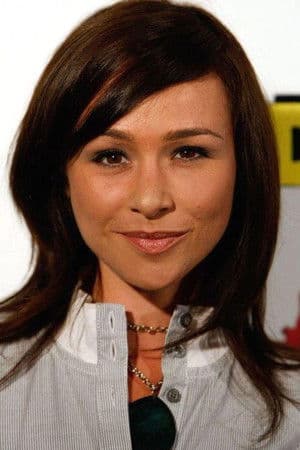
Danielle Harris, a familiar face to horror audiences since her childhood turns in the "Halloween" franchise, is stepping in front of the camera in a different way. A new feature documentary centered on Harris gives the actress room to recount both her long screen career and the personal hardships she has weathered along the way, and she speaks candidly in it about experiences she has largely kept to herself until now.
The project, billed as an exclusive look at Harris's life and work, does not revisit her filmography as a simple highlight reel. Instead, it treats her professional path and her private struggles as intertwined threads, letting her describe how the pressures of growing up on film sets and the trauma she has carried shaped the person and performer she became. No distributor, release plan or running time has been announced.
For Harris, the documentary marks a deliberate move toward authorship over her own story. Having spent decades as a performer interpreted by directors, publicists and fans, she uses the format to set the record straight in her own words - a shift that has become increasingly common among actors who came up through the industry as children and later choose nonfiction film as a way to reclaim their narrative.
A Life Lived in Front of the Camera
Harris first became known to moviegoers as a young performer in the "Halloween" series, appearing in entries released during the late 1980s. She later returned to the franchise as an adult, a rare distinction for an actor who began in the series as a child. That long association with one of horror's most enduring properties has made her a fixture at genre conventions and a recognizable name to successive generations of fans, even as her career extended well beyond it. Her credits also include work in "Roseanne" and a wide range of independent genre productions.
The documentary draws on that unusual arc: a performer who was working steadily before she was old enough to drive, who grew up in an environment where the boundary between performance and exploitation can blur, and who has spoken over the years about the difficulty of navigating adult scrutiny at a young age. Those themes give the film a broader resonance than a single career retrospective, touching on questions the industry is still wrestling with about how young actors are protected and supported.
Trauma at the Center of the Story
What distinguishes the project is Harris's willingness to discuss personal trauma directly. According to the film's framing, she addresses painful chapters of her life without softening them, connecting those experiences to the resilience that has sustained her career. The documentary positions her not as a subject to be examined but as a narrator in control of how her history is told.
That approach places the film within a growing wave of documentaries in which performers use the medium to confront difficult material on their own terms. For audiences who know Harris primarily through genre films, the project promises a more complete portrait - one that acknowledges the cost of a life spent in the public eye while also honoring the craft that has defined it.
What Comes Next
Details about how and when the documentary will reach viewers remain unconfirmed, and no release information has been made available. What is clear is that Harris is treating the project as a significant personal statement rather than a routine career retrospective. For a performer whose name is permanently linked to one of cinema's most famous horror franchises, the film offers a chance to be seen on her own terms - as a survivor, a storyteller and an actress still very much in command of her own narrative.
Source: The Hollywood Reporter